
- Table of Contents
- Introduction
- What Do We Mean by Green Finance?
- Benefits of Green Finance
- Environmental Impact
- Economic Growth
- Risk Mitigation
- Reputation and Brand Value
- Access to Capital
- Long-Term Economic Resilience
- Global Trends in Green Finance Adoption
- 1. Regulatory Support
- 2. Growth of Green Bonds
- 3. Increased Investor Demand
- 4. Technological Innovation
- 5. Global Initiatives and Collaborations
- Challenges of Green Finance
- Lack of Standardization
- Data Availability
- High Initial Costs
- Market Maturity
- Political and Economic Uncertainty
- What is Sustainable Investing?
- The ROI of Sustainable Investing
- 1. Performance Metrics
- 2. Risk Reduction
- 3. Long-Term Value Creation
- 4. Consumer Preferences
- 5. Access to New Markets
- 6. Social and Environmental Impact
- Best Practices for Implementing Green Finance
- 1. Establish Clear Definitions and Standards
- 2. Foster Collaboration and Partnerships
- 3. Leverage Innovative Financial Instruments
- 4. Enhance Data Collection and Transparency
- 5. Build Capacity and Expertise
- 6. Align Incentives and Policies
- 7. Monitor and Evaluate Impact
- Conclusion
Introduction
The world is at a critical juncture where economic growth must align with environmental sustainability. As climate change accelerates and natural resources dwindle, the financial sector is increasingly recognizing its role in fostering a sustainable future. This blog post delves into the concept of green finance and sustainable investments, exploring their definitions, benefits, global trends, challenges, and best practices. By understanding these concepts, we can appreciate how they contribute to a more sustainable economy and society.
What Do We Mean by Green Finance?
Green finance refers to financial activities that promote the development of projects and initiatives that have positive environmental impacts. This can include investments in renewable energy, energy efficiency, pollution reduction, and sustainable agriculture. The primary aim is to support projects that contribute to environmental sustainability while generating economic returns.
On the other hand, sustainable finance encompasses a broader spectrum of financial activities that consider environmental, social, and governance (ESG) factors. While green finance focuses specifically on environmental benefits, sustainable finance integrates social and governance aspects, addressing issues such as human rights, labor practices, and corporate governance alongside environmental concerns.
The distinction is crucial as it highlights the various approaches within the financial sector to promote sustainability. Green finance is often seen as a subset of sustainable finance, which aims for a more holistic approach to responsible investing.
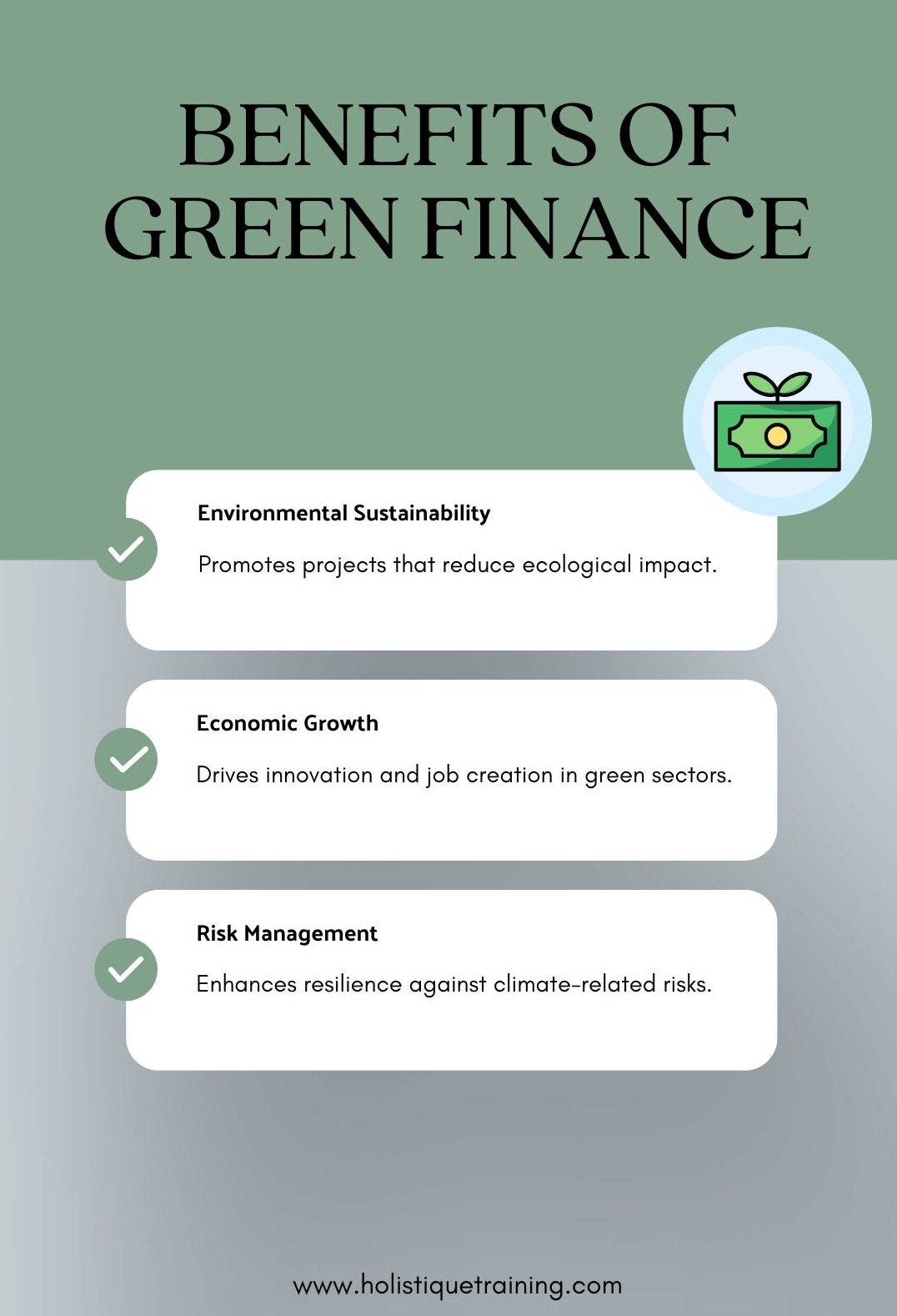
Benefits of Green Finance
The adoption of green finance brings forth numerous advantages, both for investors and society at large:
Environmental Impact
Green finance plays a crucial role in addressing pressing environmental challenges. By directing capital toward projects that have a positive impact on the environment, such as renewable energy, sustainable agriculture, and pollution control, green finance helps mitigate climate change and preserve biodiversity.
- Reduction of Carbon Emissions: Investments in renewable energy sources like solar, wind, and hydroelectric power significantly reduce greenhouse gas emissions compared to fossil fuels. For instance, a study by the International Energy Agency (IEA) found that transitioning to renewable energy could help cut global CO2 emissions by up to 70% by 2050.
- Conservation of Resources: Green finance encourages the development of technologies and practices that improve resource efficiency, such as water conservation, waste reduction, and sustainable land management. This not only helps to preserve natural resources but also promotes the health of ecosystems.
Economic Growth
Investing in green projects stimulates economic growth by creating jobs and fostering innovation. The green economy is a burgeoning sector that offers vast opportunities for development.
- Job Creation: The renewable energy sector alone has been a significant job creator. According to the IRENA, the global renewable energy sector employed over 12 million people in 2020, with potential for further growth as investments in green technologies expand. Jobs in green finance also include roles in environmental risk assessment, sustainable project management, and ESG analysis.
- Stimulating Innovation: Green finance fosters innovation by encouraging the development of new technologies and business models aimed at sustainability. Companies that invest in research and development of green technologies can gain a competitive edge, leading to economic growth and enhanced productivity.
Risk Mitigation
Incorporating green finance into investment strategies helps mitigate various risks associated with environmental degradation and climate change.
- Reducing Regulatory Risks: As governments worldwide implement stricter environmental regulations, companies that prioritize sustainability are better positioned to comply with these laws. This reduces the risk of penalties and reputational damage associated with non-compliance.
- Physical Climate Risks: Climate change poses significant physical risks to businesses, including extreme weather events and resource scarcity. By investing in sustainable infrastructure and practices, companies can enhance their resilience to these risks, protecting their assets and ensuring long-term viability.
Reputation and Brand Value
Companies that engage in green finance often experience enhanced reputation and brand value. In an era where consumers are increasingly conscious of sustainability, businesses that demonstrate a commitment to environmental responsibility can differentiate themselves in the marketplace.
- Consumer Loyalty: A growing number of consumers prefer to purchase from companies that prioritize sustainability. According to a Nielsen survey, 66% of consumers are willing to pay more for sustainable brands, highlighting the financial benefits of adopting green practices.
- Attracting Talent: Companies known for their commitment to sustainability are more likely to attract and retain top talent. Employees increasingly seek workplaces that align with their values, and organizations that prioritize green finance can enhance employee satisfaction and engagement.
Access to Capital
Green finance opens avenues to new sources of capital, providing businesses with the financial resources needed to innovate and grow.
- Government Incentives: Many governments offer subsidies, tax breaks, and grants for green projects, making it easier for businesses to secure funding. For example, the U.S. Department of Energy provides loans and grants for renewable energy projects, reducing the financial burden on companies.
- Green Bonds and Investment Funds: The rise of green bonds and sustainable investment funds has created new opportunities for businesses to attract investment. These financial instruments are specifically designed to fund environmentally friendly projects, appealing to a growing pool of socially conscious investors.
Long-Term Economic Resilience
Green finance contributes to the long-term resilience of economies by promoting sustainable development practices that ensure the well-being of future generations.
- Sustainable Development Goals (SDGs): Green finance aligns with the United Nations Sustainable Development Goals, which aim to address global challenges such as poverty, inequality, and climate change. By investing in projects that contribute to these goals, financial institutions can play a significant role in fostering global stability and prosperity.
- Intergenerational Equity: By prioritizing environmental sustainability, green finance ensures that future generations inherit a planet that is capable of sustaining their needs. This principle of intergenerational equity is fundamental to creating a balanced and just society.

This specialised training course examines the intersection between climate change risks and the evolving field of catastrophe insurance. With the increasing frequency and severity of natural disasters—such as floods, hurricanes, wildfires, and droughts—insurers, governments, and global markets are under mounting pressure to design effective risk-transfer mechanisms.
In short, the benefits of green finance are multifaceted, impacting not only the environment but also the economy and society as a whole. By embracing green finance, investors and businesses can drive positive change, foster innovation, and contribute to a sustainable future. The integration of environmental considerations into financial decision-making is not just a trend; it is a necessary evolution in the pursuit of a resilient and prosperous world.
Global Trends in Green Finance Adoption
The global landscape of green finance is evolving rapidly, driven by increasing awareness of climate change and the urgent need for sustainable development. Some notable trends include:
1. Regulatory Support
Governments worldwide are increasingly recognizing the importance of green finance in achieving climate goals and are implementing supportive policies and regulations.
- National and International Frameworks: Many countries have established national frameworks to promote green finance. For instance, the European Union has introduced the EU Taxonomy Regulation, which provides a classification system for sustainable economic activities, helping investors identify environmentally friendly projects. Similarly, the Task Force on Climate-related Financial Disclosures (TCFD) encourages companies to disclose climate-related risks, enhancing transparency for investors.
- Green Finance Initiatives: Various governments are launching initiatives aimed at boosting green investments. For example, China has implemented the Green Credit Guidelines, which encourage financial institutions to provide loans for environmentally friendly projects. This regulatory backing creates a conducive environment for green finance to flourish.
2. Growth of Green Bonds
The green bond market has experienced exponential growth over the past decade, becoming a significant tool for financing sustainable projects.
- Record Issuances: In 2020, global green bond issuances surpassed $300 billion, a remarkable increase from just $3 billion in 2012. This growth reflects a rising demand for green financing solutions among investors seeking to support sustainable initiatives.
- Diverse Issuers: Green bonds are being issued by a wide range of entities, including governments, municipalities, corporations, and financial institutions. This diversity enhances the accessibility of green bonds and provides investors with various options to align their portfolios with sustainability goals.
- Standardization Efforts: To combat greenwashing and enhance credibility, various organizations are working to establish standards for green bond issuance. The Green Bond Principles (GBP) provide guidelines for issuers and encourage transparency in the use of proceeds, fostering investor confidence.
3. Increased Investor Demand
Institutional and retail investors are increasingly prioritizing environmental, social, and governance (ESG) factors in their investment decisions, driving the demand for green finance.
- Shifts in Investment Strategies: A growing number of institutional investors, such as pension funds and insurance companies, are incorporating ESG criteria into their investment strategies. According to a 2021 report by Federated Hermes, 88% of institutional investors believe that sustainability is a key factor in long-term performance, highlighting the shift toward responsible investing.
- Rise of Sustainable Investment Funds: The market for sustainable investment funds, including mutual funds and exchange-traded funds (ETFs) focused on green assets, has seen significant growth. These funds attract investors who wish to align their financial goals with their values, further propelling the green finance movement.
4. Technological Innovation
Technological advancements are playing a pivotal role in enhancing the efficiency and effectiveness of green finance.
- Fintech Solutions: Financial technology (fintech) is facilitating the growth of green finance by improving access to capital and streamlining investment processes. Platforms that connect investors with green projects are emerging, enabling more efficient funding for sustainable initiatives.
- Blockchain for Transparency: Blockchain technology is being utilized to enhance transparency and traceability in green finance. By providing a secure and immutable record of transactions, blockchain can help verify the environmental impact of projects, mitigating concerns about greenwashing.
- Data Analytics: Advanced data analytics tools are enabling investors to assess the sustainability performance of their portfolios more effectively. These tools can analyze vast amounts of data related to ESG factors, helping investors make informed decisions based on quantifiable metrics.
5. Global Initiatives and Collaborations
International organizations and coalitions are playing a crucial role in promoting green finance on a global scale.
- United Nations Initiatives: The UN has launched various initiatives, such as the Principles for Responsible Investment (PRI) and the Sustainable Development Goals (SDGs), to encourage the integration of sustainability into financial decision-making. These frameworks provide guidance for investors and companies seeking to align their activities with global sustainability objectives.
- Public-Private Partnerships: Collaborative efforts between governments, financial institutions, and non-governmental organizations (NGOs) are emerging to facilitate green finance. These partnerships can leverage resources and expertise to drive investment in sustainable projects, particularly in developing countries where funding gaps are often significant.
The global trends in green finance adoption reflect a growing recognition of the need for sustainable investment practices. As regulatory frameworks strengthen, investor demand rises, and technological innovations emerge, green finance is poised for continued growth. These trends not only indicate a shift in financial markets but also signify a broader commitment to addressing environmental challenges and promoting sustainable development. By embracing these trends, stakeholders can contribute to a more resilient and sustainable future for all.

One of the main things that people look for in a business, whether from the angle of a partner, supplier, or consumer, is sustainability. People will look more favourably at your business if it significantly contributes ethically or financially to socio-economic factors or benefits the
Challenges of Green Finance
Despite the promising outlook, green finance faces several challenges that need to be addressed:
Lack of Standardization
One of the primary challenges facing green finance is the absence of universally accepted definitions and standards.
- Definitional Ambiguity: The term "green" can vary widely in interpretation, leading to confusion among investors and stakeholders. Without clear definitions, it becomes difficult to assess which projects genuinely qualify as green, increasing the risk of greenwashing—where projects are falsely marketed as environmentally friendly.
- Inconsistent Reporting Standards: Different organizations and countries have developed varying reporting frameworks for sustainability, making it challenging to compare and evaluate projects. The lack of a standardized approach can deter investors who seek transparency and accountability in their investments.
- Efforts for Standardization: While initiatives like the Green Bond Principles (GBP) and the Climate Bonds Initiative aim to establish guidelines, broader consensus and adoption are needed to create a cohesive framework that all stakeholders can rely on.
Data Availability
Access to reliable and comprehensive data on the environmental performance of investments is another significant hurdle.
- Data Gaps: Many companies, especially smaller firms, lack the resources to collect and report detailed ESG data. This can lead to incomplete information, making it difficult for investors to assess the sustainability of their portfolios accurately.
- Quality and Consistency: Even when data is available, discrepancies in data quality and reporting practices can create challenges. Investors require consistent and high-quality data to make informed decisions, and the current landscape often falls short in this regard.
- Emerging Solutions: While advancements in technology and data analytics are improving data collection and analysis, more investment in infrastructure and methodologies is needed to ensure that high-quality data is widely available.
High Initial Costs
The upfront capital required for green projects can be a significant barrier to investment.
- Capital Intensity: Many green technologies, such as renewable energy installations and energy-efficient infrastructure, require substantial initial investments. This can deter financial institutions from funding projects, especially when immediate returns are uncertain.
- Long Payback Periods: While green projects often yield significant long-term benefits, their payback periods can be longer than traditional investments. This can create hesitancy among investors who prioritize short-term financial returns.
- Financing Solutions: Innovative financing mechanisms, such as green bonds, blended finance, and public-private partnerships, are emerging to help mitigate these costs, but broader adoption and awareness are necessary to unlock their full potential.
Market Maturity
The green finance market is still developing, and many investors lack experience in evaluating green investments.
- Limited Knowledge and Expertise: Many financial professionals may not possess the necessary expertise to assess the risks and opportunities associated with green finance. This knowledge gap can lead to hesitancy in committing to sustainable investments.
- Need for Education and Training: Increasing awareness and understanding of green finance among investors, financial institutions, and corporate managers is essential. Education programs and workshops can help bridge this gap and build capacity within the financial sector.
- Emerging Best Practices: As the market matures, sharing best practices and case studies will be vital in building confidence and encouraging more investors to participate in green finance.
Political and Economic Uncertainty
Fluctuations in political and economic landscapes can significantly impact the stability and attractiveness of green investments.
- Policy Changes: Changes in government policies or shifts in political priorities can create uncertainty for investors. For example, a change in administration may result in the rollback of environmental regulations or subsidies for green projects, affecting their viability.
- Economic Volatility: Economic downturns can lead to reduced investment in green projects as financial institutions and investors become more risk-averse. During periods of economic uncertainty, funding for sustainable initiatives may be deprioritized in favor of more traditional investments.
- Long-Term Commitment: To foster a stable environment for green finance, it is essential for governments and policymakers to demonstrate a long-term commitment to sustainability, ensuring that policies remain supportive of green investments.
In summary, the challenges facing green finance are complex and multifaceted, but they are not insurmountable. By addressing issues related to standardization, data availability, initial costs, market maturity, and political and economic uncertainty, stakeholders can enhance the effectiveness and adoption of green finance initiatives. Collaborative efforts among governments, financial institutions, and the private sector will be crucial in overcoming these challenges and unlocking the full potential of green finance in driving sustainable development.
What is Sustainable Investing?
Sustainable investing refers to the practice of incorporating environmental, social, and governance (ESG) factors into investment decisions. This approach seeks to generate financial returns while also contributing to positive social and environmental outcomes. Sustainable investing encompasses a wide range of strategies, including:
- Negative Screening: Excluding companies or sectors that do not meet specific ESG criteria, such as fossil fuels or tobacco.
- Positive Screening: Actively selecting companies with strong ESG performance or those engaged in sustainable practices.
- Impact Investing: Investing in projects or companies that aim to generate measurable social or environmental impacts alongside financial returns.
- Shareholder Advocacy: Engaging with companies to encourage better ESG practices and transparency.
Sustainable investing has gained traction as investors increasingly recognize the importance of aligning their portfolios with their values and the broader societal goals of sustainability.
Here are some examples of sustainable investing assets;
Asset Type | Description | Risk Level | Potential Returns |
Green Bonds | Fixed-income securities for eco-projects | Low to Medium | Moderate to High |
Renewable Energy | Equity in clean energy companies | Medium | High |
Sustainable Mutual Funds | Diversified funds focusing on ESG | Medium | Moderate |

Managing personal finances has traditionally required time, effort, and expertise—but artificial intelligence is changing the game. AI-powered tools are now helping individuals budget more accurately, save automatically, and make informed investment decisions with less stress and greater precision.This course introduces participants to the growing field of
The ROI of Sustainable Investing
The return on investment (ROI) of sustainable investing is a topic of growing interest among investors. Numerous studies have demonstrated that sustainable investments can deliver competitive financial returns, often on par with or exceeding traditional investments. Key points to consider include:
1. Performance Metrics
Research indicates that sustainable investments often perform well in terms of financial returns, challenging the perception that sustainability comes at the cost of profitability.
- Empirical Evidence: A comprehensive analysis by Morgan Stanley found that sustainable equity funds outperformed their traditional counterparts by an average of 4.3% between 2004 and 2018. This trend suggests that companies with strong ESG practices may be better positioned for long-term success, as they are more likely to manage risks effectively and capitalize on emerging opportunities.
- Longitudinal Studies: Long-term studies have shown that sustainable companies tend to exhibit lower volatility and better resilience during economic downturns. For instance, during the COVID-19 pandemic, many ESG-focused funds outperformed traditional funds, highlighting their robustness in times of crisis.
2. Risk Reduction
Sustainable investing can enhance risk management, leading to improved financial performance over time.
- Lower Volatility: Companies that prioritize sustainability often experience lower volatility in their stock prices. This stability is attributed to their proactive management of environmental and social risks, which can shield them from regulatory penalties, reputational damage, and operational disruptions.
- Long-Term Viability: By focusing on sustainability, investors can reduce exposure to risks associated with climate change, resource scarcity, and shifting consumer preferences. Companies that integrate ESG factors into their strategies are better equipped to navigate these challenges, ensuring their long-term viability and profitability.
3. Long-Term Value Creation
Sustainable investing emphasizes long-term value creation rather than short-term gains, aligning with the principles of responsible investing.
- Focus on Sustainable Growth: Sustainable investments often target companies that are committed to long-term growth through sustainable practices. These companies are more likely to innovate and adapt to changing market conditions, positioning themselves for future success.
- Enhanced Brand Loyalty: Companies that prioritize sustainability tend to build stronger relationships with consumers, leading to increased brand loyalty. This loyalty can translate into higher sales and profitability over time, benefiting investors.
4. Consumer Preferences
The shift in consumer behavior toward sustainability is influencing corporate performance and, consequently, investment returns.
- Growing Demand for Sustainable Products: Consumers are increasingly prioritizing sustainable products and services, creating a market advantage for companies that embrace sustainability.
- Impact on Revenue Streams: As companies align their offerings with consumer preferences for sustainability, they are likely to experience growth in revenue streams. This trend can enhance financial performance and provide investors with attractive returns.
5. Access to New Markets
Sustainable investing opens doors to emerging markets and sectors poised for growth.
- Green Technologies and Innovations: The transition to a sustainable economy is driving demand for green technologies and innovations. Investors who focus on sustainable sectors, such as renewable energy, energy efficiency, and sustainable agriculture, can capitalize on the growth potential of these markets.
- Public and Private Investment: Governments and international organizations are increasingly investing in sustainable initiatives, creating opportunities for private investors to participate in projects that align with global sustainability goals. This trend can enhance the potential for attractive returns in sustainable investment portfolios.
6. Social and Environmental Impact
Beyond financial returns, sustainable investing generates positive social and environmental outcomes, which can further enhance ROI.
- Measurable Impact: Many sustainable investments focus on generating measurable social and environmental impacts, such as reducing carbon emissions, improving access to clean water, or promoting social equity. These outcomes can create additional value for investors who are committed to making a difference.
- Alignment with Values: For many investors, the intrinsic value of contributing to positive societal change enhances the overall ROI of sustainable investing. The alignment of investments with personal values and ethical considerations can lead to greater satisfaction and engagement in the investment process.
The ROI of sustainable investing is increasingly recognized as not only competitive but often superior to traditional investment approaches. By focusing on performance metrics, risk reduction, long-term value creation, consumer preferences, access to new markets, and social impact, sustainable investing offers a compelling case for investors. As awareness of sustainability issues continues to grow, the momentum behind sustainable investing is likely to increase, further solidifying its role as a viable and profitable investment strategy. Embracing sustainable investing not only aligns financial goals with ethical considerations but also contributes to a more sustainable and equitable future for all.

Understanding the core principles of investment is essential for anyone looking to build wealth, manage financial risk, or make informed decisions in today’s dynamic markets. This course offers a solid foundation in investment fundamentals, covering key financial instruments, risk-return trade-offs, and portfolio-building strategies.Whether you're a beginner
Best Practices for Implementing Green Finance
To effectively implement green finance and sustainable investments, financial institutions and investors should consider the following best practices:
1. Establish Clear Definitions and Standards
A foundational step in implementing green finance is to establish clear definitions and standards for what constitutes "green" investments.
- Developing Taxonomies: Governments and regulatory bodies should develop comprehensive taxonomies that classify sustainable economic activities. For example, the EU Taxonomy Regulation provides a framework for identifying environmentally sustainable investments, helping investors make informed decisions.
- Standardized Reporting: Implementing standardized reporting frameworks, such as the Global Reporting Initiative (GRI) or the Sustainability Accounting Standards Board (SASB), can enhance transparency and comparability among companies. This allows investors to assess the sustainability performance of their portfolios more effectively.
2. Foster Collaboration and Partnerships
Collaboration among various stakeholders is crucial for the successful implementation of green finance.
- Public-Private Partnerships: Governments can partner with private sector entities to leverage resources and expertise in financing sustainable projects. These partnerships can help bridge funding gaps and accelerate the development of green initiatives.
- Engaging NGOs and Community Organizations: Involving non-governmental organizations (NGOs) and community groups in the planning and implementation of green finance projects can ensure that local needs and perspectives are considered. This inclusivity can enhance project effectiveness and community buy-in.
3. Leverage Innovative Financial Instruments
Utilizing innovative financial instruments can enhance the accessibility and attractiveness of green finance.
- Green Bonds: Issuing green bonds is an effective way for governments and corporations to raise capital for environmentally friendly projects. These bonds attract investors who are specifically looking to support sustainable initiatives while earning competitive returns.
- Blended Finance: Blended finance combines public and private funding to reduce risks and attract additional investment into green projects. By using concessional capital to leverage private investment, blended finance can unlock significant funding for sustainable initiatives.
- Impact Investing: Encouraging impact investing, which seeks to generate social and environmental benefits alongside financial returns, can attract a broader range of investors interested in sustainability.
4. Enhance Data Collection and Transparency
Access to reliable data is essential for effective decision-making in green finance.
- Improving Data Infrastructure: Financial institutions and companies should invest in robust data collection and reporting systems to track ESG performance and the impacts of green investments. This data can inform investment strategies and enhance accountability.
- Utilizing Technology: Leveraging technology, such as blockchain and artificial intelligence, can improve transparency and traceability in green finance. These technologies can help verify the environmental impact of projects and streamline reporting processes.
5. Build Capacity and Expertise
Developing the necessary skills and knowledge within financial institutions and among investors is critical for successful green finance implementation.
- Training and Education Programs: Offering training programs and workshops on sustainable finance can enhance the expertise of financial professionals. This education can cover topics such as ESG analysis, risk assessment, and sustainable investment strategies.
- Knowledge Sharing: Creating platforms for knowledge sharing among stakeholders can facilitate the exchange of best practices, case studies, and lessons learned in green finance. This collaboration can foster innovation and improve the overall effectiveness of green finance initiatives.
6. Align Incentives and Policies
Aligning incentives and policies with sustainability goals can drive the adoption of green finance.
- Incentivizing Sustainable Practices: Governments can implement policies that provide incentives for companies to adopt sustainable practices, such as tax breaks for green investments or subsidies for renewable energy projects. These incentives can encourage businesses to prioritize sustainability in their operations.
- Integrating ESG Factors into Investment Decisions: Financial institutions should integrate ESG factors into their investment decision-making processes. This integration can help identify risks and opportunities associated with sustainability, leading to more informed investment choices.
7. Monitor and Evaluate Impact
Regular monitoring and evaluation of green finance initiatives are essential to assess their effectiveness and impact.
- Establishing Key Performance Indicators (KPIs): Defining clear KPIs for green finance projects can help measure their success and impact over time. These indicators can include metrics related to carbon emissions reduction, energy efficiency improvements, and social benefits.
KPI | Description |
Carbon Emissions Reduction | Measures the decrease in greenhouse gas emissions. |
Energy Efficiency Improvements | Assesses enhancements in energy use and savings. |
Water Usage Reduction | Tracks the decrease in water consumption. |
Social Impact Metrics | Evaluates benefits to local communities. |
Renewable Energy Generation | Quantifies the amount of energy produced from renewable sources. |
- Conducting Impact Assessments: Regular impact assessments can provide insights into the effectiveness of green finance initiatives. These assessments can inform future strategies and help stakeholders understand the broader implications of their investments.
In summary, implementing green finance effectively requires a multifaceted approach that incorporates clear definitions, collaboration, innovative financial instruments, robust data collection, capacity building, aligned incentives, and ongoing monitoring. By adopting these best practices, stakeholders can enhance the effectiveness of green finance initiatives and contribute to a more sustainable and resilient economy. As the demand for sustainable investments continues to grow, these practices will play a crucial role in driving the transition toward a greener future.
Conclusion
The intersection of finance and sustainability is no longer a niche concern; it is a fundamental aspect of the future of investing. Green finance and sustainable investments offer pathways to not only address pressing environmental challenges but also to drive economic growth and innovation. As the world grapples with the impacts of climate change and resource depletion, the financial sector has a crucial role to play in steering capital toward sustainable projects.
By embracing green finance and sustainable investing, investors can achieve competitive returns while contributing to a more sustainable and equitable world. The journey toward a sustainable economy requires collaboration, innovation, and a commitment to integrating ESG factors into financial decision-making. As we move forward, the principles of green finance will be instrumental in shaping a resilient and prosperous future for generations to come.