
- Table of Contents
- Introduction
- What Does a Project Manager Do?
- What is “The Project Management Professional (PMP®)" certification?
- Core Responsibilities of a Project Manager
- 1. Project Planning and Goal Setting
- 3. Team Leadership
- 4. Risk Management
- 5. Monitoring Progress and Reporting
- 6. Stakeholder Communication and Engagement
- 7. Budget Management
- 8. Quality Assurance
- 9. Problem Solving and Decision Making
- 10. Project Closure and Evaluation
- Effective vs. Ineffective Project Managers
- Project Management Best Practices
- Conclusion
Introduction
In today's fast-paced and competitive business landscape, effective project management is vital. Organizations, regardless of size, depend on structured project management to meet their objectives efficiently while ensuring optimal resource utilization. The role of a project manager is central in transforming strategic visions into tangible outcomes. Whether it's launching a new product, implementing a system upgrade, or managing organizational change, project managers play a pivotal role.
This article delves into the core responsibilities of a project manager, offering a comprehensive understanding of the skills and practices necessary for success. Mastering these responsibilities not only elevate individual careers but also drives organizational growth.
What Does a Project Manager Do?
A project manager is the cornerstone of any project's lifecycle, overseeing people, processes, and outcomes. While the title may seem self-explanatory, the role encompasses a broad spectrum of tasks.
Project managers are responsible for planning, organizing, and supervising all project aspects to ensure objectives are met within specified timeframes and budgets. They engage with stakeholders, balance priorities, manage risks, and resolve challenges to keep projects aligned with their goals. Obtaining certifications like the Project Management Professional (PMP®) not only validates their expertise but also prepares them to excel in managing complex and dynamic projects.
What is “The Project Management Professional (PMP®)" Certification?
The Project Management Professional (PMP®) certification is a globally recognized credential offered by the Project Management Institute (PMI). It is designed for project managers to validate their skills, experience, and knowledge in managing projects effectively across various industries.
Key highlights of the PMP® certification include:
- It demonstrates expertise in project management methodologies, including predictive, agile, and hybrid approaches.
- It covers areas such as project planning, execution, monitoring, and closure, ensuring a comprehensive understanding of the project lifecycle.
- It is highly valued by employers, often increasing job opportunities and earning potential.
- To earn the PMP®, candidates must meet specific educational and professional experience requirements and pass a rigorous exam.
This course prepares participants for the "Project Management Professional (PMP®)" certification. It focuses on enhancing skills in managing scope, time, cost, and quality while navigating the intricacies of team dynamics and stakeholder engagement.Participants will learn to apply best practices and advanced methodologies to projects, ensuring successful outcomes. While this course
Core Responsibilities of a Project Manager
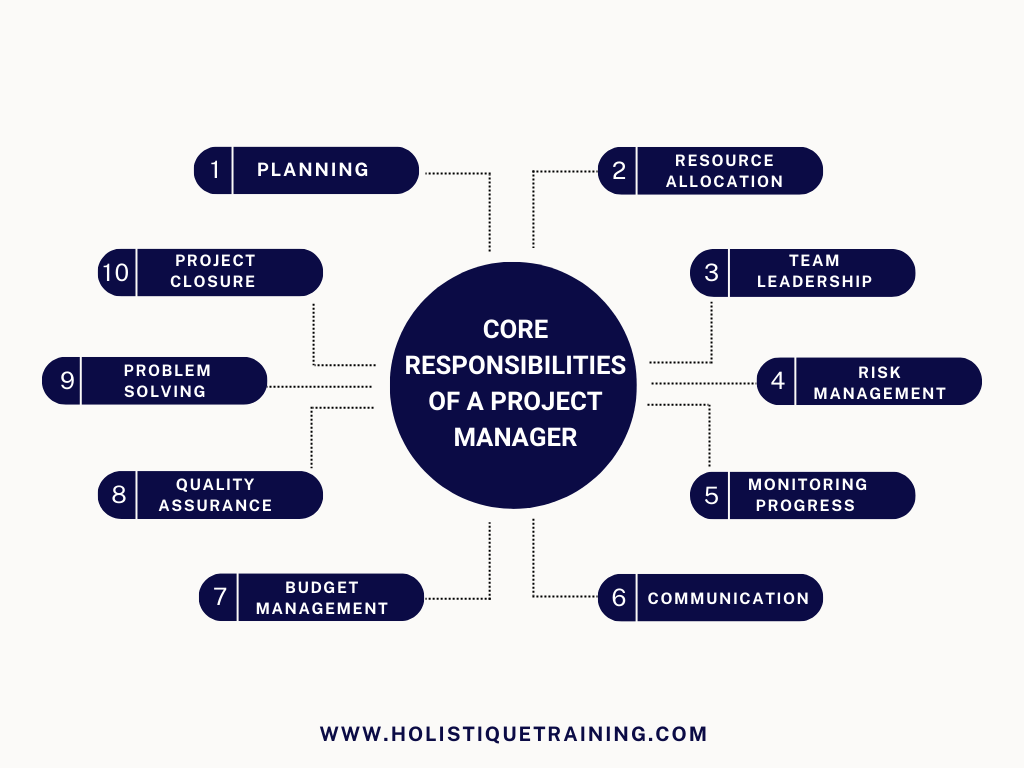
1. Project Planning and Goal Setting
Effective planning is the foundation of successful project management. This involves setting clear, achievable goals, defining steps, and establishing deadlines for each phase. Without a solid plan, projects risk lacking direction, leading to wasted resources and missed deadlines.
Project managers initiate planning by engaging stakeholders to understand expectations and clarify objectives. These objectives are then broken down into actionable milestones, forming a realistic roadmap. For instance, a software development project might include milestones such as requirements gathering, development, testing, and deployment. The plan also covers deadlines, resource allocation, and a communication strategy.
A study by the Project Management Institute (PMI) indicates that organizations with well-defined project plans are 38% more likely to achieve successful outcomes.

This course underscores the vital importance of strategic planning in achieving organisational success. Efficient planning is a fundamental skill applicable across diverse work environments. Through this course, participants will explore how strategic thinking informs planning processes, enabling them to navigate change, manage risks, and optimise outcomes. Additionally,
2. Resource Allocation
Effective resource management is critical. This includes identifying, acquiring, and efficiently utilizing human, financial, and material resources. Project managers ensure resources are allocated optimally to meet demands without overburdening teams or overspending.
For example, during peak periods in a construction project, additional workers might be needed, whereas design reviews require skilled specialists. Resource management also involves prudent budgeting to avoid unnecessary costs.
3. Team Leadership
An exemplary project manager inspires and motivates the team, fostering an environment of collaboration, trust, and open communication. They assign clear roles and responsibilities, ensuring every team member understands their contribution to the project's success.
Leadership also encompasses conflict resolution. Disagreements are natural, but effective managers mediate constructively. Research shows that projects led by strong leaders are 30% more likely to succeed.
4. Risk Management
Identifying potential risks and developing strategies to mitigate them is essential. Risks can range from delays and cost overruns to resource shortages and external market fluctuations.
Effective managers conduct risk assessments at the project's outset and continue monitoring throughout its lifecycle. Tools like risk matrices and SWOT analyses help in prioritizing risks. For instance, when introducing new technology, risks related to user adoption can be mitigated through training or pilot testing.

The fundamentals of project risk management encompass a systematic approach to identifying, assessing, and mitigating potential threats that could impede project success. At its core, this discipline involves recognising uncertainties that may arise throughout the project lifecycle and implementing proactive measures to address them.
5. Monitoring Progress and Reporting
Consistent monitoring ensures projects stay on track. Tools like Gantt charts, dashboards, and performance metrics help track progress against plans. Early identification of deviations allows for timely corrective actions.
Reporting is equally crucial. Regular updates to stakeholders about progress, challenges, and achievements build trust and promote alignment. Transparency also aids informed decision-making.
6. Stakeholder Communication and Engagement
Clear, consistent communication keeps stakeholders informed and engaged. Effective managers provide regular updates, address concerns, and build trust through proactive engagement, ensuring smoother collaboration.
7. Budget Management
Managing finances is one of the most challenging aspects of project management. This involves creating a budget, tracking expenses, and making necessary adjustments to remain within financial constraints. Managers must allocate funds appropriately, avoid unnecessary expenditures, and secure additional funding when required.

Businesses need savvy budgeting systems and reporting techniques to ensure that money is allocated to the necessary areas to stay profitable and ahead of the competition. Stakeholders and clients need to know that the money they invest in the business
8. Quality Assurance
Ensuring deliverables meet or exceed expectations is vital. Managers establish quality standards at the project's start and monitor adherence throughout its progression.
For instance, in software development, rigorous testing phases ensure the final product aligns with user requirements. Prioritizing quality reduces rework and enhances client satisfaction.
9. Problem Solving and Decision Making
Challenges are inevitable. Managers must address problems promptly using critical thinking and data-driven decisions. Whether reallocating resources or resolving technical issues, staying composed under pressure is key to success.
10. Project Closure and Evaluation
Project completion involves more than delivering outputs. Managers oversee formal closure, evaluate outcomes, document lessons learned, and celebrate achievements. This process ensures smooth transitions and informs future improvements.
Effective vs. Ineffective Project Managers
What distinguishes successful project managers from others lies in their approach, skills, and mindset. The table below highlights key differences:
| Aspects | Effective project manager | ineffective project manager |
| Communication Skills | Clear, transparent, proactive | Vague, inconsistent, reactive |
| Leadership Approach | Empowers and inspires | Micromanages or lacks direction |
| Risk Management | Proactively anticipates and plans | Reacts post-problem |
| Time Management | Adheres to deadline and milestones | Frequently misses timelines |
| Decision-Making Process | Data-driven, confident | Hesitant, rushed |
| Stakeholder Relations | Builds strong, positive relationships | Neglects stakeholder engagement |
| Conflict Resolution | Effectively mediates disputes | Allows conflicts to escalate |
Project Management Best Practices
- Set Clear Objectives and Goals: Start with well-defined, measurable, and achievable goals to keep the team aligned.
- Utilize Project Management Tools: Platforms like Trello, Monday.com, and Asana enhance collaboration and task management.
- Conduct Regular Reviews: Frequent evaluations identify issues early and allow for course corrections.
- Embrace Agile Methodologies: Agile practices improve flexibility and responsiveness. The "12th Annual State of Agile Report" shows that 71% of companies adopt Agile for its efficiency benefits.
- Invest in Team Training: Equipping teams with relevant skills increases efficiency. Organizations that invest in training see an 18% rise in project success rates.
Conclusion
Project management transforms visions into reality. A skilled project manager blends technical expertise with leadership qualities to ensure success. By mastering core responsibilities and embracing best practices, individuals can significantly elevate their impact and drive organizational growth.
Looking to enhance your project management skills? Subscribe to our newsletter for more insights or enroll in our certified courses to elevate your expertise to the next level!