
Introduction
Creating a personal brand is a journey of self-discovery, strategic planning, and consistent effort. This blog post will delve into the multifaceted concept of personal branding, exploring its definition, importance, and the common misconceptions surrounding it. We will outline actionable steps for professionals looking to establish their own brands, share expert tips, and discuss how to effectively leverage social media and AI tools in this digital age. By the end of this post, you will have a comprehensive understanding of how to build a personal brand that resonates with your audience and enhances your professional presence.
What is a Personal Brand?
A personal brand is more than just a catchy tagline or a polished LinkedIn profile; it embodies your unique identity, values, skills, and experiences. It is how you present yourself to the world and how others perceive you. Think of it as your professional fingerprint—no two are alike. Your personal brand encompasses your expertise, the way you communicate, your online presence, and even the way you dress.
At its core, a personal brand is about storytelling. It’s the narrative you create around who you are and what you stand for. This narrative is shaped by your experiences, passions, and the value you bring to others. Whether you are a freelancer, a corporate professional, or an entrepreneur, your personal brand can play a crucial role in your career trajectory.
Why is Building a Personal Brand Important?
Building a personal brand is essential for several reasons:
Differentiation in a Crowded Marketplace
In an era where competition is fierce across nearly every industry, having a distinctive personal brand is crucial. A well-defined personal brand allows you to stand out from the crowd by showcasing your unique skills, experiences, and perspectives. For instance, if you’re a graphic designer, your personal brand might highlight your specific design style, your approach to client collaboration, or your expertise in a particular niche, such as sustainable design. This differentiation not only attracts potential clients or employers but also positions you as a go-to expert in your field.
Enhanced Credibility and Trust
According to research by Hinge Marketing, there are five levels of 'visible expertise' that professionals can attain, with those classified as 'global superstars' earning13 times more than experts who lack visibility.
Establishing a personal brand fosters credibility and trust within your professional network. When you consistently present your skills and values through your brand, people begin to recognize you as an authority in your area of expertise. For example, if you regularly share insightful content related to your profession, your audience will start to see you as a knowledgeable resource. This trust is invaluable, as it can lead to recommendations, referrals, and opportunities that might not be available to those without a strong brand. Given that 'global superstars' can earn significantly more due to their visibility, building a robust personal brand is essential for maximizing your professional potential.
Networking Opportunities
A robust personal brand can significantly enhance your networking capabilities. When your brand clearly communicates who you are and what you stand for, it becomes easier for others to connect with you. Networking is not just about exchanging business cards; it’s about building meaningful relationships. A well-articulated personal brand can attract like-minded professionals, mentors, and potential collaborators. For example, if you are known for your innovative approach to project management, you may find yourself in conversations with industry leaders seeking fresh perspectives.
Career Advancement
Your personal brand plays a pivotal role in your career progression. Employers increasingly look for candidates who not only possess the necessary skills but also align with their company culture and values. A strong personal brand can position you as a desirable candidate in the eyes of hiring managers. For instance, if you actively demonstrate your leadership skills and commitment to professional development through your brand, you are more likely to be considered for promotions or leadership roles. Additionally, a well-established brand can lead to job offers and opportunities that align with your career aspirations. Given that50% of employers are prepared to research candidates via their social media profiles, establishing a strong personal brand is more important than ever.
Greater Control Over Your Narrative
One of the most empowering aspects of building a personal brand is the ability to control your narrative. Instead of allowing others to define you based on assumptions or biases, you can curate your story and present it in a way that reflects your true self. This control is particularly important in today’s fast-paced digital world, where information spreads rapidly. By proactivelymanaging your brand, you can ensure that your professional identity aligns with your goals and aspirations. For example, if you wish to pivot your career toward a new industry, your personal brand can help facilitate that transition by highlighting relevant experiences and skills.

This comprehensive course integrates sustainable practices with brand management, focusing on environmental stewardship and social responsibility. Participants will have the knowledge and tools to manage brands sustainably, emphasising the importance of aligning brand values with sustainable development goals. The course covers developing and implementing sustainable brand strategies,
Increased Opportunities for Collaboration
A well-established personal brand not only attracts attention but also creates opportunities for collaboration. When others recognize your expertise and the value you bring, they may reach out to you for partnerships, joint ventures, or collaborative projects. For instance, if you’re a writer known for your insights on digital marketing, you might find opportunities to co-author articles, participate in webinars, or contribute to industry publications. These collaborations can enhance your visibility and expand your network, leading to further opportunities in the future.

In today’s competitive and experience-driven hospitality landscape, successful marketing and branding go beyond promotions—they shape perceptions, drive loyalty, and influence every guest interaction. This course equips participants with the knowledge and tools to develop compelling brand identities and execute effective marketing strategies tailored to the hospitality sector.
Personal Growth and Development
The process of building a personal brand often involves self-reflection, goal setting, and continuous learning. As you work on defining and promoting your brand, you may discover new strengths, interests, and areas for growth. This journey of self-discovery can lead to increased confidence and a clearer sense of purpose in your professional life. Engaging in activities that align with your brand, such as attending workshops or pursuing certifications, can further enhance your skills and knowledge, making you a more well-rounded professional.
Resilience in Times of Change
In today’s rapidly changing work environment, having a strong personal brand can provide a safety net during uncertain times. Whether facing job loss, industry shifts, or economic downturns, a well-established brand can help you pivot more easily. With a recognizable personal brand, you can leverage your existing network and reputation to explore new opportunities or even transition into different career paths. For example, if you have built a brand around your adaptability andproblem-solving skills, you may find it easier to secure freelance work or consulting opportunities during challenging times.
In summary, building a personal brand is not just a trend; it is a strategic necessity in today’s professional landscape. It allows you to differentiate yourself, build credibility, and create meaningful connections. A strong personal brand can enhance your career prospects, empower you to control your narrative, and open doors to new opportunities. By investing in your personal brand, you are not only shaping your professional identity but also setting the foundation for long-term success and fulfillment in your career.
Table: Personal Branding: Then vs. Now
Aspect | Then | Now |
Medium | Primarily print media (business cards, brochures) | Digital platforms (social media, websites, blogs) |
Visibility | Limited to local or industry-specific exposure | Global reach through online presence and networking |
Content Creation | Passive consumption (advertisements, articles) | Active engagement (blogs, videos, social posts) |
Audience Interaction | Minimal interaction (one-way communication) | Direct engagement (comments, shares, feedback) |
Brand Control | Less control over public perception | Greater control through personal narratives and online reputation management |
Busting Myths About Building a Personal Brand
Despite the growing emphasis on personal branding, several myths persist that can hinder individuals from effectively building their brands. Let’s address some of these misconceptions:
Myth 1: Personal Branding is Only for Influencers and Entrepreneurs
Many people believe that personal branding is exclusively for influencers or entrepreneurs who are trying to market themselves or their products. This myth can discourage professionals in traditional corporate roles from investing in their personal brands. In reality, personal branding is relevant for everyone, regardless of their career path. For corporate professionals, a strong personal brand can enhance visibility within their organization and industry, leading to promotions, new job opportunities, and professional recognition. By developing a personal brand, employees can showcase their expertise, values, and contributions, making them more memorable to peers and leaders alike. It’s about creating a professional identity that reflects individual strengths and aspirations, which is valuable in any field.
Myth 2: You Need to Be an Expert to Build a Personal Brand
Another common misconception is that only established experts can successfully create a personal brand. This belief can be intimidating, especially for those who are early in their careers or transitioning into new fields. However, personal branding is not solely about being an authority; it’s about sharing your unique journey, insights, and experiences authentically. Everyone has something valuable to contribute, whether it’s a fresh perspective, a unique skill set, or a passion for learning. By sharing your growth process and insights along the way, you can connect with others who resonate with your journey. Personal branding is about evolving and inviting others to join you on that path, rather than waiting until you reach a certain level of expertise.
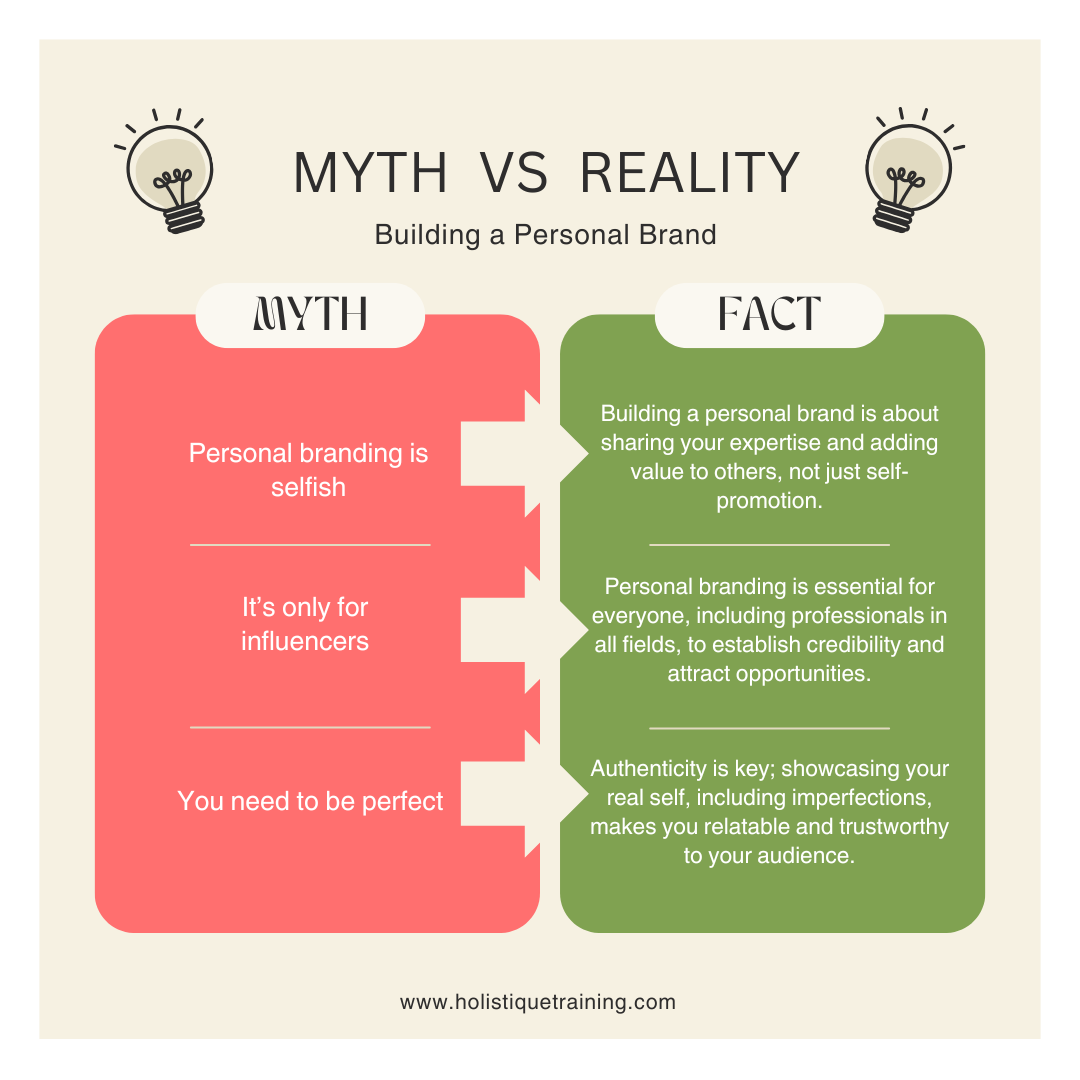
Myth 3: Personal Branding is All About Self-Promotion
The notion that personal branding is synonymous with self-promotion is a significant myth that can lead to discomfort for many individuals. While promoting oneself is a component of personal branding, it should not be the primary focus. Effective personal branding involves providing value to your audience, engaging in meaningful conversations, and building relationships. It’s about sharing knowledge, experiences, and insights that can benefit others. For example, instead of merely touting your achievements, you could create content that helps others solve problems or improve their skills. By prioritizing relationship-building and value creation over self-promotion, you can foster a more authentic and impactful personal brand.
Myth 4: Personal Branding is a One-Time Effort
Some people mistakenly believe that building a personal brand is a one-time effort that can be completed and then forgotten. In reality, personal branding is an ongoing process that requires continuous attention and adaptation. As your career evolves, your experiences, goals, and the landscape of your industry may change, necessitating updates to your personal brand. Regularly assessing your brand allows you to ensure that it accurately reflects your current identity and aspirations. This could involve refreshing your online profiles, updating your content strategy, or reassessing yourtarget audience. By viewing personal branding as a dynamic process rather than a static one, you can maintain relevance and stay connected to your audience.
Myth 5: You Have to Be Perfect
The myth that personal branding requires perfection can be particularly paralyzing for many individuals. This belief can lead to hesitation in sharing your story or engaging with others due to fear of judgment or making mistakes. In truth, authenticity is far more compelling than perfection. People connect with real stories that include challenges, failures, and growth. By embracing your imperfections and sharing your journey honestly, you can create a deeper connection with your audience. This vulnerability fosters relatability and trust, allowing others to see you as a genuine individual rather than an unattainable ideal. Building a personal brand is about celebrating your uniqueness, flaws and all, and inviting others to learn and grow alongside you.
Steps to Building Your Personal Brand as a Professional
Creating a personal brand requires a strategic approach. Here are the essential steps to get started:
1. Self-Reflection
The foundation of a compelling personal brand lies in self-reflection. This step involves taking a deep dive into your values, strengths, weaknesses, and passions. Consider the following aspects:
- Values: What principles guide your decisions and actions? Identifying your core values will help you align your brand with what truly matters to you.
- Strengths and Skills: What are you particularly good at? Assessing your skills can help you determine what to highlight in your branding efforts.
- Passions: What activities or topics excite you? Your passions can inform the content you create and the audience you wish to engage.
- Unique Experiences: Reflect on your life and career experiences that have shaped who you are today. These narratives can be powerful components of your brand story.
By understanding these elements, you can create a clear picture of your brand identity, which serves as a guiding light throughout your branding journey.
2. Define Your Target Audience
Identifying your target audience is a critical step in personal branding. Understanding who you want to reach will inform your messaging and content strategy. Consider the following:
- Demographics: Who are the people you want to connect with? Consider their age, profession, location, and other relevant factors.
- Interests and Needs: What are the interests, challenges, and needs of your audience? Understanding these aspects will help you tailor your content to provide value.
- Professional Goals: What do you hope to achieve with your personal brand? Are you looking to attract potential employers, clients, or collaborators? Defining your goals will help you craft a focused brand message.
By clearly defining your target audience, you can create a more effective branding strategy that resonates with the people you want to influence.
3. Craft Your Brand Statement
A brand statement is a concise summary that encapsulates who you are, what you do, and the value you provide. This statement should be clear, memorable, and reflective of your unique identity. Consider the following structure:
- Who You Are: Start with your professional title or area of expertise.
- What You Do: Describe the specific services or skills you offer.
- Value Proposition: Highlight what sets you apart and the benefits your audience can expect from engaging with you.
For example: "I am a digital marketing strategist dedicated to helping small businesses enhance their online presence through tailored content and data-driven strategies."
This brand statement serves as a foundation for your messaging across various platforms, ensuring consistency and clarity in your communication.

The "Strategic Digital Marketing and Brand Management" course offers an in-depth exploration of modern marketing strategies and brand management techniques in the digital era. Designed for marketing professionals, entrepreneurs, and business leaders, this five-day intensive course focuses on the strategic application of digital tools, the integration of
4. Build an Online Presence
In today’s digital world, having a strong online presence is essential for personal branding. Start by optimizing key platforms:
- LinkedIn: Create a professional profile that highlights your skills, experiences, and accomplishments. Use a professional photo and craft a compelling summary that incorporates your brand statement.
- Personal Website or Blog: Consider creating a personal website where you can showcase your portfolio, share insights, and provide resources. A blog can serve as a platform for sharing your expertise and engaging with your audience.
- Social Media Profiles: Choose social media platforms that align with your target audience and professional goals. Ensure that your profiles reflect your brand identity and maintain consistency in visuals and messaging.
Your online presence is often the first impression people have of you, so it’s essential to present a cohesive and professional image.
5. Create Valuable Content
Content creation is a powerful way to establish your expertise and engage with your audience. Focus on producing high-quality content that provides value. Here are some ideas:
- Blog Posts: Write articles on topics relevant to your field, sharing insights, tips, or case studies that demonstrate your knowledge.
- Videos: Create video content that showcases your expertise, such as tutorials, interviews, or thought leadership pieces.
- Podcasts: Consider starting a podcast where you discuss industry trends, interview experts, or share your experiences.
- Social Media Updates: Share relevant articles, quotes, or personal reflections that align with your brand and resonate with your audience.
By consistently creating valuable content, you can position yourself as a thought leader in your field and build aloyal following.
6. Network Strategically
Networking is a vital component of personal branding. Building relationships with others in your industry can lead to valuable opportunities. Consider the following strategies:
- Attend Industry Events: Participate in conferences, workshops, and networking events to meet professionals in your field. Engage in conversations and exchange ideas to build connections.
- Join Professional Organizations: Becoming a member of industry-specific organizations can provide access to resources, networking opportunities, and professional development.
- Leverage Online Networking: Use platforms like LinkedIn to connect with professionals, engage in discussions, and share insights. Participate in relevant groups to expand your network and visibility.
Networking is not just about what you can gain; it’s also about how you can contribute to others. Building genuine relationships can lead to collaborations, mentorships, and referrals.
7. Seek Feedback
Feedback is an invaluable tool in the personal branding process. It can help you identify strengths, areas for improvement, and blind spots in your branding efforts. Here’s how to effectively seek feedback:
- Ask for Input: Reach out to colleagues, mentors, or friends and ask for their perspectives on your brand. What do they perceive as your strengths? What could be improved?
- Conduct Surveys: Consider creating surveys or polls to gather feedback from your audience regarding your content and brand presence.
- Engage in Self-Assessment: Regularly assess your own branding efforts. Are you meeting your goals? Is your messaging resonating with your audience?
Constructive criticism can help you refine your approach and ensure that your brand remains relevant and impactful.
8. Stay Consistent
Consistency is key when building a personal brand. It helps reinforce your identity and makes you more recognizable to your audience. Here are some tips for maintaining consistency:
- Visual Identity: Use consistent colors, fonts, and imagery across all your online platforms to create a cohesive visual identity.
- Messaging: Ensure that your messaging aligns with your brand statement and reflects your values and expertise. Avoid shifting your focus too frequently, as this can confuse your audience.
- Content Schedule: Establish a content schedule to ensure regular posting and engagement. Consistency in sharing content keeps your audience engaged and reinforces your brand.
By maintaining consistency, you can build trust and familiarity with your audience, making it easier for them to connect with your brand.
9. Evolve with Your Career
As your career progresses, your personal brand should evolve alongside you. Regularly assess your brand to ensure it accurately reflects your current identity and aspirations. Consider the following:
- Update Your Brand Statement: As you gain new experiences or shift your focus, update your brand statement to reflect your growth.
- Refresh Your Online Presence: Regularly update your online profiles and content to showcase your latest achievements, skills, and insights.
- Adapt to Industry Changes: Stay informed about trends and changes in your industry, and be willing to pivot your brand strategy as needed.
Embracing evolution in your personal brand allows you to stay relevant and aligned with your professional goals.
In summary, building a personal brand as a professional is a structured process that involves self-reflection, strategic planning, and consistent effort. By following these steps—self-reflection, defining your audience, crafting a brand statement, building an online presence, creating valuable content, networking, seeking feedback, maintaining consistency, and evolving with your career—you can establish a personal brand that resonates with your audience and enhances your professional identity. This journey not only empowers you to take control of your narrative but also opens doors to new opportunities and success in your career.
Pro Tips When Building a Personal Brand
Building a personal brand requires strategic thinking and thoughtful execution. Here are some pro tips that can enhance your branding efforts:
1. Be Authentic
Authenticity is the cornerstone of a strong personal brand. When you present yourself genuinely, you foster trust and relatability with your audience. People are drawn to real stories and experiences, so being true to yourself allows others to connect with you on a deeper level. Embrace your unique qualities and share your journey, including both successes and challenges, to create a more compelling narrative.
2. Leverage Social Media Wisely
Social media platforms are powerful tools for personal branding, but they must be used strategically. Choose platforms that align with your target audience and professional goals, and ensure that your content is tailored to each platform's unique culture and audience expectations. Regularly engage with your followers by responding to comments and participating in discussions, as this interaction helps build a community around your brand. Additionally, curating and sharing relevant content can position you as a thought leader in your field.
3. Network with Purpose
Networking is not just about collecting contacts; it's about building meaningful relationships. Approach networking with a mindset of giving rather than just receiving. Seek opportunities to support others, whether through sharing their content, offering advice, or making introductions. This approach fosters goodwill and can lead to reciprocal support in the future. Attend events and connect with individuals who share your interests, as these relationships can lead to collaborations and opportunities that align with your brand.
4. Stay Informed About Industry Trends
Being knowledgeable about industry trends is essential for maintaining relevance in your personal brand. Regularly consume content related to your field—such as articles, podcasts, and webinars—to stay updated on emerging trends and best practices. This knowledge not only informs your content but also positions you as a credible source of information within your network. Engaging in conversations about these trends can also demonstrate your expertise and thought leadership.
5. Invest in Professional Development
Continuous learning is vital for personal growth and brand evolution. Seek out opportunities for professional development, such as workshops, courses, or certifications, that align with your career goals. These investments not only enhance your skills but also provide fresh content and insights to share with your audience. By demonstrating a commitment to learning, you reinforce your brand as one that values growth and innovation, which can attract like-minded professionals and opportunities.
6. Be Patient and Persistent
Building a personal brand is a long-term endeavor that requires patience and persistence. Results may not be immediate, and it’s crucial to remain committed to your branding efforts even when progress seems slow. Consistently producing quality content and engaging with your audience will gradually establish your presence and credibility. Celebrate small milestones along the way to stay motivated, and remember that a successful personal brand is built over time through dedication and consistent effort.
7. Monitor Your Online Reputation
Your online reputation can significantly impact your personal brand, making it essential to monitor what is being said about you. Regularly search for your name on search engines and review your social media profiles to ensure they reflect your desired image. Address any negative feedback or misinformation promptly and professionally. By actively managing your online presence, you can maintain a positive reputation that aligns with your brand values and objectives.
Here’s a table that outlines key social media metrics to measure the effectiveness of your personal brand:
Metric | Description |
Engagement Rate | Measures interactions (likes, comments, shares) relative to total followers, indicating how well your content resonates with your audience. |
Follower Growth Rate | Tracks the increase in followers over time, reflecting the expanding reach and appeal of your personal brand. |
Reach and Impressions | Reach indicates how many unique users saw your content, while impressions show how many times your content was displayed, helping assess visibility. |
Click-Through Rate (CTR) | The percentage of users who clicked on links in your posts, indicating the effectiveness of your calls to action and content relevance. |
Profile Visits | Counts how many times your profile was viewed, providing insight into interest in your personal brand and prompting further engagement. |
8. Embrace Feedback and Adapt
Feedback is a valuable resource for refining your personal brand. Encourage your audience and peers to share their thoughts on your content and brand presence, and be open to constructive criticism. Use this feedback to make informed adjustments to your branding strategy. Embracing feedback not only helps you improve but also demonstrates your willingness to grow and adapt, which can resonate positively with your audience.
By incorporating these pro tips into your personal branding strategy, you can enhance your efforts and create a more impactful and authentic brand. Remember that building a personal brand is an ongoing journey that requires dedication, adaptability, and a genuine connection with your audience. Embrace the process, and you’ll find that your personal brand can open doors to new opportunities and relationships in your professional life.
Leveraging Social Media and AI Tools
Social media platforms and AI tools offer powerful resources for building and enhancing your personal brand. Here’s how to leverage these tools effectively:
1. Choose the Right Platforms
Not all social media platforms are suitable for personal branding. Identify which platforms align best with your target audience and professional goals. LinkedIn, X (formerly Twitter), and Instagram are popular choices for professionals, but choose the ones that resonate with your brand.

Social media has revolutionised the way we communicate as a society. Every region of the world partakes in social media and has developed its own platforms specific to its interests and social needs. This has opened up a whole new marketing method for businesses and
2. Create Consistent Content
Use social media to share valuable content that reflects your brand. Consistency in posting and messaging helps reinforce your brand identity. Consider creating a content calendar to plan your posts and ensure a steady flow of content.
3. Engage in Conversations
Social media is a two-way street. Engage with your audience by responding to comments, participating in discussions, and sharing relevant content from others. Building relationships through engagement can enhance your brand’s visibility and credibility.
4. Utilize AI Tools for Efficiency
AI tools can streamline various aspects of personal branding. Consider using AI content creation tools to generate ideas, automate social media posting, or analyze engagement metrics. These tools can save you time and help you focus on strategic branding efforts.
5. Analyze and Adjust
Regularly analyze your social media performance to understand what resonates with your audience. Use insights and analytics to refine your content strategy, focusing on what works best for your brand.
Conclusion
Building a personal brand is a dynamic and rewarding process that requires self-reflection, strategic planning, and consistent effort. By understanding what a personal brand is and why it matters, addressing common myths, and following actionable steps, you can create a brand that reflects your unique identity and resonates with your audience.
Embrace authenticity, leverage storytelling, and engage with your audience to foster meaningful connections. In today’s digital landscape, social media and AI tools can amplify your efforts, helping you reach a broader audience and establish yourself as a credible professional.
As you embark on your personal branding journey, remember that it is an ongoing process. Continuously learn, adapt, and refine your brand to stay relevant in an ever-evolving marketplace. With dedication and strategic effort, you can build a personal brand that not only enhances your professional presence but also opens doors to new opportunities and success.