
Introduction
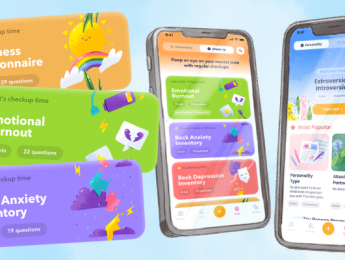
The Breeze app is a mental health app built to develop healthy habits and self-exploration on a long-term basis. Its aim is to help users support themselves daily to create a lasting impact on mental well-being.
We will review all nine core features of Breeze Mental Health. Most features are based on research and evidence-based strategies, but everybody has to decide on their own whether the app is for them. Explore more about the app before trying Breeze to save yourself time and money.

Quizzes
A safe entry point to the Breeze app is its self-discovery tests. It's the first mental health app on the market to have this extended variety of quizzes and evaluations. There are both fun and more serious tests. For example, fun quizzes for self-exploration include:
- True zodiac sign
- Humor style
- Jungian archetype
- Love language
- Perfect career
Other evaluations focus more on healing. From the reviews on App Store and Google Play, we see that 60% of new users opt to try Breeze as an entry point to professional diagnosis or therapy. Here are some tests users mention the most frequently:
- Attachment style
- Childhood trauma
- ADHD screening
- Neurodivergent features
- OCD evaluation
The Breeze app warns that these tests cannot replace an official screening at the doctor's office, although they are created by mental health specialists.
A key strength of the self-discovery tests is that the value lies more in the questions than in the final result. At the same time, it's important to understand that results are best viewed as hypotheses or starting points for reflection, not conclusions. Follow the recommendations with caution. Only you know what's best for you.

Journaling
Journaling in the Breeze app consists of 3 parts: Foster Gratitude, Calm Anxiety , and Release Worry. These three parts have their own prompts to fulfill their mission. Here are some examples of prompts:
Foster Gratitude
- Who has brightened your day?
- What are 3 small things that were good about the day?
- Write down one reason why you feel proud of yourself today.
- What caught your eye today?
- What is one nice thing you did for yourself today?
Calm Anxiety
- I felt anxious when...
- What situation in the past made you so alert?
- How does your body feel at the moment?
- What can you do today to make you feel safer?
- Name one thing you did today to take care of yourself.
Release Worry
- What was the most distressing moment today?
- How did you handle this situation?
- Where in your body did you feel stress from this situation?
- Write one lesson that you learned from this situation.
- What will you do to unwind today?
The guided prompts are best recommended to beginners in journaling or self-care. Breeze Mental Health also has a freewriting journaling option for advanced users or those who need to share something out of the scope of guided prompts.
In order to make journaling a habit stick, you can use Breeze's routine builder. Add journaling as a task, and you'll be getting reminders.

Mood Tracker
The mood tracker is a part of daily journaling in Breeze Self-Discovery. Mood tracker consists of these elements:
- Your Note . A space for unrestricted journaling.
- Mood . A mood scale from Unhappy to Happy to describe general emotional well-being that day.
- Feelings . A wheel of positive/negative emotions that users can choose from. There's a huge choice of nuanced emotions, but users can also edit the list of their personal emotions and even add their own.
- Activities . Choose what you did that day to connect emotions to actions. You can also add your own activities.
- Photo . Add a photo of that day to capture the moment or illustrate something specifically.
The mood tracker in Breeze Wellbeing is designed not only to provide an overview of emotions but also to explain them. By adding extra notes, activities, and photos, users can clearly relate events of the day with their reactions and learn how to avoid/prepare for stressful situations.
However, mood tracking is most effective when it's used as an observation tool rather than a performance metric. Checking in shouldn't become a source of pressure or self-criticism. Lower the expectations and track your feelings objectively without masking. By tracking feelings for a while, it's possible to advance emotional intelligence and literacy.
Analytics
Mood analytics is a continuation of the mood tracking feature in the Breeze app. This feature summarizes the mood data into trends and insights. Mood analytics of Breeze Mental Health will only work accurately if users track their mood consistently for at least a week.
The analytics feature can count the average mood of the week, month, and year. It also shows in percentages how much of certain activities you did and how they made you feel. Say, you listened to music all day long and were feeling unfocused, the Breeze app may show you that these two things might be related, and you can analyze and experiment.
That said, analytics are most helpful when reviewed periodically rather than constantly. Obsessive checking can increase self-monitoring anxiety or lead to overinterpretation of normal fluctuations.

Routines
The routine plan feature focuses on building structure through small, repeatable actions rather than rigid schedules. This feature is one of the reasons to try Breeze if you want to introduce healthier habits but fail consistently.
The routine builder feature in the Breeze app is based on the approach of consistency > perfection. It means that a person will achieve their aim sooner or later if they do at least something every day. So, better something than nothing.
The reason why most habits fail to stick is that people set unrealistic expectations. It's impossible to "get jacked" immediately, but going to a gym twice a week is a doable task for a beginner. With time, the intensity and frequency of habits can, of course, be adjusted.
You can choose a health habit to develop from Breeze's library (mindfulness, drinking a bunch of water, journaling, etc.) or create your own. The tasks can be anything, and you can even use Breeze Wellbeing as your personal, customizable to-do list.
Games
Relaxation games in the Breeze app are designed to support short-term nervous system regulation. Such exercises can be handy in highly emotional moments, when feelings are intense. Games give the brain time to sort out thoughts.
Here's the library of games in the Breeze Mental Health app:
- Flower Chain . Catching flowers with calming music in the background. Satisfies stimulation needs while also training attention and fine motor skills.
- Mindful Breathing . A game for those who want to try mindfulness/meditation but find it too hard to try. The sessions last just a few minutes, but they're enough to provide relaxation.
- Calming Waters . A background with satisfying images and water textures you can tap, and music plays. Another way to satisfy stimulation needs, but without the harms of social media or fast content.
These features can be helpful during moments of stress, overstimulation, or mental fatigue. The strength of these games lies in their simplicity. They provide sensory-focused engagement that can calm the nervous system and reduce immediate tension.

Personal Achievements
The personal achievements are designed to highlight consistency and effort rather than perfection. There is a streak in the Breeze app that keeps running if the user completes all the tasks set by them in the routine builder.
Users can also get in-app achievement badges for completing Breeze's self-discovery quizzes. For example,
- Personality time grants a badge with your personality type.
- Identity tests give badges with your results (introvert, optimist, non-abusive, etc.)
These badges are saved in the user's profile. These badges can be changed when retaking a test. It might be a sign of maturity and evolution.
Affirmations
Daily affirmations in the Breeze app are designed to help users overcome negative self-beliefs. Although affirmations are simply daily cards with nice messages, they are very effective in introducing more compassion and positivity.
Why do Breeze Wellbeing's affirmations work? Because they are grounded, simple, and directed to the user. Statements about growth, self-worth, and acceptance will work best if users read them out loud and take a moment to think about how these statements concern them.
Affirmations can also be shared on social media or in personal messages if there's someone you know who needs to hear these exact words.

Social Sharing
The social sharing feature is the feature of Breeze Wellbeing that allows users to exchange insights from the app. Users can share:
- Results from self-discovery tests
- Affirmations
- Profile summary
- Invitations to complete certain quizzes
- Badges and achievements
The social feature isn't compulsory, and users can remain anonymous if they want. The reviews say that users liked this feature for building a stronger connection with their close ones and having new topics for discussions. They write that they couldn't find words to describe certain aspects of their lives to their partners/families, and the test results helped them verbalize their struggles.
Conclusion
Breeze Wellbeing is best understood as a self-discovery tool rather than a cure to emotional problems. Like any mental health app, the value of Breeze's 9 features depends on how they are used. Trying Breeze will be most effective for those who approach it as a space for honest reflection. When integrated into daily life thoughtfully, it can support personal growth, but it works best alongside self-awareness, patience, and professional support when needed.