
- Table of Contents
- 1. Introduction:
- 2. Understanding Decision Authority in Operations Management
- Centralised vs Decentralised Decision-Making
- Strategic, Tactical, and Operational Decision Authority
- Formal Authority vs Informal Decision Influence
- Governance, Policies, and Delegation Frameworks
- 3. Theoretical Foundations Linking Authority to Financial Performance
- 4. Decision Speed and Its Impact on Operational Income
- 5. Cost Control and Budget Ownership in Operations
- Budget Overruns vs Cost Discipline
- 6. Revenue Generation Through Empowered Operational Teams
- 7. Risk Management and Financial Stability
- 8. Decision Authority, Employee Engagement, and Productivity
- 9. Digital Transformation and Decision Authority
- 10. Industry-Specific Impacts on Operations Income
- Healthcare: Cost Efficiency vs Patient Outcomes
- 11. Balancing Control and Autonomy: Best-Practice Models
- 12. Common Pitfalls and Financial Consequences
- 13. Strategic Recommendations for Leaders
- 14. Conclusion:
1. Introduction:
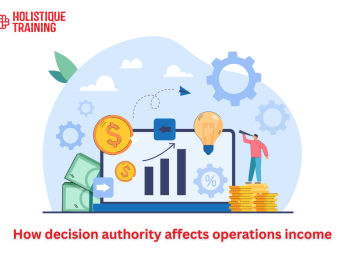
Decision authority refers to the formal and informal power granted to individuals or teams to make choices that directly influence operational activities. In an operational context, decision authority determines who approves spending, adjusts workflows, resolves disruptions, negotiates with suppliers, or responds to customer demands. While often discussed as a governance or leadership issue, decision authority is increasingly recognised as a critical financial lever that shapes operational income.
In modern organisations, operations income is no longer driven solely by production volume or service capacity. It is deeply influenced by how quickly and effectively decisions are made at different operational levels. Delays in approvals, unclear ownership, or excessive escalation layers can result in missed revenue opportunities, cost overruns, service disruptions, and reputational damage. Conversely, well-designed decision authority structures enable faster responses, better cost control, and improved revenue generation.
As markets become more volatile and customer expectations continue to rise, organisations are under pressure to shorten decision cycles while maintaining financial discipline. This tension places decision authority at the centre of operational performance. Authority structures influence how resources are allocated, how risks are managed, and how innovation emerges within operations. When authority is aligned with responsibility and information access, operational teams can act decisively in ways that protect and enhance income.
This article examines how decision authority affects operations income through multiple lenses, including operational efficiency, cost control, revenue generation, risk management, employee engagement, and digital transformation. Drawing on management theory, empirical studies, and industry examples, it presents a structured analysis of how authority design can either amplify or erode financial performance. The analytical framework moves from conceptual foundations to practical implications, offering leaders clear insights into treating decision authority as a strategic income driver rather than an administrative afterthought.
2. Understanding Decision Authority in Operations Management
Decision authority in operations management defines who has the right to decide, at what level, and under which conditions. It is shaped by organisational structure, leadership philosophy, regulatory requirements, and operational complexity. Understanding its dimensions is essential to assessing its financial impact.
Centralised vs Decentralised Decision-Making
Centralisation and decentralisation represent two ends of a spectrum in authority design. Most organisations operate with hybrid models, yet the balance chosen significantly affects operational income.
Aspect | Centralised Decision Authority | Decentralised Decision Authority |
Decision speed | Slower due to approval layers | Faster at operational level |
Cost control | Strong standardisation | Risk of inconsistency |
Responsiveness | Limited local adaptation | High customer responsiveness |
Income impact | Stable but potentially constrained | Higher growth potential with higher risk |
While centralised authority can reduce financial risk through tighter controls, it often limits the organisation’s ability to capture time-sensitive revenue or respond to operational disruptions efficiently.
Strategic, Tactical, and Operational Decision Authority
Decision authority operates across three levels. Strategic authority concerns long-term investment, capacity planning, and pricing models. Tactical authority focuses on resource allocation, scheduling, and process optimisation. Operational authority governs day-to-day decisions such as order fulfilment, service recovery, and minor procurement. Misalignment between these levels often leads to income leakage, as operational teams may lack authority to act on revenue-critical situations.
Formal Authority vs Informal Decision Influence
Beyond organisational charts, decision authority also exists informally through expertise, relationships, and experience. Informal influence can either compensate for rigid structures or undermine formal accountability.
Dimension | Formal Authority | Informal Influence |
Source | Job role and policy | Expertise and trust |
Visibility | Documented | Often undocumented |
Financial impact | Predictable | Variable but significant |
Risk | Bureaucratic delay | Accountability gaps |
Governance, Policies, and Delegation Frameworks
Governance mechanisms define boundaries for authority through policies, approval thresholds, and escalation paths. Effective delegation frameworks clarify decision rights while preserving financial oversight, ensuring that operational decisions contribute positively to income rather than exposing the organisation to uncontrolled risk.
3. Theoretical Foundations Linking Authority to Financial Performance
The relationship between decision authority and financial performance is well grounded in management and economic theory. These theoretical perspectives explain why authority allocation directly affects operational income.
Agency theory focuses on the relationship between principals and agents, highlighting how decision rights influence behaviour. When operational managers lack authority but retain responsibility for results, misaligned incentives emerge. This often results in risk avoidance, delayed decisions, and reduced income potential. Conversely, granting appropriate authority aligns incentives and improves financial outcomes.
Transaction cost economics examines the costs associated with coordination, monitoring, and enforcement. Excessive centralisation increases transaction costs through prolonged approvals and information asymmetry. Decentralised authority reduces these costs by enabling local decision-making, thus improving operational efficiency and income generation.
The resource-based view (RBV) positions empowered human capital as a strategic asset. When employees are trusted with decision authority, their knowledge and problem-solving capabilities translate into operational advantages that competitors struggle to replicate. This directly supports sustained income growth.
Authority allocation also affects operational friction. Poorly designed authority structures increase friction through duplication, rework, and conflict, all of which erode income. Clear authority reduces friction, accelerates execution, and enhances financial performance.
A study by Harvard Business Review demonstrates that organisations with clearly defined decision rights outperform peers financially by up to 20% due to faster execution and improved accountability.
4. Decision Speed and Its Impact on Operational Income
Decision speed is a critical determinant of operational income. Every delay in decision-making carries an opportunity cost, whether through lost sales, idle capacity, or increased operating expenses.
Time-to-decision affects both revenue and cost structures. In procurement, slow approvals can result in higher input costs or missed volume discounts. In production, delayed decisions may increase downtime and reduce throughput. In service environments, slow responses lead to customer dissatisfaction and revenue loss.
Excessive approval layers are a common bottleneck. When decisions must pass through multiple hierarchical levels, operational momentum is lost. These delays often stem from unclear authority boundaries rather than risk considerations.
Accelerated decision-making enables operational teams to respond to demand fluctuations, resolve issues proactively, and exploit short-term revenue opportunities. For example, a manufacturing firm that empowers plant managers to approve overtime during demand spikes can capture additional revenue that would otherwise be lost.
Case comparisons consistently show that organisations with streamlined authority structures outperform those with rigid hierarchies. Faster decisions translate into improved asset utilisation, reduced waste, and higher operational income.
5. Cost Control and Budget Ownership in Operations
Decision authority plays a decisive role in cost management. When operational managers have ownership over budgets but lack authority to control expenses, financial discipline deteriorates.
Budget ownership creates accountability. Managers with authority over procurement, staffing, and maintenance can align spending with operational priorities. Without this authority, cost overruns become common, as decisions are made by distant actors without operational context.
Budget Overruns vs Cost Discipline
Clear authority boundaries distinguish disciplined operations from those plagued by inefficiencies.
Dimension | Weak Authority Alignment | Strong Authority Alignment |
Cost visibility | Limited | High |
Budget adherence | Frequent overruns | Consistent control |
Decision accountability | Diffused | Clear ownership |
Income impact | Margin erosion | Income optimisation |
Operational managers’ authority over procurement enables negotiation flexibility and supplier responsiveness. Authority over staffing allows timely adjustments to workload fluctuations. Control over maintenance and resources prevents costly breakdowns andunplanned downtime.
Cost visibility is enhanced when authority and accountability are aligned, enabling managers to make informed trade-offs that protect income margins.
6. Revenue Generation Through Empowered Operational Teams
Empowered operational teams contribute directly to revenue generation. Frontline authority enables rapid responses to customer needs, improving satisfaction and retention.
Decision authority over pricing adjustments, discounts, and service recovery allows teams to preserve revenue that might otherwise be lost due to rigid policies. For example, a logistics supervisor authorised to reroute shipments or approve compensation can prevent customer churn.
Operational innovation thrives in environments where teams have authority to experiment and improve processes. Such innovations often lead to new revenue streams or cost-efficient service models.
In manufacturing, empowered teams optimise production schedules to meet urgent orders. In logistics, local decision authority improves route efficiency. In healthcare, empowered clinical operations reduce inefficiencies while maintaining care quality. In service industries, frontline authority enhances upselling and cross-selling opportunities.
7. Risk Management and Financial Stability
Clear decision authority is fundamental to effective risk management. Ambiguity in authority creates gaps where risks go unmanaged, leading to financial losses.
When authority is unclear, decisions are delayed or avoided, allowing issues to escalate. Compliance failures, quality defects, and operational disruptions often stem from unclear ownership rather than technical shortcomings.
Balancing autonomy with controls ensures that empowered decisions do not expose the organisation to excessive financial risk. Guardrails such as spending limits, compliance checks, and escalation protocols maintain stability while preserving agility.
Financial stability improves when authority structures enable swift corrective action without bypassing essential controls.
8. Decision Authority, Employee Engagement, and Productivity
Decision authority strongly influences employee engagement. Psychological ownership emerges when individuals feel trusted to make meaningful decisions, leading to higher productivity and better financial outcomes.
Engaged employees take proactive steps to improve processes, reduce waste, and protect income. Authority reduces rework and inefficiencies by enabling first-time-right decisions.
Authority also drives accountability. Employees who control decisions are more invested in outcomes, reducing errors and operational leakage.
A Gallup study shows that highly engaged teams achieve 21% higher profitability than disengaged ones, largely due to faster decision-making and improved operational execution.
9. Digital Transformation and Decision Authority
Digital transformation reshapes decision authority by providing real-time data and analytical tools. Dashboards, AI systems, and predictive analytics decentralise decision-making by equipping operational teams with actionable insights.
AI-enabled systems support faster financial decisions, such as inventory replenishment or dynamic pricing. However, algorithmic authority without human oversight introduces new risks, including bias and loss of contextual judgment.
Effective digital authority combines data-driven insights with human accountability, ensuring that technology enhances rather than replaces responsible decision-making.

Analytics are vital for making informed business decisions and maximising operational value. This approach emphasises the importance of collecting qualitative and quantitative data from all sources to comprehensively understand before implementing procedural changes. Reliable and accessible systems are essential for storing and recalling this data,
10. Industry-Specific Impacts on Operations Income
The effect of decision authority on operations income varies significantly across industries, shaped by differences in operational complexity, regulatory pressure, risk tolerance, and customer expectations. While the core principles of authority design remain consistent, their financial implications manifest differently depending on sector-specific dynamics.
Manufacturing: Throughput, Downtime, and Yield
In manufacturing environments, decision authority has a direct and measurable impact on throughput, equipment utilisation, and production yield. When shop-floor supervisors and plant managers are empowered to make real-time decisions regarding maintenance scheduling, overtime approval, or production adjustments, organisations experience reduced downtime and improved output consistency. Conversely, highly centralised decision authority often delays responses to machine failures or supply disruptions, leading to idle capacity and lost production income. Clear authority over operational interventions enables faster recovery from disruptions and improves yield rates, directly strengthening operational margins.
Healthcare: Cost Efficiency Versus Patient Outcomes
Healthcare operations operate under unique constraints, where financial efficiency must be balanced with patient safety and care quality. Decision authority design plays a crucial role in achieving this balance. Excessive centralisation can slow clinical and administrative decisions, increasing waiting times and operational costs, while uncontrolled decentralisation may compromise standardisation and financial oversight.
Decision Authority Model | Cost Efficiency | Patient Outcomes |
Highly centralised authority | Strong cost control | Slower service delivery |
Balanced authority with guardrails | Sustainable cost efficiency | Improved care quality |
Excessive decentralisation | Cost escalation | Inconsistent outcomes |
Empowering clinical and operational leaders within clearly defined financial and regulatory boundaries has been shown to improve both efficiency and patient experience, contributing to long-term financial sustainability.
Retail and Services: Frontline Authority and Revenue Leakage
In retail and service industries, operations income is highly sensitive to frontline decision-making. Employees who lack authority to resolve customer issues, approve returns, or offer limited discounts often escalate minor problems, resulting in customer dissatisfaction and revenue leakage. Granting controlled authority to frontline staff improves service recovery, increases customer retention, and enhances upselling and cross-selling opportunities. In these sectors, decision authority functions as a revenue protection mechanism as much as a growth driver.
NGOs and Donor-Funded Operations: Financial Sustainability
For NGOs and donor-funded organisations, decision authority affects income sustainability rather than profit generation. Clear authority structures ensure timely project implementation, compliance with donor requirements, and efficient resource utilisation. When authority is unclear or overly centralised, delays in procurement or programme adjustments can lead to funding inefficiencies, reputational damage, and reduced donor confidence. Empowered field teams, operating within strict accountability frameworks, are better positioned to deliver impact while safeguarding financial continuity.
A McKinsey Global Institute study highlights that organisations across sectors with faster and more decentralised decision-making structures are more financially resilient and outperform peers in operational efficiency.
11. Balancing Control and Autonomy: Best-Practice Models
Best-practice organisations recognise that sustainable operations income depends on achieving an effective balance between managerial control and operational autonomy. Rather than viewing control and empowerment as opposing forces, high-performing organisations integrate both through clearly defined decision-rights frameworks that support accountability while enabling speed and adaptability. This balance ensures that operational decisions contribute positively to income without exposing the organisation to unmanaged financial risk.
One of the most widely adopted tools is the RACI matrix, which clarifies who is Responsible, Accountable, Consulted, and Informed for each operational decision. When applied consistently, RACI frameworks eliminate ambiguity, reduce decision duplication, and prevent costly delays. By clearly defining ownership, organisations enable faster execution while maintaining financial oversight, directly supporting income stability and growth.
Delegation matrices further refine authority allocation by linking decision rights to financial thresholds. These matrices specify which roles can approve expenditures, pricing adjustments, or contractual commitments within defined limits. Such clarity prevents unnecessary escalation for routine decisions while ensuring that high-impact financial choices receive appropriate scrutiny. As a result, operational managers can act decisively within their remit, improving cost efficiency and revenue responsiveness.
Increasingly, organisations are replacing micromanagement with guardrails. Guardrails establish clear boundaries through policies, performance targets, and compliance standards rather than constant supervisory intervention. Within these boundaries, teams are free to exercise judgment and innovate. The effectiveness of authority design is measured using income-related metrics such as margin improvement, revenue growth, cost-to-serve ratios, and asset utilisation. When authority structures are aligned with these metrics, decision-making becomes a deliberate driver of financial performance rather than a procedural constraint.
12. Common Pitfalls and Financial Consequences
Despite the strategic importance of decision authority, many organisations fall into structural traps that undermine operational income. Over-centralisation is one of the most common pitfalls. When decision power is concentrated at senior levels, operational responses slow significantly, leading to missed sales opportunities, delayed service recovery, and inefficient resource utilisation. While intended to reduce risk, excessive centralisation often increases hidden costs and limits revenue potential.
At the opposite extreme, excessive decentralisation can result in cost escalation, inconsistent decision-making, and weakened financial controls. When authority is delegated without clear boundaries or accountability mechanisms, operational teams may pursue local optimisation at the expense of overall income performance. This can lead to uncontrolled spending, pricing inconsistencies, and reputational risks that ultimately erode financial outcomes.
Another critical challenge is the misalignment between authority and accountability. When individuals are held responsible for financial results but lack the authority to influence key decisions, operational discipline deteriorates. This misalignment encourages risk avoidance, decision deferral, and reliance on informal influence, all of which negatively affect income. Additionally, cultural resistance to delegation, often driven by trust deficits or legacy leadership practices, can sabotage empowerment initiatives. In such environments, authority exists in theory but not in practice, weakening execution and undermining the organisation’s ability to translate operational effort into sustainable income.
13. Strategic Recommendations for Leaders
To maximise operations income, leaders must intentionally design decision authority structures that align with financial objectives rather than historical hierarchies. Authority should be allocated based on decision impact, information proximity, and risk exposure, ensuring that those closest to operations have the power to act within clearly defined limits. This alignment allows organisations to respond quickly to operational challenges while protecting financial performance.
Investing in financial literacy and decision-making capabilities among operational leaders is equally critical. Training managers to understand cost drivers, margin implications, and revenue trade-offs enhances accountability and improves decision quality. Empowerment without financial competence increases risk, whereas informed authority strengthens income outcomes.
Governance models should focus on enabling speed while safeguarding financial integrity. This involves simplifying approval processes, clarifying escalation paths, and embedding performance monitoring into routine operations. Leaders should also commit to continuous review of authority structures, recognising that operational complexity, market conditions, and technology adoption evolve over time. Regular assessments ensure that decision authority remains aligned with income goals and organisational strategy.
14. Conclusion:
Decision authority is not merely a structural or leadership concern; it is a fundamental driver of operational income. When designed strategically, authority frameworks accelerate decision speed, strengthen cost control, enhance revenue generation, and reinforce financial stability. Organisations that treat decision authority as a dynamic strategic asset rather than an administrative necessity are better positioned to convert operational activity into sustained financial performance.
In an increasingly complex and fast-moving operational environment, income growth depends on placing decisions in the right hands at the right time. The ability to balance control with autonomy determines whether operations function as a cost centre constrained by bureaucracy or as a value-creating engine that actively multiplies income. Ultimately, effective decision authority is not a managerial preference but a financial imperative for organisations seeking long-term sustainability and competitive advantage.

Financial decision-making occurs in all businesses to increase profits, make sensible changes, and aim for continuous improvement. Some financial changes may be popular when they are rolled out. For example, a salary increase will likely land well with employees and reflect well on the company