
- Table of Contents
- Introduction
- 1- Why Early Career Habits Matter
- Habits Compound Over Time
- Your First Jobs Are a Learning Laboratory
- 2- Understanding Your Workplace Culture
- Observe Before You Act
- What to Pay Attention To
- Learn Who Does What
- 3- Communication Skills That Get You Noticed
- Write Clearly and Briefly
- Speak Up in Meetings
- Listen Actively
- 4- Time Management and Prioritisation
- Sort Tasks by Urgency and Importance
- Plan Your Day Before It Starts
- Protect Your Focus Time
- Be Honest About Your Capacity
- 5- Building Professional Relationships and Networking
- Start With the People Around You
- Practical Ways to Build Your Network
- Keep Relationships Alive
- 6- Asking for Feedback and Learning from Mistakes
- Ask Specific Questions
- Respond Without Defensiveness
- Own Your Mistakes Quickly
- 7- Managing Stress and Protecting Your Wellbeing
- Recognise the Early Signs of Burnout
- Set Healthy Boundaries
- Build Habits Outside Work
- 8- Career Growth and Continuous Learning
- Set Clear Goals
- Look for Growth Within Your Current Role
- Ambition Looks Different Today
- 9- Working Well in Hybrid and Remote Settings
- Make Your Work Visible
- Create Connection Deliberately
- 10- Working Effectively With Your Manager
- Understand Their Expectations
- Be Proactive Rather Than Reactive
- 11- Common Mistakes Young Professionals Make
- 1- Staying silent when confused.
- 2- Comparing yourself constantly with others.
- 3- Ignoring the details.
- 4- Saying yes to everything.
- 5- Neglecting relationships outside your team.
- 6- Waiting for someone to manage your career.
- Conclusion
Introduction
Starting your first or second professional role can feel like learning a new language while everyone around you already speaks it fluently. You are expected to deliver good work, understand unwritten rules, build relationships and prove your potential, all at the same time. Nobody hands you a manual for this, and university rarely covers it. That gap is exactly why so many talented people struggle in their early careers, not because they lack ability, but because nobody explained how the workplace really works.
The good news is that most workplace success comes from habits that anyone can learn. Clear communication, sensible time management, genuine curiosity and the ability to handle feedback matter far more in the first few years than natural brilliance. Young professionals who build these habits early tend to earn trust faster, receive better opportunities and feel less overwhelmed along the way.
In this article, we will discuss why early career habits matter, how to read your workplace culture, which communication skills get you noticed, how to manage your time, how to build a useful network, how to handle feedback, how to protect your wellbeing, how to keep growing, how to work well in hybrid settings, how to work effectively with your manager, and the common mistakes worth avoiding.
1- Why Early Career Habits Matter
The first two or three years of your working life shape your reputation more than you might expect. Colleagues and managers form impressions quickly, and those impressions tend to stick. If you are known as someone who meets deadlines, asks thoughtful questions and treats people with respect, you will be trusted with more interesting work. If you are known as unreliable or disengaged, even small mistakes can feel heavier than they should.
Habits Compound Over Time
A single good habit may look unimpressive on its own. Replying to emails promptly, arriving prepared to meetings or keeping a simple task list will not transform your career in a week. However, these small behaviours accumulate. After a year, they add up to a reputation for being dependable, and that reputation opens doors to projects, promotions and recommendations.
Your First Jobs Are a Learning Laboratory
Early roles are also your best chance to experiment safely. Expectations are lower, mistakes are more forgiving and people are generally willing to teach someone who shows effort. Treat each task as practice for the professional you want to become, and you will gain skills far faster than colleagues who simply wait for instructions.
2- Understanding Your Workplace Culture
Every organisation has an official way of doing things and an actual way of doing things. The official version lives in handbooks and onboarding slides. The actual version lives in how people speak to each other, how decisions get made and what behaviour is quietly rewarded. Young professionals who learn the actual version quickly avoid many unnecessary mistakes.
Observe Before You Act
During your first weeks, spend more time watching than talking. Notice how formal people are in emails, whether meetings start on time, who speaks first and who tends to be listened to. You are not trying to become a copy of your colleagues. You are simply gathering information so that your own style fits comfortably within the environment.
What to Pay Attention To
There are several signals that reveal how a workplace really operates. Paying attention to them early will save you from awkward moments later.
1- Communication style.
Some teams prefer short chat messages, while others expect structured emails. Matching the preferred channel shows that you respect how people work.
2- Decision-making.
In some companies, decisions are made quickly by one person. In others, they require consensus and several rounds of approval. Knowing which applies helps you set realistic expectations about timing.
3- Working hours.
Check whether people send messages late in the evening and whether they actually expect replies. Many young professionals burn themselves out by assuming that every late message demands an instant response.
4- Recognition.
Notice what earns praise, whether it is speed, accuracy, creativity or teamwork. This tells you what the organisation truly values, and you can direct your effort accordingly.
Learn Who Does What
Take the time to understand the roles around you. Knowing who handles finance queries, who manages the calendar of a senior leader and who can unblock a technical problem makes you far more efficient. It also helps you direct questions to the right person, which colleagues will appreciate.
3- Communication Skills That Get You Noticed
Almost every workplace problem, from missed deadlines to tense relationships, can be traced back to unclear communication. For young professionals, communication is also the fastest way to stand out. People who explain their ideas clearly and listen carefully are often given more responsibility, even when their technical skills are similar to those of their peers.
Write Clearly and Briefly
Busy colleagues rarely read long messages from start to finish. Put the main point in the first sentence, state what you need from the reader and include a deadline where relevant. A message that says, “Could you approve the attached budget by Thursday so we can order materials?” will get a faster response than three paragraphs of background.
Speak Up in Meetings
Many young professionals stay silent in meetings because they worry about saying something wrong. Yet silence can be interpreted as a lack of interest or ideas. Aim to contribute at least once in every meeting, even if it is only a short question or a summary of what you have understood. Preparing one point in advance makes this much easier.
Listen Actively
Active listening means giving your full attention, avoiding interruptions and checking your understanding before you respond. Repeating the key points back, for example “So the priority this week is the client report, and the presentation can wait,” prevents misunderstandings and shows that you take instructions seriously.
According to the National Association of Colleges and Employers, employers reviewing candidates for entry-level roles look for evidence of strong teamwork, problem-solving and communication skills. The organisation also found that more than half of the employers responding to its Job Outlook 2026 Spring Update survey listed ten or more skills they want to see.

Effective interpersonal skills are essential to working in a team and achieving shared goals. These skills help you successfully navigate interactions with others and understand them better. Today, professional success is especially tied to interpersonal effectiveness, enabling you to communicate and collaborate well with your
4- Time Management and Prioritisation
Time management is less about squeezing more into your day and more about choosing what deserves your attention. Early in your career, everything can feel urgent because you do not yet know which tasks carry real consequences. Learning to separate what is truly important from what is simply loud is one of the most valuable skills you can develop.
Sort Tasks by Urgency and Importance
A simple way to prioritise is to place every task into one of four categories. This approach, often called the Eisenhower Matrix, helps you decide what to do now, what to schedule, what to delegate and what to drop.
Task Type | Example | Best Action |
|---|---|---|
Urgent and important | A client report due today | Do it immediately |
Important but not urgent | Learning a new software tool | Schedule time in your calendar |
Urgent but not important | Routine requests that others could handle | Delegate or batch together |
Neither urgent nor important | Aimless browsing between tasks | Reduce or remove |
Plan Your Day Before It Starts
Spend five minutes at the end of each day writing down the three most important things you need to complete tomorrow. This small ritual means you start the morning with direction instead of reacting to whatever arrives in your inbox first. It also gives you a clear sense of progress, which reduces stress.
Protect Your Focus Time
Constant notifications are one of the biggest threats to productivity. Try working in focused blocks of 25 to 50 minutes, then taking a short break. Silence unnecessary alerts during these blocks and check messages between them. Colleagues quickly learn to respect your focus when you are consistent and still respond reliably.
Be Honest About Your Capacity
When a new request arrives and your plate is already full, resist the urge to say yes automatically. Instead, explain what you are currently working on and ask which task should take priority. Managers generally prefer an honest conversation about workload to a missed deadline.

This program emphasises the critical role of productivity in achieving personal success and organisational excellence. Effective task management, team collaboration, and continuous assessment of improvement areas are essential to staying ahead of the competition. Adhering to strict deadlines is crucial to maintaining momentum and progress.
5- Building Professional Relationships and Networking
Networking has an unfortunate reputation for being awkward and transactional. In reality, it simply means building genuine relationships with people whose work you respect. For young professionals, a good network provides advice, support, visibility and, eventually, opportunities that never appear in public job listings.
Start With the People Around You
You do not need to attend large events to build a network. Your colleagues, your manager, people in neighbouring teams and former classmates are already part of it. Showing interest in their work, offering help and keeping in touch consistently matters far more than collecting contacts.
Practical Ways to Build Your Network
There are many simple ways to build connections without feeling forced. The following examples work well for people at the start of their careers.
1- Ask for short coffee conversations. Invite a colleague whose career you admire for a twenty-minute chat. Prepare two or three specific questions about how they made key decisions, and always thank them afterwards.
2- Find a mentor. A mentor does not have to be a senior executive. Someone just a few years ahead of you can offer realistic advice about the challenges you are facing right now.
3- Join professional communities. Industry groups, online forums and professional associations give you access to people with shared interests. Contribute thoughtful comments rather than simply observing.
4- Use professional social platforms wisely. Keep your profile current, share useful articles or lessons from your work and send personalised messages instead of generic connection requests.
5- Give before you ask. Share a helpful resource, introduce two people who could benefit from knowing each other or offer to assist with a project. Generosity builds trust, and trust is the foundation of every strong network.
Keep Relationships Alive
A network only works if you maintain it. Send a brief message when you see something relevant to a contact, congratulate people on achievements and update your mentors on your progress. These small gestures keep relationships warm without taking much time.
6- Asking for Feedback and Learning from Mistakes
Nobody enjoys hearing that their work could be better, yet feedback is the quickest route to improvement. Young professionals who actively seek it often progress faster than those who wait for formal reviews, because they correct small problems before they become habits.
Ask Specific Questions
Vague requests such as “How am I doing?” rarely produce useful answers. Ask for feedback on something concrete: “How could I have made that presentation clearer?” or “What would have made my report easier to use?” Specific questions make it easier for others to respond honestly and constructively.
Respond Without Defensiveness
When you receive criticism, your first instinct may be to explain or justify. Try to pause, listen fully and say thank you. You can always ask follow-up questions later. Reacting calmly shows emotional maturity, and it makes people more willing to be honest with you again.
Own Your Mistakes Quickly
Everyone makes mistakes, especially at the beginning of a career. What matters is how you respond. Tell your manager as soon as you notice a problem, explain what happened without making excuses and suggest how you will fix it. Managers remember people who handle errors responsibly far longer than they remember the errors themselves.

As a leader, understanding and utilising emotional intelligence and mastering effective communication styles are essential skills to get the most out of your team. It’s important that your direct reports find you approachable and relatable, meaning they feel confident raising issues and suggesting ideas to
7- Managing Stress and Protecting Your Wellbeing
Ambition is valuable, but it should not come at the expense of your health. Many young professionals feel pressure to prove themselves by working constantly, saying yes to everything and ignoring signs of exhaustion. Over time, this approach usually reduces performance rather than improving it.
Recognise the Early Signs of Burnout
Burnout rarely arrives suddenly. It tends to build gradually through persistent tiredness, loss of motivation, irritability and a feeling that your work no longer matters. If you notice these signs, treat them as useful information rather than weakness, and take action before the situation becomes serious.
Set Healthy Boundaries
Boundaries are not a sign of low commitment. Decide when your working day ends, take your breaks and use your holiday entitlement. When you need to decline an additional task, do so politely and explain what you are already committed to. Most reasonable managers respect clear boundaries, particularly when your work is consistently good.
Build Habits Outside Work
Regular sleep, physical activity and time with friends and family make you more resilient at work. Hobbies that have nothing to do with your career are equally valuable, because they remind you that your identity is bigger than your job title.
According to Gallup's State of the Global Workplace 2025 report, global employee engagement fell from 23% to 21% in 2024, only the second decline in twelve years. The report found that engagement among managers under the age of 35 dropped by five percentage points, and Gallup estimated that the overall decline cost the world economy 438 billion US dollars in lost productivity.
8- Career Growth and Continuous Learning
The skills that earn you your first job are rarely the skills that earn you your fifth. Technology, industries and job descriptions change quickly, so the ability to keep learning has become a core professional requirement. Fortunately, learning today is more flexible than ever, with online courses, workshops, podcasts and mentoring available at almost any budget.
Set Clear Goals
Without direction, learning can become random. Decide where you want to be in two or three years and identify the skills that would get you there. Then review your plan every few months and adjust it as your interests and the market change. Your goals do not need to be perfect, but they do need to exist.
Look for Growth Within Your Current Role
You do not need to change jobs to grow. Volunteer for cross-team projects, ask to shadow a colleague, offer to present at a team meeting or take responsibility for improving a process that frustrates everyone. These experiences build skills and visibility at the same time.
Ambition Looks Different Today
A global survey by Deloitte found that only 6% of Gen Zs see reaching a senior leadership position as a primary career goal. However, the same survey reported that learning and development ranks among the top three reasons they choose their current employer, behind work and life balance and opportunities to progress. This suggests that young professionals value growth, but they want it on their own terms.
9- Working Well in Hybrid and Remote Settings
Hybrid and remote work have become normal in many industries, and they bring both freedom and new challenges. Without the casual interactions of an office, it is easier to feel isolated and harder to be noticed. Young professionals in particular may miss the informal learning that happens simply by sitting near experienced colleagues.
Make Your Work Visible
When people cannot see you working, they rely on what you tell them. Share short progress updates, document your decisions and mention completed milestones in team channels. This is not boasting. It is simply keeping everyone informed so that your contribution is understood.
Create Connection Deliberately
Schedule short video calls with colleagues, join optional social sessions and use in-person days for conversations that are harder to have online. Building relationships takes extra effort at a distance, but it is entirely possible when you make it a priority.
Area | In the Office | Remote or Hybrid |
|---|---|---|
Learning from others | Happens naturally through observation | Requires scheduled calls and questions |
Visibility of your work | Colleagues see your effort directly | Depends on updates and clear written reports |
Communication | Quick conversations in person | Messages, calls and documentation |
Work-life boundaries | Defined by travel and office hours | Needs deliberate routines and shutdown habits |
10- Working Effectively With Your Manager
Your manager has a significant influence on your experience at work, your development and your future opportunities. Building a strong working relationship with them is not about flattery. It is about understanding their priorities, making their job easier and being clear about what you need in order to succeed.
Understand Their Expectations
Early in the relationship, ask your manager how they prefer to receive updates, which outcomes matter most and how they define good work. Clarifying expectations at the start prevents frustration on both sides. If priorities change, confirm the new direction rather than assuming.
Be Proactive Rather Than Reactive
Managers value people who anticipate needs. Instead of waiting to be told what to do, think ahead. If you know a report is due next week, prepare an outline. If you spot a risk, raise it with a possible solution. The table below shows how small changes in approach can create a very different impression.
Reactive Habit | Proactive Habit | Impact on Your Manager |
|---|---|---|
Waiting for instructions | Suggesting next steps | Saves them time and energy |
Reporting problems only when they grow | Flagging issues early with options | Builds confidence in your judgement |
Delivering work at the deadline | Sharing progress along the way | Reduces uncertainty |
Avoiding difficult conversations | Raising concerns respectfully | Strengthens trust |
11- Common Mistakes Young Professionals Make
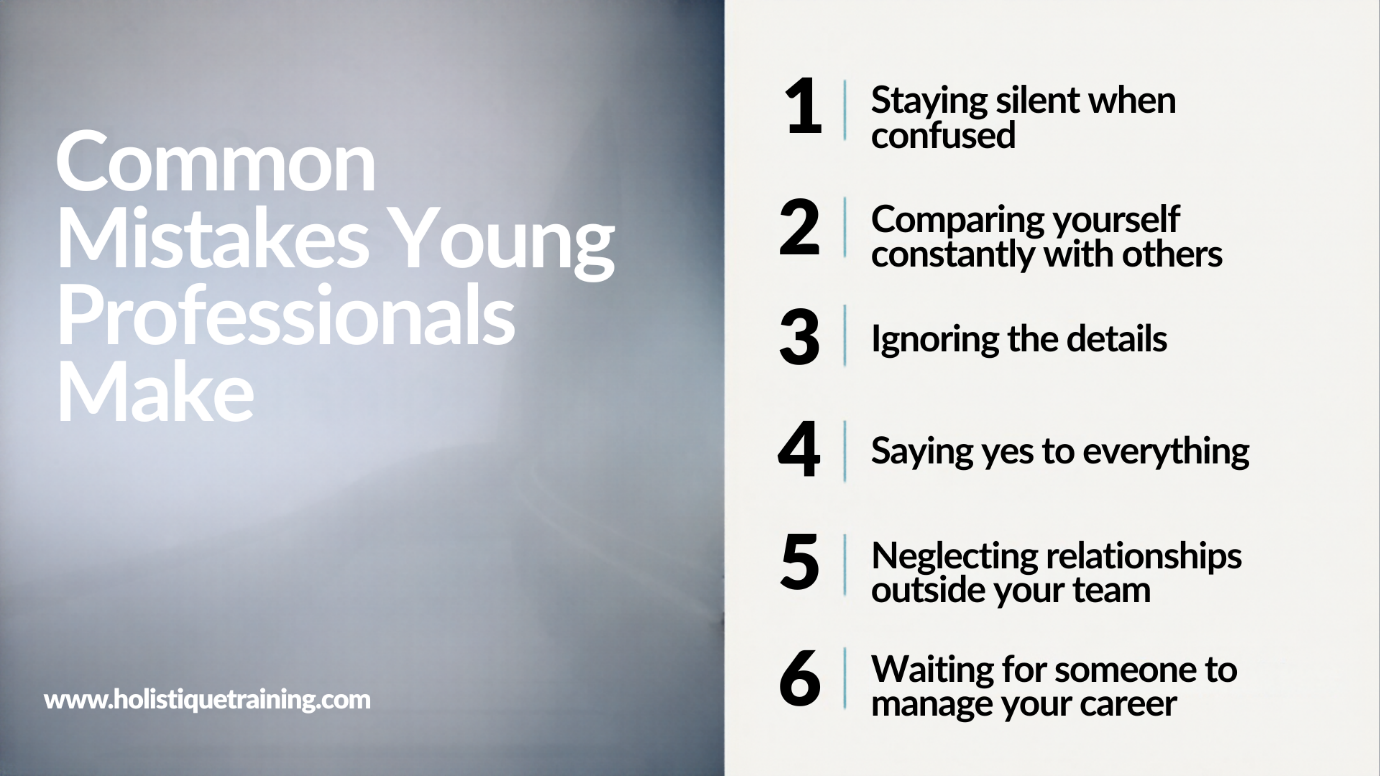
Everyone makes mistakes when starting out, but some are easy to avoid once you know about them. Awareness of these pitfalls can save you months of frustration and help you build credibility more quickly.
1- Staying silent when confused.
Many newcomers pretend to understand instructions because they fear looking inexperienced. In practice, asking a clear question early is far less costly than redoing a task that was misunderstood.
2- Comparing yourself constantly with others.
Social media and office conversations can create the impression that everyone else is progressing faster. Every career path is different, and measuring yourself against someone with a different background rarely helps.
3- Ignoring the details.
Typos, missed attachments and late arrivals may seem minor, but they influence how reliable you appear. Checking your work before sending it is a simple habit that protects your reputation.
4- Saying yes to everything.
Eagerness is admirable, but overcommitting leads to rushed work and stress. It is better to deliver fewer tasks to a high standard than to disappoint people with too many.
5- Neglecting relationships outside your team.
Focusing only on your immediate colleagues limits your visibility. Take an interest in other departments, because understanding the wider organisation makes your own work more effective.
6- Waiting for someone to manage your career.
Promotions and opportunities rarely arrive without effort. Share your goals with your manager, ask what skills you need to develop and take responsibility for your own progress.
Conclusion
Succeeding as a young professional is not about being perfect from day one. It is about developing habits that make you reliable, curious and easy to work with. Learn the culture around you, communicate clearly, manage your time with intention, build genuine relationships and welcome feedback. Protect your wellbeing along the way, because sustainable performance always beats short bursts of overwork.
Equally important, keep learning. Your first role is only the start of a long journey, and the people who thrive are usually those who stay open to new skills, new perspectives and new challenges. Choose two or three of the tips in this article, apply them over the next month and notice how your confidence and results change. Small, consistent improvements are the surest route to a rewarding career.