

Table of Contents
Introduction
Setting goals is an essential part of personal and professional growth. Whether it's pursuing a new career, improving your health, or learning a new skill, goals provide direction and motivation to help us achieve what we desire. However, without proper goal management, even the most well-intentioned aspirations can fall by the wayside. In this comprehensive guide, we will delve deep into the concept of goal management, explore its significance, and provide six practical tips to help you set and effectively manage your goals.
What Is Goal Management?
Goal management is more than just jotting down a list of things you want to accomplish; it's a systematic approach to achieving your dreams. It refers to the process of defining, organising, monitoring, and ultimately achieving personal or professional objectives. Effective goal management involves breaking down large, intimidating goals into smaller, actionable steps, creating a roadmap to success. This process encompasses the skills and strategies required to prioritise tasks, allocate resources, track progress, and adapt as circumstances evolve.
The Goal Management Process
The goal management process is structured and iterative, transforming your aspirations into tangible accomplishments. It encompasses a series of interconnected steps, each crucial for successfully attaining your goals. Here, we'll explore the goal management process in more detail, highlighting the significance of each step.
1. Definition
Effective goal management starts with a clear and precise definition of your objectives. This initial step is akin to setting the coordinates on your GPS—it directs your journey. When defining your goals, it's essential to answer fundamental questions: What do you want to achieve? Why is it important to you? How will your life be different once you've accomplished this goal?
The act of defining your goals brings purpose and meaning to them. It clarifies your intentions and helps you gauge the significance of each goal in the broader context of your life. This process can be reflective and deeply personal, as it forces you to confront your values, desires, and priorities. For instance, if your goal is to achieve a healthier lifestyle, defining it might involve specifying the weight you want to reach, the level of fitness you aim for, and the reasons behind these choices. This clarity lays the foundation for the subsequent steps in the goal management process.
2. Organisation
Once you've defined your goals, the next step is organising them. This involves categorising your objectives into different areas of your life. For example, you might have goals related to your career, health and fitness, relationships, personal development, and leisure activities. Organising your goals this way ensures you maintain a well-rounded approach to life and goal management.
Think of goal organisation as creating compartments for different aspects of your life. Just as a ship uses compartments to prevent flooding in the event of a breach, organising your goals helps you maintain equilibrium and prevents the overemphasis of one area to the detriment of others. It also facilitates resource allocation and time management, allowing you to devote the right amount of energy and attention to each area.

This program emphasises the critical role of productivity in achieving personal success and organisational excellence. Effective task management, team collaboration, and continuous assessment of improvement areas are essential to staying ahead of the competition. Adhering to strict deadlines is crucial to maintaining momentum and progress.
3. Planning
With your goals defined and organised, the planning phase comes into play. Planning involves creating a detailed roadmap that outlines the necessary actions, resources, and timelines for each goal. It's where you break down your objectives into smaller, actionable steps.
Think of planning as your GPS route for each goal. Just as a GPS tells you the specific turns and distances to reach your destination, your plan should provide clear instructions on achieving your goals. This includes setting milestones and deadlines to track progress and maintain a sense of urgency. For instance, if your goal is to start a business, your plan might include steps like market research, business plan development, securing funding, and marketing strategies.
Planning is not a one-time activity but a dynamic process requiring regular review and adjustment. As you progress toward your goals, you may encounter unexpected obstacles or opportunities that necessitate changes to your plan. Being adaptable and willing to modify your approach while staying focused on your objectives is a hallmark of effective goal management.
4. Execution
After meticulous planning, it's time to execute your goals. Execution involves taking consistent action on the smaller, actionable steps you've identified. This is where the rubber meets the road, and progress materialises.
Think of execution as driving on your journey. Just as each mile travelled brings you closer to your destination, each task completed brings you nearer to your goal. Staying committed, maintaining focus, and managing your time effectively during this phase is essential. It's also crucial to celebrate your achievements along the way. These celebrations are motivators, reminding you of your progress and encouraging you to continue.
5. Monitoring
Regular monitoring of your progress is a critical aspect of goal management. Monitoring involves closely monitoring your advancement, much like checking your GPS to ensure you're on the right route. This step provides valuable feedback, allowing you to make informed adjustments to your plan if necessary.
Monitoring serves several purposes. Firstly, it helps you stay accountable. When you see your progress (or lack thereof) laid out before you, you're more likely to take ownership of your goals. Secondly, it allows you to identify and address any issues or challenges that may arise during your journey. For example, if you're not progressing toward a fitness goal, monitoring may reveal that your exercise routine needs adjustment.
Regularly assessing your advancement also boosts motivation. It provides visible proof of your progress, reinforcing your belief in your ability to achieve your goals. This positive feedback loop can propel you forward with even greater determination.
6. Adaptation
The final step in the goal management process is adaptation. Life is dynamic, and circumstances can change unexpectedly. To navigate these changes while still working toward your objectives, you must be flexible and open to adjustments.
Adaptation is about maintaining the overall direction of your goals while altering your approach as needed. This may involve modifying your plan, revising your timelines, or even redefining your goals in response to changing circumstances. For instance, if you initially set a goal to launch a physical retail store but encounter market shifts favouring e-commerce, adapting might mean shifting your focus toward an online presence.
In summary, the goal management process is a structured journey from defining your objectives to adapting your approach as you progress. Each step plays a pivotal role in turning your aspirations into achievements. By following this process, you set the stage for success and cultivate valuable skills in organisation, planning, execution, and adaptability, which can benefit every aspect of your life.
Why Is Goal Management Important?
Before diving into the practical tips for effective goal management, let's explore why this process is so crucial. According to Bramework, in a research conducted by Dominican University, individuals who set goals are 43 percent more likely to accomplish them. However, the study emphasises the importance of setting specific and challenging goals rather than easy ones. Here's why goal management is essential:
Clarity and Focus
Goal management helps clarify your aspirations by defining precisely what you want to achieve. It provides a clear vision and direction, allowing you to focus your efforts and make purposeful decisions aligned with your objectives. When your goals are well-defined, you're less likely to drift aimlessly, and your actions become more deliberate.
Motivation and Accountability
Setting goals creates a sense of purpose and motivation. When you have a clear target to aim for, staying committed and taking consistent action becomes easier. Goal management ensures you remain accountable for your progress, increasing the likelihood of achieving your desired outcomes. Knowing you're responsible for achieving your goals can be a powerful motivator.
Efficiency and Productivity
Goal management enables you to prioritise effectively by breaking down large goals into smaller, manageable tasks. It helps you allocate your time, energy, and resources efficiently, maximising productivity and minimising distractions. When you have a well-structured plan, you're less likely to waste time on unimportant tasks and can focus on what truly matters.
Adaptability and Flexibility
Circumstances can change unexpectedly, and goals may need to be adjusted accordingly. Goal management encourages flexibility, enabling you to adapt your approach without losing sight of your ultimate objective. This adaptability is crucial for overcoming challenges and navigating the twists and turns that life may throw your way.
Improved Decision-Making
Effective goal management also enhances your decision-making skills. When you clearly understand your goals and their associated priorities, you can make decisions that align with your long-term objectives. This clarity helps you avoid distractions and stay on course.

Explore the power of decision-making in work and life. Learn from real examples and gain practical insights to enhance your decision-making skills today.
The Role of Goal Management in Achieving Goals
Now that we understand the importance of goal management, let's explore how it plays a pivotal role in turning dreams into reality:
1. Planning and Strategy
Effective goal management involves thoughtful planning and strategising. By carefully considering the steps required to reach your goals, you can create a roadmap that outlines the necessary actions, resources, and timelines. A well-thought-out plan is like a blueprint for success, guiding you toward your objectives.
2. Actionable Steps
Large goals can often feel overwhelming. Goal management helps by breaking them down into smaller, actionable steps. This approach makes the journey more manageable, allowing you to focus on one step at a time. It also provides opportunities to celebrate small wins along the way, boosting your motivation and confidence.
3. Progress Tracking
Goal management emphasises the importance of tracking your progress. Regularly assessing your advancement provides valuable feedback and helps you make informed adjustments to stay on track. It also boosts motivation as you witness the progress you've made. To illustrate this point, let's take a look at the following table:
Goal | Start Date | Current Status | Target Completion Date |
Complete Online Course | 01/01/20 | 60% complete | 03/31/20 |
Run a 10k Race | 04/15/20 | Not started | 09/30/20 |
Launch Blog | 06/01/20 | 40% complete | 12/31/20 |
Table 1 shows how tracking progress can help you stay on top of your goals. Regularly updating the "Current Status" column gives you a visual representation of your achievements.
4. Adaptability and Flexibility
As mentioned earlier, circumstances can change unexpectedly. Goal management encourages flexibility, enabling you to adapt your approach without losing sight of your ultimate objective. This adaptability is crucial for overcoming challenges and navigating the twists and turns that life may throw your way.
5. Increased Confidence
Achieving goals, especially when managed effectively, boosts your confidence. Each milestone you reach and every goal you accomplish reinforces your belief in your abilities. This newfound confidence can spill over into other areas of your life, empowering you to tackle even more significant challenges.
6. Personal Growth
Goal management is not just about achieving external objectives; it also fosters personal growth. The journey toward your goals often involves learning, self-discovery, and developing new skills. Over time, this continuous growth can lead to a more fulfilling and meaningful life.
6 Tips for Setting Goals and Goal Management
Now that we've explored the fundamentals of goal management, let's dive into six practical tips to help you set and manage your goals effectively:
Tip #1: Set SMART Goals
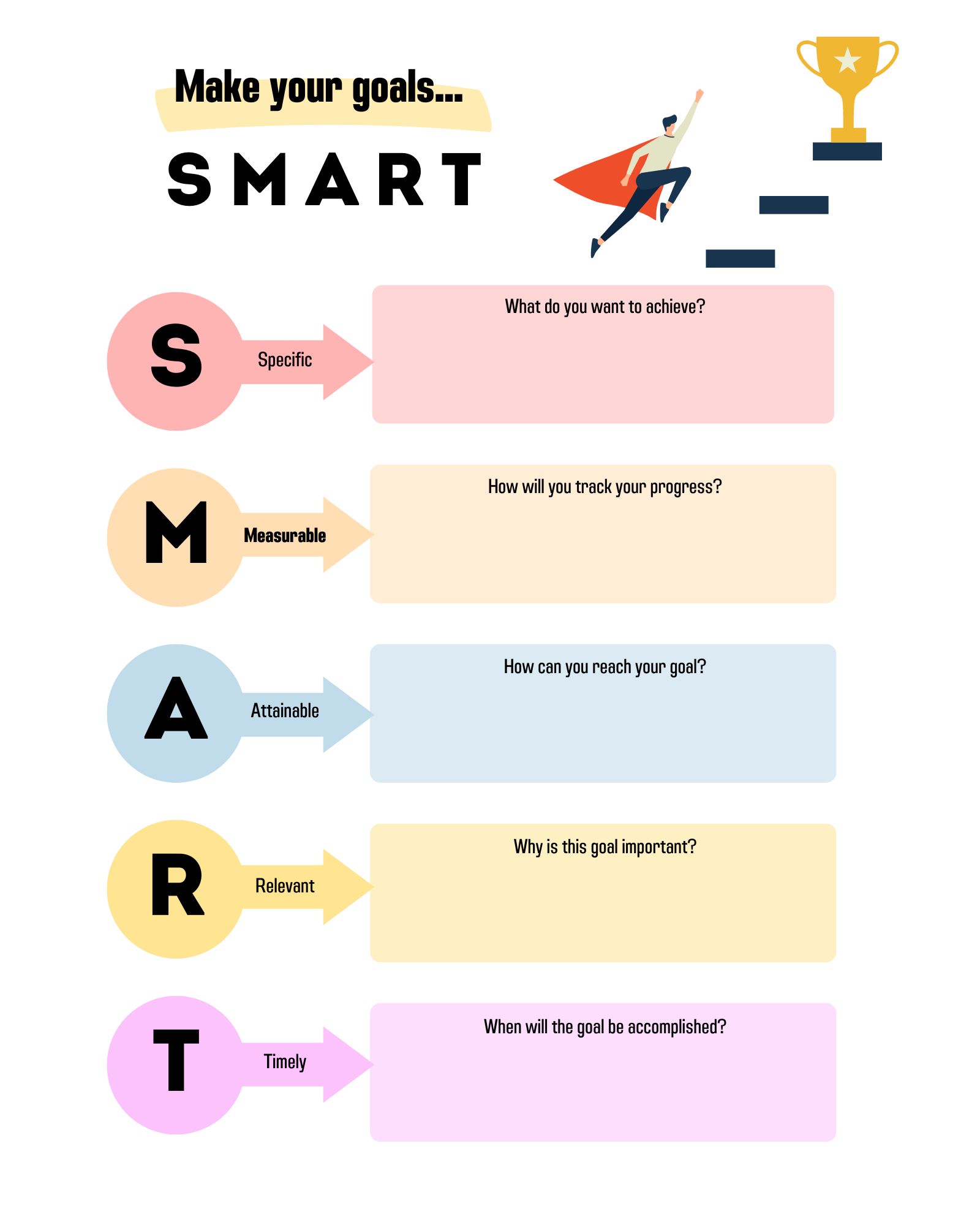
Use the SMART framework to define your goals: Specific, Measurable, Achievable, Relevant, and Time-bound. Only 3% of people use the SMART framework when setting their goals, according to Weekdone. And apparently, they achieve their goals ten times more than people who don't adopt this framework. This approach ensures your goals are well-defined, realistic, and have a clear timeline, enhancing your ability to manage and achieve them.
- Specific: Clearly state what you want to accomplish. The more specific, the better.
- Measurable: Define how you'll measure your progress and know when you've achieved your goal.
- Achievable: Ensure your goal is realistic and attainable, given your current resources and circumstances.
- Relevant: Make sure your goal aligns with your values and long-term objectives.
- Time-bound: Set a deadline for achieving your goal. This adds a sense of urgency and helps with planning.
SMART Goal | Details |
Specific | Increase monthly sales revenue by 20% for the next quarter. |
Measurable | Track and report on monthly sales revenue to ensure a consistent 20%iincrease. |
Achievable | Provide additional sales training to the sales team and allocate a budget for the targeted marketing campaigns |
Relevant | Increasing revenue aligns with the company’s objective to expand market share and improve profitability. |
Time-bound | Achieve the 20% increase in monthly sales revenue within the next three months |
Table 2: Example of a SMART goal
2. Break It Down
Large goals can be daunting, so breaking them down into smaller, actionable tasks is essential. This approach lets you focus on manageable steps and track your progress more effectively. Celebrate each milestone to stay motivated. Here's an example:
Large Goal: Write a Book
Smaller Tasks:
- Outline book chapters
- Set daily writing goals
- Research relevant topics
- Write a draft for each chapter
- Edit and proofread
Breaking down your goals makes them more achievable and provides a clear path forward.
3. Prioritise and Plan
Assess the importance and urgency of each goal and prioritise them accordingly. Create a detailed plan with timelines, milestones, and deadlines. This helps structure your efforts and enables effective resource allocation. Consider using a task management tool or a project management app to help you stay organised and on track.
4. Track Progress
Regularly review and track your progress. Keep a journal, use task management tools, or utilise goal-tracking apps to stay organised. Celebrate achievements and learn from setbacks to refine your approach. Tracking your progress not only helps you stay motivated but also allows you to make data-driven decisions about your goals.
5. Stay Accountable
Share your goals with others who can provide support and hold you accountable. Consider finding an accountability partner or joining a mastermind group where you can share progress and seek guidance. You will likely stay committed to your goals when you have someone to report to.
6. Adapt and Adjust
Be flexible and open to adjustments. Circumstances may change, and your goals may need tweaking. Regularly assess your approach and make necessary modifications while staying focused on the bigger picture. Adaptation is a sign of resilience and can be the key to overcoming obstacles.
The Power of Visualisation
Visualisation is a compelling tool within the realm of goal management, and its impact on your ability to achieve your goals cannot be overstated. Visualisation involves creating vivid mental images of your desired outcomes and experiencing the emotions associated with achieving those goals. Let's explore the profound effects and techniques of visualisation in more detail:
The Science Behind Visualisation
Visualisation operates on the principle that your mind and body are interconnected. When you vividly imagine yourself achieving a particular goal, your brain interprets these mental images as real experiences. This triggers a cascade of physiological responses that affect your emotions, motivation, and behaviours.
For instance, if your goal is to excel in a job interview, visualising yourself confidently answering questions, making a positive impression, and receiving a job offer can elicit feelings of confidence and competence. This emotional response can, in turn, boost your self-assurance, improve your performance during the interview, and increase your chances of success.
How to Practise Visualisation
Practising visualisation involves dedicating time each day to mentally immerse yourself in achieving your goals. Here's a step-by-step guide to help you harness the power of visualisation:
Step 1: Set Aside Quiet Time
Find a quiet and comfortable space where you can relax without distractions. You can practise visualisation in a seated or lying down position, whichever is more comfortable for you.
Step 2: Define Your Goal
Begin by clearly defining the goal you want to visualise. Whether it's landing your dream job, running a marathon, or achieving financial independence, be specific about what you want to accomplish.
Step 3: Create a Detailed Scenario
Close your eyes and imagine the scenario associated with achieving your goal. Make the visualisation as vivid and detailed as possible. Engage all your senses: see the surroundings, hear the sounds, smell the scents, and feel the sensations.
Step 4: Engage Your Emotions
As you visualise your success, focus on the emotions you would experience in that moment. Imagine the joy, satisfaction, and pride you would feel. Allow these emotions to wash over you.
Step 5: Visualise the Process
Visualise not only the end result but also the steps leading up to it. See yourself taking action, overcoming obstacles, and persevering. Embrace the journey as part of the visualisation process.
Step 6: Practise Regularly
Consistency is key. Dedicate a few minutes each day to your visualisation practice. The more you practise, the more powerful and natural it becomes.
Step 7: Believe in Your Visualisation
Belief in the effectiveness of your visualisation is crucial. Trust that your mental rehearsals influence your subconscious mind and shape your behaviours.
Benefits of Visualisation
The practice of visualisation offers a multitude of benefits within the context of goal management:
a. Enhanced Motivation
Visualisation provides a tangible link between your current state and your desired future. It becomes a powerful motivator when you can vividly see and feel your success. The clarity of your vision and the intensity of your emotions constantly remind you what you're working toward, igniting your drive and determination.
b. Increased Confidence
Visualisation fosters a sense of self-assuredness. When you repeatedly visualise yourself overcoming challenges and achieving your goals, you build confidence in your abilities. This newfound self-belief can be transformative, empowering you to tackle obstacles with resilience.
c. Improved Performance
Numerous studies have demonstrated the positive impact of visualisation on performance. Athletes, for example, often use visualisation to enhance their skills and mental preparedness. When you mentally rehearse a task or goal, it can improve execution in the physical world. Your brain is already familiar with the scenario because you've practised it mentally.
d. Stress Reduction
Visualisation can help reduce stress and anxiety associated with pursuing your goals. By mentally rehearsing challenging situations and visualising yourself handling them successfully, you prepare your mind to respond calmly and effectively when faced with real-life stressors.
e. Goal Alignment
Visualisation encourages alignment between your conscious and subconscious mind. When your inner beliefs and thoughts align with your goals, you create a harmonious mental environment that supports your efforts. This alignment can be a potent force for goal achievement.
f. Increased Resilience
When you visualise yourself overcoming setbacks and challenges on your journey to achieving your goals, you build resilience. This mental toughness allows you to bounce back from setbacks and maintain your commitment even in the face of adversity.
Incorporating Visualisation into Your Goal Management
To fully harness the power of visualisation in goal management, consider integrating it into your daily routine. You can practise visualisation during dedicated sessions, such as in the morning or before bed. Additionally, visualisation can be used as a tool to stay focused and motivated throughout the day. Whenever you face a challenging task or need a boost of confidence, take a moment to rehearse success mentally.
Incorporating visualisation into your goal management process can be a game-changer. It taps into your mind's immense potential to influence your actions and outcomes. By consistently practising visualisation, you enhance your motivation and confidence and align your subconscious mind with your aspirations, ultimately propelling you toward achieving your goals.
The Importance of Self-Care
Pursuing goals and aspirations makes it easy to become engrossed in the relentless pursuit of success. However, overlooking the importance of self-care can significantly affect your well-being and ability to manage and achieve your goals effectively. Let's explore the profound significance of self-care within the context of goal management:
Mental and Emotional Resilience
Self-care is a buffer against the stresses and challenges often accompanying goal pursuit. When you're committed to achieving your goals, you may encounter setbacks, face demanding deadlines, or navigate complex obstacles. These pressures can take a toll on your mental and emotional well-being.
Engaging in self-care practices provides you with the tools to build resilience. It allows you to recharge, manage stress effectively, and bounce back from setbacks with a positive mindset. Neglecting self-care, on the other hand, can lead to burnout, anxiety, and decreased emotional resilience, hindering your ability to stay focused and motivated toward your goals.
Physical Health and Vitality
Your physical well-being is a fundamental aspect of goal management. A healthy body provides the energy and vitality needed to tackle challenges, maintain focus, and sustain long-term efforts. Self-care encompasses activities such as regular exercise, a balanced diet, and sufficient sleep—cornerstones of physical health.
When you prioritise self-care, you invest in your physical health, ensuring you have the stamina and endurance required to pursue your goals. Neglecting self-care, on the other hand, can lead to fatigue, decreased productivity, and even health issues that may divert your attention from your goals.
Mental Clarity and Creativity
Self-care practices can enhance cognitive abilities, including mental clarity and creativity. Meditation, mindfulness, and relaxation exercises promote mental well-being by reducing anxiety and enhancing focus. These practices can help you make informed decisions, strategise effectively, and think creatively when facing challenges or brainstorming solutions.
When you're in a state of mental clarity and creativity, you're better equipped to adapt to changing circumstances and devise innovative approaches to achieving your goals. Neglecting self-care can lead to mental fatigue, mental blocks, and decreased problem-solving abilities.
Work-Life Balance
Balancing your pursuit of goals with other aspects of your life is essential for long-term success and overall well-being. Self-care plays a pivotal role in maintaining this equilibrium. It reminds you that life is not just about achieving goals; it's also about enjoying the journey, nurturing relationships, and finding fulfilment in everyday experiences.
Neglecting self-care can lead to an unhealthy work-life balance, where your goals consume you to the detriment of other essential areas of your life. This imbalance can strain relationships, lead to burnout, and even compromise your overall happiness.
Stress Management
The journey toward achieving your goals can be accompanied by stress, and managing stress is a critical aspect of goal management. Self-care practices, such as mindfulness, deep breathing, and relaxation techniques, are effective tools for stress management. They help you navigate high-pressure situations with composure and prevent chronic stress from damaging your physical and mental health.
When you neglect self-care, stress can accumulate and become overwhelming, negatively impacting your focus, decision-making, and overall well-being. It can also lead to health problems and derail your progress toward your goals.
Improved Productivity and Efficiency
Contrary to the misconception that self-care is a time-consuming distraction, it can actually enhance your productivity and efficiency. When you take breaks to engage in self-care, you recharge your mental and physical resources. As a result, you return to your tasks with renewed energy and a clearer mind.
Long-Term Goal Sustainability
Sustainability is a key consideration in goal management. Achieving your goals is not just about reaching them but also about maintaining the results and sustaining the benefits over the long term. Self-care practices are instrumental in ensuring the sustainability of your achievements.
By prioritising self-care, you develop habits that support your well-being and overall quality of life. These habits can help you maintain the results of your hard work and prevent burnout or regression. For example, if your goal is to maintain a healthy weight, self-care practices like regular exercise and a balanced diet become integral to sustaining your progress.
Essential Software for Goal Management
In today's digital age, various software tools and applications are designed to streamline and enhance the goal management process. These tools can be invaluable in helping you stay organised, track progress, and maintain focus on your objectives. Here are some essential software options for effective goal management:
1. Project Management Software
Project management software is powerful for breaking down large goals into smaller, actionable tasks and creating a structured plan. Some popular project management tools include:
- Trello: Known for its visual and flexible Kanban boards, Trello allows you to create boards for each goal or project, add tasks, set deadlines, and move items through customisable columns.
- Asana: Asana is a comprehensive project management platform that helps you create task lists, set due dates, assign responsibilities, and track progress. It's particularly useful for managing multiple goals simultaneously.
- Monday.com: This platform offers a range of templates and customisable workflows to manage goals, projects, and teams. It provides visual clarity and collaboration features.
2. Goal Tracking Apps
Goal-tracking apps are designed to monitor your progress toward achieving your goals. They often include features for setting milestones, visualising progress, and staying motivated. Some examples are:
- Strides: Strides is a goal and habit-tracking app that allows you to set SMART goals, track your daily progress, and view insightful charts to monitor your performance over time.
- GoalsOnTrack: This app provides a comprehensive goal management system, including goal templates, action plans, and a journal to help you stay on track.
3. Note-taking and Journaling Apps
Effective goal management often involves reflection, planning, and documentation. Note-taking and journaling apps can assist in capturing your thoughts and ideas related to your goals. Consider using:
- Evernote: Evernote is a versatile note-taking app that allows you to create notes, set reminders, and organise your thoughts, plans, and resources related to your goals.
- Day One: A journaling app that encourages daily reflection, Day One can be used to record your progress, insights, and setbacks as you work toward your goals.
4. Time Management and Productivity Tools
Efficient time management is a crucial aspect of goal management. Utilise time-tracking and productivity apps to maximise your efficiency:
- Toggl: Toggl is a time-tracking app that helps you monitor how much time you spend on various tasks and projects. It provides valuable insights into your work habits and can help you allocate time more effectively.
- RescueTime: This tool runs in the background, tracking your computer usage and providing reports on how you spend your time. It's an eye-opening way to identify time-wasting habits.
These software options can significantly enhance your goal management efforts by providing structure, organisation, and valuable insights into your progress. Depending on your specific needs and preferences, you can choose the tools that best suit your goal management style. Incorporating these software solutions into your routine can make the journey to goal achievement more efficient and enjoyable.
Conclusion
Goal management is the driving force behind transforming dreams into accomplishments. By implementing effective goal management strategies, you can enhance your clarity, focus, motivation, and efficiency and ultimately achieve your desired objectives. Remember to set SMART goals, break them down into actionable steps, prioritise and plan, track your progress, stay accountable, and be adaptable.
Embrace the power of goal management and unlock your path to success. Start today and witness its transformative impact on your personal and professional journey. And if you're a leader or aspiring to be one and would like to elevate your leadership skills to new heights, don't miss the opportunity to enrol in our course, ‘Perfecting Your Management and Leadership Skills.’ This comprehensive programme will equip you with the tools, strategies, and insights needed to excel in your leadership role, guiding both yourself and your team toward unparalleled success. Don't wait—take the first step toward becoming an exceptional leader today!

Effective leadership is crucial to the success of any business. This program will help you harness your internal leadership potential by exploring effective strategies, motivating team members, and mastering negotiation and influencing skills to achieve your goals. You will examine