
- Table of Contents
- Introduction
- What Are Soft Skills?
- Why Are Soft Skills Important in the Digital Age?
- Navigating Remote Work and Virtual Collaboration
- Complementing Automation and Artificial Intelligence
- Thriving in a Globalized and Culturally Diverse Workplace
- Enhancing Customer Experience in the Digital Era
- Adapting to Continuous Change
- Supporting Leadership and Team Dynamics
- Soft Skills vs. Hard Skills: Key Differences
- Top 10 Soft Skills Employers Are Looking For
- 1. Communication Skills
- 2. Teamwork and Collaboration
- 3. Adaptability and Flexibility
- 4. Problem-Solving Skills
- 5. Emotional Intelligence (EQ)
- 6. Leadership and Initiative
- 7. Time Management
- 8. Conflict Resolution
- 9. Creativity and Innovation
- 10. Work Ethic and Accountability
- Connecting the Skills
- How to Hone Your Soft Skills
- 1. Take Online Courses and Workshops
- 2. Obtain Professional Certifications
- 3. Engage in Experiential Learning
- 4. Seek Feedback and Practice Reflection
- 5. Practice Communication Skills
- 6. Enhance Emotional Intelligence
- 7. Build Leadership and Initiative
- 8. Improve Time Management
- 9. Strengthen Creativity and Innovation
- 10. Foster Work Ethic and Accountability
- 11. Combine Methods for Maximum Impact
- Conclusion
Introduction
Every professional environment is built on more than just technical knowledge or academic credentials. While qualifications and experience remain significant, the subtle yet powerful influence of personal attributes, interpersonal behaviors, and emotional intelligence often determines career success. These attributes, commonly referred to as soft skills, have become increasingly crucial in a fast-evolving professional landscape. This blog will explore the concept of soft skills, their importance in the digital age, how they differ from hard skills, the top soft skills employers prioritize, and actionable strategies to develop and strengthen them.
Soft skills are no longer optional extras in professional life—they are the backbone of effective communication, collaboration, and leadership. They influence how individuals interact with colleagues, respond to challenges, and adapt to change. In this exploration, we will not only define what soft skills are but also uncover why they have become essential in a world where technology and automation constantly reshape the nature of work. Additionally, the blog will provide guidance on how to identify, enhance, and apply these skills to create meaningful professional growth and long-term career success.
What Are Soft Skills?
Soft skills encompass the non-technical, interpersonal attributes that enable individuals to interact effectively and harmoniously with others. Unlike hard skills, which can be measured through specific competencies or academic knowledge, soft skills are more abstract. They often manifest in behaviors, attitudes, and emotional responses. Examples include communication, empathy, teamwork, adaptability, problem-solving, and leadership.
A helpful way to understand soft skills is to consider them as the glue that holds the workplace together. Technical knowledge may allow a software engineer to write code, but collaboration and communication skills enable the same engineer to work effectively within a team, understand client requirements, and contribute to project success. Similarly, a customer service representative may be trained in the technicalities of a product, but it is patience, empathy, and conflict resolution skills that create a positive customer experience.
Soft skills also extend beyond professional interactions—they influence how individuals manage time, handle stress, and maintain motivation. Emotional intelligence, a key component of soft skills, involves recognizing one’s own emotions, understanding others’ feelings, and managing interpersonal relationships judiciously. High emotional intelligence can enhance team collaboration, reduce workplace conflicts, and improve overall productivity.
The intangible nature of soft skills does not diminish their importance. In fact, these skills often differentiate top performers from those who meet only minimum expectations. They are the qualities that inspire trust, foster strong workplace relationships, and contribute to a positive organizational culture. In the modern workplace, where collaboration, innovation, and adaptability are essential, soft skills are increasingly regarded as a critical complement to hard skills.
Why Are Soft Skills Important in the Digital Age?
The digital age has transformed the nature of work, creating a unique set of challenges and opportunities that highlight the importance of soft skills. Technology has automated many routine tasks, making technical knowledge necessary but not sufficient for career success. While hard skills may help professionals perform specific functions, soft skills determine how effectively individuals navigate complex work environments, build relationships, and contribute to organizational goals.
Navigating Remote Work and Virtual Collaboration
One of the most profound changes brought about by the digital age is the widespread adoption of remote work. Teams are no longer confined to shared office spaces; employees collaborate across cities, countries, and continents. While digital tools like video conferencing, instant messaging, and project management platforms enable these collaborations, they cannot replace the nuance of human interaction.
Soft skills such as effective communication, active listening, empathy, and conflict resolution become critical in virtual settings. In fact, a recent study found 82% of business leaders worry about communication in remote or hybrid teams, with poor communication costing each employee about $12,500 annually. Professionals must be able to clearly articulate ideas in writing and speech, interpret tone and intent without visual cues, and maintain engagement despite physical distance. Those who excel at building rapport and fostering collaboration online are more likely to sustain productivity, nurture strong team dynamics, and create a positive virtual work culture.
Complementing Automation and Artificial Intelligence
Automation, artificial intelligence (AI), and machine learning are rapidly transforming industries, replacing repetitive tasks with intelligent systems. While these technologies excel at processing data and performing standardized operations, they lack uniquely human capabilities such as empathy, ethical judgment, creativity, and strategic thinking.
Soft skills enable humans to complement technology rather than compete with it. Critical thinking, problem-solving, creativity, and decision-making are indispensable in leveraging digital tools effectively. Professionals who can analyze complex data, identify patterns, and propose innovative solutions bring a human dimension to technology-driven processes, making them invaluable assets to any organization.
Thriving in a Globalized and Culturally Diverse Workplace
Globalization has expanded the reach of businesses, creating multicultural work environments where collaboration across borders is the norm. This diversity introduces new perspectives and opportunities but also increases the potential for misunderstandings.
Soft skills like cultural awareness, empathy, adaptability, and interpersonal communication enable professionals to navigate cultural differences effectively. Understanding local customs, respecting diverse perspectives, and adjusting communication styles to fit multicultural teams are essential for fostering trust, collaboration, and a sense of belonging. Organizations increasingly recognize that inclusive, culturally competent employees are not just assets—they are catalysts for innovation and international success.
Enhancing Customer Experience in the Digital Era
The digital age has shifted consumer expectations. Customers demand seamless, personalized experiences, whether interacting with a brand online, through social media, or via digital service platforms. In this context, employees’ soft skills play a pivotal role in creating meaningful interactions that drive satisfaction and loyalty.
Skills such as empathy, active listening, negotiation, persuasion, and emotional intelligence empower professionals to address client needs, resolve conflicts constructively, and anticipate problems before they escalate. These abilities directly impact customer relationships, business reputation, and long-term growth, making soft skills a competitive advantage in service-oriented industries.
Adapting to Continuous Change
The speed of technological advancement has made change a constant feature of the modern workplace. Job roles evolve, organizational structures shift, and market dynamics fluctuate at an unprecedented rate. In such a volatile environment, adaptability, resilience, learning agility, and problem-solving are essential soft skills. Employees who embrace change with a proactive mindset, respond creatively to new challenges, and continuously update their competencies are better positioned to succeed in a world defined by uncertainty.
Supporting Leadership and Team Dynamics
Even as organizations digitize processes, human collaboration remains central to achieving strategic goals. Soft skills like leadership, teamwork, and emotional intelligence enhance group cohesion, foster a positive work culture, and inspire colleagues to perform at their best. Leaders who demonstrate empathy, effective communication, and conflict resolution set the tone for team behavior, encourage engagement, and improve overall organizational performance.
In summary, the digital age has amplified the value of soft skills because technology, while powerful, cannot replicate the nuanced human interactions that drive collaboration, innovation, and leadership. Professionals equipped with strong soft skills can navigate remote work, complement automation, thrive in multicultural environments, enhance customer experiences, adapt to constant change, and lead teams effectively. In a world where technical knowledge alone is no longer sufficient, soft skills are the key differentiator between those who succeed and those who merely survive.
Soft Skills vs. Hard Skills: Key Differences
Understanding the distinction between soft skills and hard skills is essential for appreciating why both are necessary for career success. While they complement each other, their nature, application, and development differ.
Aspect | Soft Skills | Hard Skills |
Definition | Interpersonal and emotional abilities | Technical knowledge and expertise |
Measurability | Difficult to quantify | Easily measurable |
Learning Method | Developed through experience, reflection, and mentoring | Learned through education, training, and practice |
Examples | Communication, teamwork, adaptability, problem-solving | Coding, accounting, data analysis, legal knowledge |
Application | Influences behavior, collaboration, and leadership | Used to perform specific tasks or solve technical problems |
Hard skills are often considered the baseline for employability—they demonstrate competence in a given field and can be validated through certifications, degrees, or portfolios. Soft skills, however, determine how effectively individuals apply those competencies in real-world scenarios. For instance, a highly skilled software developer may excel technically but fail to collaborate effectively without strong soft skills, limiting their potential impact.
Employers increasingly recognize that technical expertise alone is insufficient for career advancement. Professionals who combine hard and soft skills are better equipped to navigate complex projects, lead teams, and adapt to evolving industry demands.
Top 10 Soft Skills Employers Are Looking For
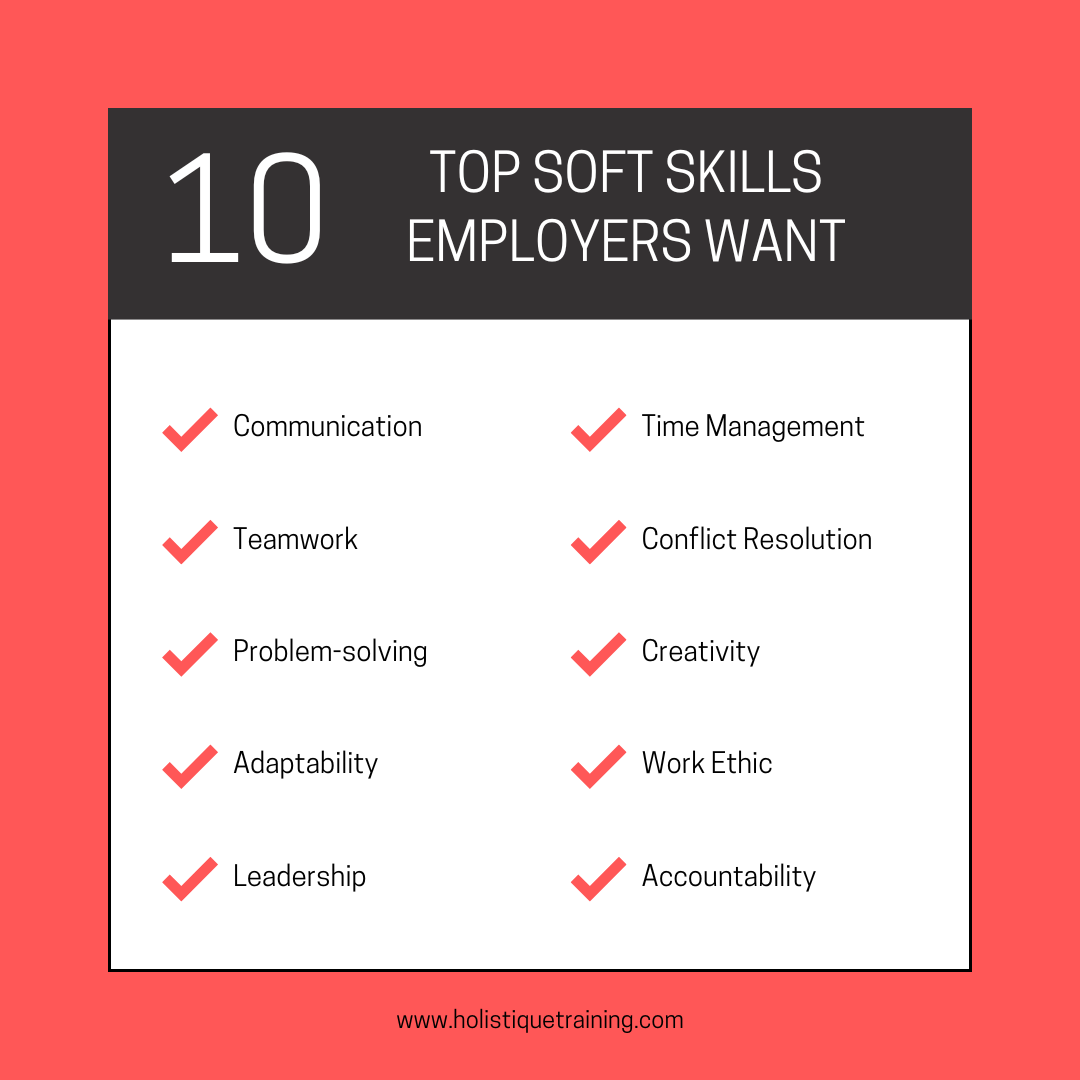
While the range of soft skills is vast, certain competencies consistently emerge as highly valued across industries. Employers seek individuals who can communicate effectively, solve problems creatively, and contribute positively to team dynamics. The following are the top 10 soft skills currently in demand:
1. Communication Skills
Communication is the cornerstone of professional success. It goes beyond simply conveying information; it involves expressing ideas clearly, listening actively, and adapting your message to the audience. Effective communicators can reduce misunderstandings, resolve conflicts efficiently, and ensure that projects move forward smoothly.
Example: A marketing specialist presenting a campaign idea must not only articulate the concept clearly but also persuade stakeholders by tailoring their message to the audience’s priorities.

Leadership, innovation, and communication are integral components of any organisation's success. Effective leadership provides direction, inspires confidence, and fosters a cohesive work environment. The guiding force sets the tone for innovation, encouraging teams to think creatively and embrace change.
2. Teamwork and Collaboration
Even highly skilled professionals rarely work in isolation. The ability to collaborate effectively with colleagues, share knowledge, and contribute to collective goals is critical. Strong teamwork fosters creativity, drives innovation, and ensures projects meet their objectives efficiently.
Example: In a software development team, front-end and back-end developers must coordinate seamlessly. A team member with excellent collaboration skills facilitates knowledge sharing and problem-solving, enhancing the final product.
3. Adaptability and Flexibility
The modern workplace is constantly evolving, with new technologies, workflows, and challenges emerging regularly. Professionals who can adjust their approach, embrace change, and remain productive in uncertain conditions are invaluable to any organization.
Example: A customer service representative who can quickly learn to use a new CRM system and adapt to changing customer expectations maintains performance and improves service quality.
4. Problem-Solving Skills
Problem-solving is more than addressing challenges—it involves analyzing situations, identifying underlying causes, and developing practical solutions. Employees with strong problem-solving skills contribute to efficiency, innovation, and organizational resilience.
Example: A project manager facing resource constraints might devise a creative schedule reallocation to meet deadlines without overburdening team members.
5. Emotional Intelligence (EQ)
Emotional intelligence involves recognizing one’s own emotions, understanding others’ feelings, and managing relationships effectively. High EQ allows professionals to navigate workplace dynamics, resolve conflicts, and build strong interpersonal connections.
Example: A team leader noticing signs of stress among team members can offer support, redistribute workload, or mediate discussions, preventing burnout and maintaining morale.
6. Leadership and Initiative
Leadership is not limited to managerial roles. Taking initiative, guiding projects, and motivating peers demonstrate leadership qualities that employers highly value. Effective leaders inspire confidence, foster engagement, and drive results.
Example: A junior employee noticing inefficiencies in a workflow proposes a new system and volunteers to lead its implementation, showcasing initiative and potential for leadership growth.
7. Time Management
Time management skills ensure tasks are completed efficiently, priorities are set effectively, and deadlines are met consistently. Professionals who manage their time well reduce stress, increase productivity, and contribute to smoother team operations.
Example: A content writer juggling multiple assignments prioritizes tasks, sets realistic deadlines, and maintains consistent quality across all projects.

Effective task and time management skills are essential to remaining competitive, working successfully with colleagues on shared goals, and meeting client and stakeholder needs. Any project requires you to manage challenges promptly and creatively. This course provides the framework for
8. Conflict Resolution
Workplace conflicts are inevitable, but employees who can address disagreements constructively are crucial to maintaining a healthy environment. Conflict resolution involves active listening, empathy, negotiation, and finding solutions that satisfy all parties involved.
Example: During a disagreement over project responsibilities, an employee mediates discussions, identifies common ground, and proposes compromises that preserve team harmony.
9. Creativity and Innovation
Employers value employees who can think outside the box, develop new ideas, and approach problems from unique perspectives. Creativity fuels innovation, enhances competitive advantage, and drives organizational growth.
Example: A product designer developing a new app feature brainstorms unconventional solutions, resulting in a user-friendly interface that differentiates the company from competitors.
10. Work Ethic and Accountability
Reliability, responsibility, and dedication to delivering high-quality results reflect a strong work ethic. Professionals who consistently meet commitments, take ownership of their work, and demonstrate integrity are highly valued by employers.
Example: An accountant who identifies and corrects an error proactively, even under tight deadlines, demonstrates accountability and earns trust from colleagues and management.

In healthcare, technical knowledge alone isn’t enough. Healthcare professionals need strong soft skills to interact effectively with patients, families, and colleagues. These skills build trust, improve patient outcomes, and create healthier work environments.This course focuses on communication, empathy, teamwork, conflict resolution, and emotional intelligence - essential
Connecting the Skills
These soft skills are often interconnected. Strong communication enhances teamwork, emotional intelligence strengthens conflict resolution, and adaptability complements creativity. Developing a well-rounded soft skill set not only increases employability but also equips professionals to handle complex challenges, lead teams effectively, and make meaningful contributions to organizational success.
Employers increasingly recognize that technical expertise alone is insufficient. Professionals who combine hard skills with these top soft skills can thrive in collaborative environments, adapt to constant change, and make a lasting impact on their organizations.
Soft Skill | Why It Matters | How to Develop It |
Communication Skills | Facilitates clear ideas, reduces misunderstandings, strengthens collaboration | Take public speaking courses, practice active listening, join writing or presentation workshops |
Teamwork & Collaboration | Enhances productivity, fosters innovation, builds strong relationships | Participate in group projects, volunteer in teams, seek cross-functional assignments |
Adaptability & Flexibility | Helps navigate change, embrace new tools, and stay productive | Take on new roles/tasks, practice adjusting strategies, learn new technologies |
Problem-Solving Skills | Enables effective solutions, innovation, and informed decision-making | Engage in critical thinking exercises, case studies, puzzle-solving, or scenario-based simulations |
Emotional Intelligence (EQ) | Improves relationships, conflict resolution, and workplace morale | Practice empathy, mindfulness, self-reflection, and seek feedback on interpersonal interactions |
Leadership & Initiative | Inspires others, drives projects, and builds credibility | Volunteer for leadership roles, mentor peers, lead small projects, and seek responsibility gradually |
Time Management | Increases efficiency, reduces stress, and ensures deadlines are met | Use task lists, prioritize work, apply time-blocking techniques, and track productivity |
Conflict Resolution | Maintains harmony, resolves disagreements constructively | Role-play scenarios, learn negotiation strategies, practice active listening, and mediation skills |
Creativity & Innovation | Fuels innovation, competitive advantage, and problem-solving | Brainstorm regularly, experiment with new approaches, attend creative workshops or hackathons |
Work Ethic & Accountability | Builds trust, ensures quality work, and fosters professional growth | Set personal goals, track commitments, seek feedback, and take ownership of both successes and errors |
How to Hone Your Soft Skills
Unlike hard skills, which can be learned through formal instruction and practice, soft skills require intentional cultivation, self-awareness, and ongoing reflection. The process involves observation, feedback, practice, and often mentorship. Fortunately, there are structured avenues to enhance soft skills, from online courses to certifications and experiential learning.
1. Take Online Courses and Workshops
Online learning platforms provide accessible, flexible, and interactive ways to develop soft skills. Many courses focus on real-world scenarios, role-playing exercises, and practical applications:
- Communication Skills: Courses like Effective Business Communication on Coursera or Communication Foundations on LinkedIn Learning help learners refine both verbal and written communication.
- Leadership & Teamwork: Programs such as Leading Teams on edX or Teamwork Foundations on LinkedIn Learning offer strategies for motivating teams, resolving conflicts, and leading projects effectively.
- Creativity & Problem-Solving: Platforms like Skillshare or Coursera offer courses like Creative Problem Solving and Design Thinking to foster innovation and critical thinking.

Effective leadership is crucial to the success of any business. This program will help you harness your internal leadership potential by exploring effective strategies, motivating team members, and mastering negotiation and influencing skills to achieve your goals. You will examine
These courses often provide certificates that can be shared on professional networks like LinkedIn, demonstrating commitment to self-improvement.
2. Obtain Professional Certifications
Certifications provide formal recognition of your skills, often combining theoretical knowledge with practical application:
- Certified Professional in Emotional Intelligence (CPEI): Validates the ability to understand and manage emotions in professional settings.
- Project Management Professional (PMP): Beyond technical project management, PMP emphasizes leadership, communication, and teamwork skills.
- Certified Leadership Coach: Focuses on developing leadership, mentoring, and conflict resolution skills.
Earning certifications not only enhances your credibility but also encourages deliberate skill development through structured learning.
3. Engage in Experiential Learning
Practical, hands-on experience is often the most effective way to develop soft skills. Opportunities to interact with others, take responsibility, and solve real-world problems are invaluable:
- Mentorship Programs: Being mentored by an experienced professional helps you learn leadership, communication, and conflict resolution strategies. Similarly, mentoring others hones empathy, patience, and teaching skills.
- Volunteering and Community Engagement: Working on nonprofit projects or community initiatives develops teamwork, adaptability, and problem-solving in diverse environments.
- Cross-Functional Projects: Participating in projects across different departments exposes you to varying perspectives and challenges, strengthening collaboration, adaptability, and communication.
4. Seek Feedback and Practice Reflection
Self-awareness is critical for soft skill development. Reflection and feedback help identify strengths and areas for improvement:
- 360-Degree Feedback: Collect feedback from peers, managers, and subordinates to gain a comprehensive view of your interpersonal effectiveness.
- Journaling and Self-Assessment: Regularly reflect on daily interactions, noting what went well and areas for improvement. Set specific goals to address gaps.
- Peer Review and Coaching: Ask colleagues to provide constructive feedback on teamwork, communication, or leadership style, and practice implementing their suggestions.
5. Practice Communication Skills
Communication is one of the most frequently valued soft skills. It can be strengthened through targeted exercises and real-world practice:
- Public Speaking and Presentation: Join organizations like Toastmasters to improve confidence and clarity when speaking to groups.
- Active Listening Exercises: Practice summarizing what others say, asking clarifying questions, and demonstrating understanding.
- Professional Writing: Develop concise, persuasive, and clear writing skills through blogs, emails, reports, or LinkedIn posts.
6. Enhance Emotional Intelligence
High emotional intelligence improves collaboration, conflict management, and leadership effectiveness:
- Mindfulness and Meditation: Cultivate self-awareness, emotional regulation, and empathy through daily mindfulness practices.
- Empathy Exercises: Practice putting yourself in others’ shoes, considering their perspectives before reacting.
- Conflict Resolution Role-Playing: Simulate workplace disagreements to experiment with resolution strategies, improving negotiation and mediation skills.
7. Build Leadership and Initiative
Even without formal managerial roles, demonstrating leadership can set you apart:
- Lead Small Projects: Volunteer to manage tasks or initiatives within your team, gradually building responsibility.
- Mentor Others: Sharing knowledge helps develop communication, coaching, and interpersonal skills.
- Professional Leadership Programs: Participate in structured programs that emphasize strategic thinking, team management, and decision-making.
8. Improve Time Management
Efficient time management increases productivity and reduces stress:
- Use Task Prioritization Techniques: Methods like Eisenhower Matrix, Kanban boards, or time-blocking help organize responsibilities.
- Set SMART Goals: Specific, measurable, achievable, relevant, and time-bound objectives create focus and accountability.
- Track and Reflect on Productivity: Analyze how time is spent, identify distractions, and implement strategies to optimize workflow.
9. Strengthen Creativity and Innovation
Creativity is essential for problem-solving and differentiating yourself professionally:
- Brainstorm Regularly: Engage in idea-generation sessions individually or with colleagues to explore new solutions.
- Experiment with Approaches: Try unconventional methods in work tasks or projects to discover innovative results.
- Attend Workshops and Hackathons: Participate in creativity-focused events that encourage collaboration and experimentation.
10. Foster Work Ethic and Accountability
Reliability and responsibility build trust and professional credibility:
- Take Ownership of Tasks: Accept responsibility for both successes and setbacks.
- Track Commitments: Use to-do lists or project management tools to monitor progress and meet deadlines.
- Seek Feedback and Self-Improve: Continuously refine work processes, quality, and performance to uphold professional standards.
11. Combine Methods for Maximum Impact
The most effective way to develop soft skills is through a combination of methods:
- Formal Learning: Courses, certifications, and workshops provide structured knowledge.
- Practical Application: Volunteering, projects, mentorship, and hands-on experience ensure skills are applied effectively.
- Self-Reflection and Feedback: Regular evaluation ensures continuous improvement and growth.
Developing soft skills is a lifelong journey. Unlike technical abilities that can become outdated, soft skills remain universally valuable, transferable across roles, industries, and cultures. Investing time and effort into honing these skills pays off in stronger relationships, enhanced career prospects, and the ability to thrive in any professional environment.
Conclusion
Soft skills are the often-overlooked determinants of professional success. While technical expertise, credentials, and experience remain essential, it is the ability to communicate effectively, collaborate with others, adapt to change, and demonstrate emotional intelligence that often distinguishes outstanding professionals. In the digital age, where technology transforms roles, global collaboration is commonplace, and customer-centric approaches dominate, soft skills are no longer optional—they are essential.
The key differences between soft and hard skills highlight why both are necessary for career growth. Hard skills validate competence; soft skills determine effectiveness. Employers increasingly prioritize attributes such as communication, adaptability, problem-solving, leadership, and teamwork. Developing these skills requires a multifaceted approach, including online courses, certifications, experiential learning, self-reflection, and continuous practice.
By investing in soft skills, professionals enhance their ability to navigate complex work environments, foster positive relationships, and contribute meaningfully to organizational success. Beyond career advancement, soft skills enrich personal development, empower individuals to handle challenges with resilience, and enable lifelong learning. Mastery of these intangible abilities ensures that professionals remain not only employable but indispensable in an ever-evolving workplace landscape.
Soft skills are, ultimately, the bridge between knowledge and impact—the subtle forces that turn competence into excellence and potential into achievement.