
- Table of Contents
- 1- Introduction
- 2- Understanding the Circular Economy
- 1- Definition and Core Principles
- 2- Linear Economy vs Circular Economy
- 3- Circular Business Models
- 3- Why Reuse Models Are Profitable
- 1- Cost Reduction Through Resource Efficiency
- 2- Recurring Revenue Opportunities
- 3- Customer Retention and Brand Loyalty
- 4- Types of Reuse Models in Business
- 1- Product-as-a-Service
- 2- Remanufacturing
- 3- Repair and Refurbishment Systems
- 4- Sharing Platforms
- 5- Technology as an Enabler of Circular Reuse Systems
- 6- Operational Benefits of Circular Business Models
- 1- Supply Chain Resilience
- 2- Reduced Waste Management Costs
- 3- Innovation and Competitive Advantage
- 7- Challenges and Limitations
- 1- High Initial Investment
- 2- Consumer Behavior Barriers
- 3- Complex Reverse Logistics
- 4- Regulatory and Standardization Issues
- 8- Circular Economy Applications Across Industries
- 1- Fashion Industry
- 2- Electronics Industry
- 3- Automotive Sector
- 4- Construction Industry
- 9- Future Trends in Circular Business Strategies
- 10- Conclusion
1- Introduction
The global economy has historically operated through a linear model of production and consumption commonly described as “take, make, and dispose.” In this model, businesses extract raw materials, manufacture products, distribute them to consumers, and eventually discard them as waste after use. While this approach supported industrial expansion and mass consumption for decades, it has also generated severe environmental and economic pressures. Rising resource scarcity, volatile commodity prices, increasing waste generation, and growing climate concerns have exposed the limitations of linear economic systems. As governments, corporations, and consumers become more conscious of sustainability and resource efficiency, the circular economy has emerged as a strategic alternative capable of reshaping how businesses create and capture value.
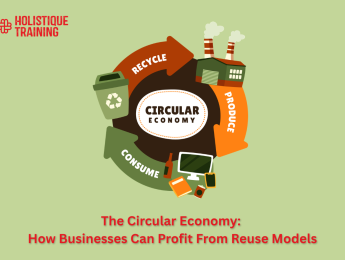
The circular economy is based on the principle of keeping materials, products, and resources in use for as long as possible through reuse, repair, refurbishment, remanufacturing, and recycling. Instead of treating products as disposable, circular systems aim to extend product lifecycles and minimize waste generation. This approach not only reduces environmental impact but also creates new commercial opportunities for organizations willing to redesign their operations and business models. Companies are increasingly recognizing that circularity is not merely an environmental responsibility initiative but also a competitive strategy that can reduce costs, improve resilience, generate recurring revenue streams, and strengthen customer loyalty.
2- Understanding the Circular Economy
1- Definition and Core Principles
The circular economy is an economic system designed to eliminate waste and continuously circulate materials and products at their highest possible value. Unlike the traditional linear economy, circular systems prioritise regeneration, resource optimisation, and long-term material use. Products are designed to last longer, components are reused or remanufactured, and waste is minimised throughout the value chain.
The Ellen MacArthur Foundation identifies three core principles that define circular economy systems. The first is designing out waste and pollution from the beginning of production processes. The second is keeping products and materials in circulation through reuse, repair, refurbishment, and recycling. The third is regenerating natural systems by reducing environmental degradation and supporting renewable resource cycles.
Beyond environmental sustainability, circular economy strategies also offer substantial economic advantages. According to the Ellen MacArthur Foundation , circular economy practices could generate trillions of dollars in global economic benefits while significantly reducing greenhouse gas emissions and resource consumption. Research by Accenture further estimates that circular business models could unlock approximately $4.5 trillion in economic output by 2030 through improved efficiency, waste reduction, and innovative product-service systems.
2- Linear Economy vs Circular Economy
The difference between linear and circular models is not simply operational but strategic. Linear systems depend heavily on continuous extraction and consumption, whereas circular systems focus on extending product utility and recovering value from materials repeatedly.
Aspect | Linear Economy | Circular Economy |
Resource Use | Extractive and finite | Regenerative and optimized |
Product Lifecycle | Short-term and disposable | Extended and reusable |
Waste Management | Disposal-focused | Recovery-focused |
Revenue Model | One-time sales | Recurring value creation |
Environmental Impact | High waste generation | Reduced emissions and waste |
The transition toward circularity is increasingly driven by economic pressures. Rising raw material costs and supply chain disruptions have demonstrated th e vulnerability of businesses dependent on finite resources. Circular systems improve resilience by reducing reliance on virgin materials and creating internal recovery loops.
3- Circular Business Models
Circular economy strategies are implemented through several business model approaches. Product-as-a-service systems allow customers to pay for usage rather than ownership. Remanufacturing models recover used products and restore them for resale. Sharing and rental systems maximize asset utilization rates. Recycling and material recovery systems recover value from products after use.
Research published in the Journal of Cleaner Production emphasizes that circular business models create value not only through sustainability but also through operational efficiency, customer retention, and innovation. Businesses that integrate circular systems often reduce procurement costs while simultaneously developing new service-based revenue streams.
This comprehensive course delves into circular economy principles and waste management, focusing on sustainable strategies to tackle global environmental challenges. Participants will explore innovative business models that promote sustainability and learn practical approaches to implementing circular economy principles in their organisations.
3- Why Reuse Models Are Profitable
1- Cost Reduction Through Resource Efficiency
Reuse systems reduce dependence on raw material extraction and lower operational expenses associated with manufacturing and procurement. When businesses recover and refurbish products instead of producing entirely new units, they reduce energy consumption, transportation costs, and waste disposal expenses. This creates measurable financial advantages while simultaneously improving sustainability performance.
Companies operating within reuse frameworks also benefit from improved material productivity. Materials remain within operational cycles for longer periods, reducing exposure to volatile commodity prices and supply chain instability. This is especially important in industries dependent on metals, plastics, electronics, and industrial components where material costs can fluctuate significantly.
2- Recurring Revenue Opportunities
Reuse models often shift businesses away from one-time transactions toward recurring revenue structures. Subscription services, leasing arrangements, and product-as-a-service models create continuous income streams while maintaining long-term customer relationships. This approach increases customer lifetime value and improves revenue predictability.
The growth of rental and subscription markets demonstrates the profitability of access-based consumption. Consumers increasingly value flexibility and affordability over permanent ownership, especially in sectors such as fashion, electronics, transportation, and industrial equipment.
3- Customer Retention and Brand Loyalty
Circular systems strengthen customer loyalty because they create ongoing interactions between businesses and consumers. Repair services, trade-in programs, refurbishment systems, and upgrade pathways increase customer engagement beyond the initial sale. Organizations that demonstrate sustainability commitments also strengthen brand reputation among environmentally conscious consumers.
According to a Deloitte sustainability survey, consumers are increasingly willing to support brands that demonstrate measurable environmental responsibility. Businesses integrating reuse models therefore benefit from both operational savings and stronger market positioning.
4- Types of Reuse Models in Business
1- Product-as-a-Service
Product-as-a-service models replace traditional ownership with usage-based access. Customers pay for performance or access rather than purchasing products outright. Businesses retain ownership of products, enabling them to recover, repair, and reuse materials more efficiently.
This model is widely used in sectors such as transportation, industrial machinery, office equipment, and software services. Because companies maintain ownership, they are incentivized to design products that are durable, repairable, and easy to maintain.
2- Remanufacturing
Remanufacturing involves restoring used products or components to near-new condition. Instead of discarding products after use, businesses recover components, replace damaged parts, and reintroduce products into the market.
The remanufacturing industry has grown significantly in automotive, aerospace, electronics, and heavy manufacturing sectors. Remanufactured products often cost substantially less than newly manufactured alternatives while maintaining comparable quality standards.
3- Repair and Refurbishment Systems
Repair and refurbishment models extend product lifecycles by restoring products for continued use. These systems reduce waste generation while creating additional service-based revenue opportunities.
Technology companies increasingly offer certified refurbished devices to meet consumer demand for lower-cost alternatives. This strategy allows organizations to recover value from returned products while expanding access to new customer segments.
4- Sharing Platforms
Sharing systems maximize asset utilization by enabling multiple users to access the same product or service. Examples include car-sharing services, co-working spaces, equipment rental systems, and peer-to-peer marketplaces.
Digital platforms have accelerated the scalability of sharing models by simplifying transactions, payment systems, and asset tracking. This has transformed underutilized assets into revenue-generating opportunities.
Reuse Model | Main Revenue Mechanism | Key Business Benefit |
Product-as-a-Service | Subscription or leasing | Recurring income |
Remanufacturing | Resale of restored products | Lower production costs |
Repair and Refurbishment | Service and resale revenue | Extended product lifecycle |
Sharing Platforms | Usage-based fees | Higher asset utilization |

The 21st century demands more than just subject knowledge — learners need a set of future skills to thrive in an ever-changing, technology-driven, and interconnected world. These skills — often called “soft” or “essential” — include creativity, critical thinking, digital literacy, collaboration, and resilience.This course equips
5- Technology as an Enabler of Circular Reuse Systems
Technology plays a central role in scaling circular business models. Digital systems improve visibility across supply chains, track product lifecycles, and support material recovery operations. Data analytics and artificial intelligence enable businesses to predict maintenance needs, optimize inventory recovery, and improve operational efficiency.
Internet of Things technologies are increasingly integrated into circular systems through sensors and connected devices. These technologies allow organizations to monitor product conditions in real time, enabling predictive maintenance and improving product longevity. Blockchain systems are also being explored to improve transparency and traceability within circular supply chains.
Research published in the World Economic Forum highlights that digital technologies significantly improve circularity performance by enhancing material tracking, logistics coordination, and product lifecycle management. AI-driven systems are also increasingly used to automate sorting and recycling processes, improving recovery rates and reducing operational costs.
6- Operational Benefits of Circular Business Models
1- Supply Chain Resilience
Circular systems reduce dependence on global supply chains by recovering materials internally. Businesses become less vulnerable to shortages, trade disruptions, and commodity price volatility. This resilience became particularly important following major global supply chain disruptions during the COVID-19 pandemic.
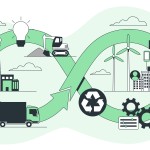
This course explores the principles and applications of green supply chain management and sustainable trade practices. It equips participants with tools and strategies to reduce environmental impact, enhance resource efficiency, and align supply chain operations with global sustainability goals. From eco-friendly procurement to circular economy models
2- Reduced Waste Management Costs
Waste disposal is increasingly expensive due to environmental regulations and landfill costs. Circular models reduce waste generation and therefore lower disposal expenses. Businesses also avoid potential regulatory penalties associated with environmental non-compliance.
3- Innovation and Competitive Advantage
Organizations adopting circular systems often develop new products, services, and operational capabilities that differentiate them from competitors. Sustainability innovation can improve market positioning and strengthen investor confidence.
According to the European Commission, circular economy initiatives could increase EU GDP by 0.5 percent and create approximately 700,000 jobs by 2030. This demonstrates that circularity is increasingly viewed as a growth strategy rather than solely an environmental initiative.
7- Challenges and Limitations
1- High Initial Investment
Transitioning toward circular systems often requires significant upfront investment in infrastructure, logistics, technology, and redesign processes. Businesses may need to establish reverse logistics networks, refurbishing facilities, and digital tracking systems before realizing long-term savings.
2- Consumer Behavior Barriers
Some consumers still associate reused or refurbished products with lower quality. Businesses must therefore invest in quality assurance, branding, and customer education to build trust in circular products.
3- Complex Reverse Logistics
Reuse systems depend heavily on effective product recovery and transportation processes. Managing reverse logistics across multiple markets can be operationally complex and expensive without strong coordination systems.
4- Regulatory and Standardization Issues
Circular business models often operate within regulatory frameworks originally designed for linear systems. Businesses may face inconsistent recycling standards, limited repair regulations, or barriers related to product certification and waste classification.
Despite these challenges, the long-term trajectory strongly favors circular transition. Governments worldwide are introducing sustainability regulations, extended producer responsibility policies, and waste reduction targets that increasingly encourage circular business practices.
8- Circular Economy Applications Across Industries
1- Fashion Industry
The fashion sector has become a major area for circular innovation. Clothing rental platforms, resale marketplaces, repair services, and textile recycling systems are increasingly common. Fast fashion has faced criticism for excessive waste generation, pushing brands toward more sustainable approaches.
2- Electronics Industry
Electronics companies are implementing refurbishment and trade-in programs to recover valuable materials and reduce electronic waste. Modular product design also supports easier repair and component replacement.
3- Automotive Sector
Automotive manufacturers have adopted remanufacturing systems for engines, transmissions, and components. Electric vehicle battery recycling and second-life battery applications are also growing rapidly.
4- Construction Industry
The construction sector is exploring reusable building materials, modular construction systems, and material recovery strategies to reduce waste and improve resource efficiency.
Industry | Circular Strategy | Primary Benefit |
Fashion | Rental and resale platforms | Reduced textile waste |
Electronics | Refurbishment and trade-ins | Material recovery |
Automotive | Remanufacturing | Lower production costs |
Construction | Reusable materials | Reduced resource consumption |
9- Future Trends in Circular Business Strategies
The future of circular economy systems will likely be shaped by digital transformation, regulatory pressure, and changing consumer expectations. Artificial intelligence will continue improving material recovery efficiency and predictive maintenance systems. Advanced recycling technologies will increase recovery rates for complex materials. Governments are also expected to strengthen regulations supporting repair rights, waste reduction, and sustainable product design.
Businesses are increasingly integrating environmental, social, and governance metrics into corporate strategy, making circularity an important factor in investor evaluations and market competitiveness. Circular models are therefore becoming part of broader corporate resilience and sustainability strategies rather than isolated environmental initiatives.
Research from the World Economic Forum indicates that the circular economy could become one of the most significant drivers of sustainable industrial transformation over the coming decade. Companies capable of integrating circularity into core operations are likely to gain long-term advantages in cost efficiency, resource security, and consumer trust.
https://www.weforum.org/stories/2026/03/circular-economy-economic-industrial-strategy/
https://holistiquetraining.com/en/course/circular-economy-and-waste-management
https://holistiquetraining.com/en/news/how-to-create-an-effective-learning-path-for-career-growth
10- Conclusion
The circular economy represents a major shift in how businesses create value, manage resources, and engage with consumers. Reuse models demonstrate that sustainability and profitability are not mutually exclusive objectives. Through remanufacturing, refurbishment, product-as-a-service systems, and sharing platforms, organizations can reduce costs, generate recurring revenue, strengthen customer relationships, and improve operational resilience.
Although transitioning toward circular systems involves challenges such as infrastructure investment, reverse logistics complexity, and consumer perception barriers, the long-term economic and environmental advantages are increasingly difficult to ignore. As regulatory pressures intensify and digital technologies improve circular operations, reuse models are likely to become a central component of modern business strategy. Companies that successfully integrate circular principles today will be better positioned to compete in an economy increasingly shaped by sustainability, resource efficiency, and long-term resilience.