
- Table of Contents
- Introduction
- What is Algorithmic Management?
- How Do Businesses Use AI to Supervise Employees?
- 1. Performance Monitoring
- 2. Task Allocation
- 3. Predictive Analytics
- 4. Employee Engagement
- 5. Training and Development
- 6. Compliance and Risk Management
- Benefits of Algorithmic Management for Managers
- 1. Data-Driven Decision Making
- 2. Increased Efficiency
- 3. Enhanced Employee Performance
- 4. Improved Resource Allocation
- 5. Greater Employee Satisfaction
- Downsides of Algorithmic Management
- 1. Job Displacement
- 2. Privacy Concerns
- 3. Over-Reliance on Data
- 4. Algorithmic Bias
- 5. Resistance to Change
- How to Implement Algorithmic Management in the Workplace
- 1. Assess Organizational Needs
- 2. Choose the Right Tools and Technologies
- 3. Involve Employees in the Process
- 4. Provide Training and Support
- 5. Monitor and Evaluate Performance
- 6. Address Ethical Considerations
- The Future of Algorithmic Management
- 1. Increased Integration of AI and Machine Learning
- 2. Enhanced Focus on Employee Well-Being
- 3. Greater Emphasis on Ethical AI Practices
- 4. Evolution of Leadership Roles
- 5. Continuous Learning and Adaptation
- Conclusion
Introduction
The rise of technology has transformed various aspects of our lives, including how businesses operate and manage their workforce. Algorithmic management, a concept that has gained traction in recent years, represents a significant shift in the way organizations supervise their employees. This blog post delves into the intricate world of algorithmic management, exploring its definition, applications, benefits, downsides, implementation strategies, and future prospects. By examining these facets, we aim to provide a comprehensive understanding of how businesses leverage artificial intelligence (AI) to enhance supervision while also considering the implications for employees and organizational culture.
What is Algorithmic Management?
Algorithmic management refers to the use of algorithms and AI systems to make decisions related to the management of employees. This approach utilizes data analytics, machine learning, and predictive modeling to optimize various aspects of workforce management, including task allocation, performance evaluation, and employee monitoring. Rather than relying solely on human judgment, algorithmic management employs data-driven insights to enhance efficiency and productivity.
At its core, algorithmic management integrates technology into traditional management practices, providing a framework that allows organizations to analyze vast amounts of data related to employee performance, behavior, and engagement. This can include tracking productivity metrics, assessing skill levels, and even predicting employee turnover. By harnessing the power of AI, businesses can make more informed decisions, streamline operations, and ultimately drive better outcomes.
How Do Businesses Use AI to Supervise Employees?
Businesses across various industries are increasingly adopting AI-driven tools to supervise employees. These tools can be categorized into several key areas:
1. Performance Monitoring
AI systems play a crucial role in performance monitoring by providing real-time insights into employee productivity and effectiveness. These systems can track a wide array of metrics, including:
- Task Completion Rates: AI tools can monitor how quickly and accurately employees complete their assigned tasks. This data can help managers identify high performers and those who may need additional support or training.
- Time Tracking: Many AI applications allow for automated time tracking, capturing how long employees spend on specific tasks or projects. This information can be invaluable for assessing productivity levels and identifying areas for improvement.
- Quality of Work: By analyzing the outcomes of completed tasks, AI can evaluate the quality of work produced by employees. This could involve reviewing error rates, customer feedback, or compliance with established standards.
2. Task Allocation
Efficient task allocation is essential for maximizing productivity and ensuring that employees are engaged in work that aligns with their skills and interests. AI systems facilitate this process through:
- Skill Matching: AI algorithms can analyze employee profiles, including skills, past performance, and preferences, to assign tasks to the most suitable individuals. This ensures that tasks are matched with the right skill sets, leading to better outcomes.
- Workload Balancing: AI can assess the current workload of each employee and distribute tasks accordingly. This prevents burnout and ensures that no single employee is overwhelmed while others have capacity.
- Dynamic Reallocation: As project requirements change or new tasks emerge, AI systems can dynamically reallocate tasks in real-time, ensuring that resources are optimized and deadlines are met.
3. Predictive Analytics
Predictive analytics powered by AI enables businesses to anticipate future trends and behaviors among their workforce. This capability encompasses:
- Employee Turnover Prediction: By analyzing historical data, AI can identify patterns that may indicate which employees are at risk of leaving the organization. This allows managers to intervene proactively, addressing concerns or providing incentives to retain talent.
- Performance Forecasting: AI can predict future performance levels based on past behavior and current trends. This insight enables managers to set realistic goals and expectations, as well as to identify employees who may need additional training or support.
- Identifying Training Needs: By analyzing performance data, AI can highlight skill gaps within the workforce. This allows organizations to tailor training programs to address specific needs, ensuring that employees have the necessary skills to succeed.
4. Employee Engagement
AI tools can significantly enhance employee engagement by providing insights into employee sentiment and morale. This includes:
- Sentiment Analysis: AI can analyze feedback from employee surveys, emails, and social media interactions to gauge overall sentiment within the organization. This data helps managers understand how employees feel about their work environment and identify areas for improvement.
- Feedback Mechanisms: AI-driven platforms can facilitate continuous feedback loops, allowing employees to share their thoughts and experiences in real time. This encourages open communication and fosters a culture of transparency.
- Recognition Programs: AI can help identify and highlight employee achievements, ensuring that contributions are recognized and rewarded. This recognition can boost morale and motivation, leading to higher levels of engagement.
5. Training and Development
AI enhances training and development initiatives by providing personalized learning experiences tailored to individual employee needs. Key aspects include:
- Personalized Learning Paths: AI can analyze an employee’s current skills and performance data to recommend specific training modules or resources that align with their career goals and development needs.
- Adaptive Learning Technologies: AI-driven training platforms can adapt in real-time to the learner’s progress, adjusting the difficulty level and content based on their performance. This ensures that employees receive the right level of challenge and support.
- Skill Assessments: AI can facilitate ongoing skill assessments to measure progress and effectiveness of training programs. This data can help organizations refine their training strategies and ensure employees are developing the necessary competencies.
6. Compliance and Risk Management
AI can also play a vital role in ensuring compliance with regulations and managing risks associated with employee behavior. This includes:
- Monitoring Compliance: AI systems can monitor employee actions and communications to ensure adherence to company policies and legal regulations. This is particularly important in industries with stringent compliance requirements.
- Risk Assessment: By analyzing data related to employee behavior and performance, AI can identify potential risks, such as fraudulent activities or safety violations. This proactive approach allows organizations to address issues before they escalate.
In short, the integration of AI into employee supervision is reshaping how businesses operate, providing managers with powerful tools to enhance performance, foster engagement, and streamline operations. By leveraging AI for performance monitoring, task allocation, predictive analytics, employee engagement, training, and compliance, organizations can create a more efficient and responsive workforce. However, it is essential for businesses to implement these technologies thoughtfully, ensuring that they complement human judgment and support a positive organizational culture. As AI continues to evolve, its role in employee supervision will likely expand, offering even greater opportunities for innovation and improvement in the workplace.

COVID-19 has introduced the challenges of virtual working, where team connection and productivity are not guaranteed. While virtual teams offer benefits, they risk misalignment and reduced collaboration, affecting trust and engagement. Building a successful virtual team requires trust, clear communication, and knowledge-sharing, especially due to
Benefits of Algorithmic Management for Managers
The adoption of algorithmic management offers several advantages for managers, including:
1. Data-Driven Decision Making
With access to comprehensive data analytics, managers can make informed decisions based on objective insights rather than relying solely on intuition. This reduces biases and enhances the overall quality of management decisions. By utilizing data to identify trends, managers can better understand employee performance and engagement levels, enabling them to tailor their strategies accordingly. For instance, if data reveals that certain teams consistently underperform, managers can investigate underlying issues and implement targeted interventions. This analytical approach fosters a culture of accountability, where decisions are backed by evidence rather than assumptions.
2. Increased Efficiency
AI-driven tools streamline various management processes, allowing managers to focus on strategic initiatives rather than getting bogged down in administrative tasks. This increased efficiency can lead to improved productivity across the organization. For example, automated scheduling and task allocation reduce the time managers spend coordinating workflows, freeing them to concentrate on leadership and team development. Additionally, by minimizing manual data entry and reporting, managers can access real-time insights that inform their decisions, leading to quicker responses to challenges and opportunities. This efficiency not only benefits managers but also enhances the overall agility of the organization.
3. Enhanced Employee Performance
By utilizing performance monitoring and predictive analytics, managers can identify areas for improvement and provide targeted support to employees. This proactive approach fosters a culture of continuous improvement and helps employees reach their full potential. Managers can use data to recognize patterns in performance, such as identifying top performers who can mentor others or pinpointing skills that require further development. Furthermore, by setting clear performance benchmarks based on data, managers can motivate employees to strive for excellence, creating a more engaged and high-performing workforce. This focus on development ultimately contributes to higher job satisfaction and retention rates.
4. Improved Resource Allocation
Algorithmic management enables managers to allocate resources more effectively by matching tasks to the right employees. This ensures that projects are completed on time and within budget, ultimately benefiting the organization as a whole. By analyzing employee workloads and skill sets, managers can ensure that high-priority tasks are assigned to those best equipped to handle them, reducing bottlenecks and enhancing overall productivity. Additionally, AI can help managers identify underutilized resources, allowing for better planning and optimization of team dynamics. This strategic allocation not only improves project outcomes but also fosters a sense of fairness and transparency in the distribution of work.
5. Greater Employee Satisfaction
When employees feel supported and engaged in their work, job satisfaction increases. Algorithmic management can help create a more positive work environment by addressing employee concerns and promoting professional development. By leveraging AI to gather feedback and monitor employee sentiment, managers can identify potential issues before they escalate, allowing for timely interventions. Furthermore, recognizing and rewarding employee contributions through data-driven insights fosters a culture of appreciation, making employees feel valued. As a result, organizations that implement algorithmic management practices often experience lower turnover rates and higher levels of employee loyalty, contributing to long-term success.
In summary, algorithmic management provides managers with powerful tools to enhance decision-making, efficiency, employee performance, resource allocation, and satisfaction. By embracing these technologies, managers can foster a more dynamic and responsive organizational culture that supports both individual and collective success.
Downsides of Algorithmic Management
While algorithmic management offers numerous benefits, it is not without its challenges and downsides. Some of the key concerns include:
1. Job Displacement
The increased reliance on AI for management tasks raises concerns about job displacement. As organizations automate certain functions, there is a risk that some roles may become obsolete, leading to job losses and employee anxiety. This can create a climate of uncertainty, where employees fear that their positions are at risk due to technological advancements. Moreover, the transition to algorithmic management may require new skills that existing employees do not possess, resulting in further job insecurity. Organizations must address these concerns by investing in reskilling and upskilling programs to prepare employees for new roles and responsibilities in an AI-driven environment.
2. Privacy Concerns
The extensive monitoring of employee performance can lead to privacy issues. Employees may feel uncomfortable knowing that their every move is being tracked, which can negatively impact trust and morale within the workplace. The collection of personal data, such as communication patterns and work habits, raises ethical questions about surveillance and consent. If employees perceive that their privacy is being compromised, it can lead to a decline in job satisfaction and engagement. Organizations should establish clear policies regarding data usage and ensure that employees are informed about what data is being collected and how it will be used. Creating a culture of transparency is essential to mitigate privacy concerns and foster trust.
3. Over-Reliance on Data
While data-driven decision-making is beneficial, an over-reliance on algorithms can lead to a lack of human judgment in management practices. This could result in decisions that fail to consider the nuances of individual employee situations or organizational culture. For instance, algorithms may prioritize efficiency over employee well-being, leading to burnout or disengagement. Additionally, managers may become overly dependent on data, neglecting the importance of interpersonal relationships and emotional intelligence in leadership. To counteract this downside, organizations must emphasize the value of human insight alongside algorithmic recommendations, ensuring that managers remain engaged with their teams and responsive to their needs.
4. Algorithmic Bias
AI systems are only as good as the data they are trained on. If the underlying data contains biases, the algorithms may perpetuate these biases in their decision-making processes. This can lead to unfair treatment of employees, such as biased performance evaluations or unequal opportunities for advancement. For example, if an algorithm is trained on historical data that reflects gender or racial biases, it may inadvertently favor certain groups over others, undermining diversity and inclusion efforts. Organizations must actively work to identify and mitigate biases in their algorithms by regularly auditing data sources and involving diverse teams in the development of AI systems. This commitment to fairness is crucial for maintaining an equitable workplace.
5. Resistance to Change
Implementing algorithmic management may encounter resistance from employees and managers who are accustomed to traditional management practices. Change management strategies are essential to ensure a smooth transition and foster acceptance of new technologies. Employees may feel threatened by the introduction of AI, fearing that it will undermine their roles or diminish their autonomy. Additionally, managers may struggle to adapt to new tools and processes, leading to frustration and decreased morale. To address resistance, organizations should prioritize communication and training, emphasizing the benefits of algorithmic management while providing support to help employees navigate the transition. Engaging employees in the implementation process can also foster a sense of ownership and collaboration, reducing resistance and promoting a more positive outlook on change.
In summary, while algorithmic management presents significant opportunities for organizations, it also poses challenges that must be carefully managed. By addressing concerns related to job displacement, privacy, over-reliance on data, algorithmic bias, and resistance to change, organizations can create a balanced approach that leverages the advantages of AI while safeguarding the interests of their employees. This thoughtful implementation will ultimately lead to a more sustainable and effective management strategy.
How to Implement Algorithmic Management in the Workplace
Successfully implementing algorithmic management requires careful planning and consideration. Here are some steps organizations can take to integrate AI-driven management practices:
1. Assess Organizational Needs
Before introducing algorithmic management, it is crucial to conduct a thorough assessment of the organization’s needs and objectives. This involves:
- Identifying Pain Points: Engage with employees and managers to identify current challenges in performance management, resource allocation, and employee engagement. Understanding these pain points will help determine how algorithmic management can address specific issues.
- Defining Goals: Establish clear goals for what the organization hopes to achieve through algorithmic management. These could include improving productivity, enhancing employee satisfaction, or optimizing resource allocation. Having well-defined objectives will guide the implementation process and provide benchmarks for success.
- Evaluating Readiness: Assess the existing technological infrastructure and organizational culture to determine readiness for algorithmic management. This includes evaluating data availability, employee skill levels, and the overall openness to change within the organization.
2. Choose the Right Tools and Technologies
Selecting appropriate tools and technologies is critical for the success of algorithmic management. Consider the following:
- Researching Options: Explore various AI-driven management tools that align with the organization’s goals. This may includeperformance monitoring software,task management platforms, oremployee engagement tools. Look for solutions that offer scalability and integration capabilities with existing systems.
- Customization: Choose tools that allow for customization to fit the unique needs of the organization. This ensures that the algorithms and metrics used reflect the specific context and culture of the workplace.
- Vendor Evaluation: When selecting vendors, consider their reputation, customer support, and the ability to provide ongoing updates and improvements. Engaging with vendors who prioritize ethical AI practices and data security is essential.
3. Involve Employees in the Process
Engaging employees in the implementation of algorithmic management is vital for fostering acceptance and reducing resistance. This can be achieved through:
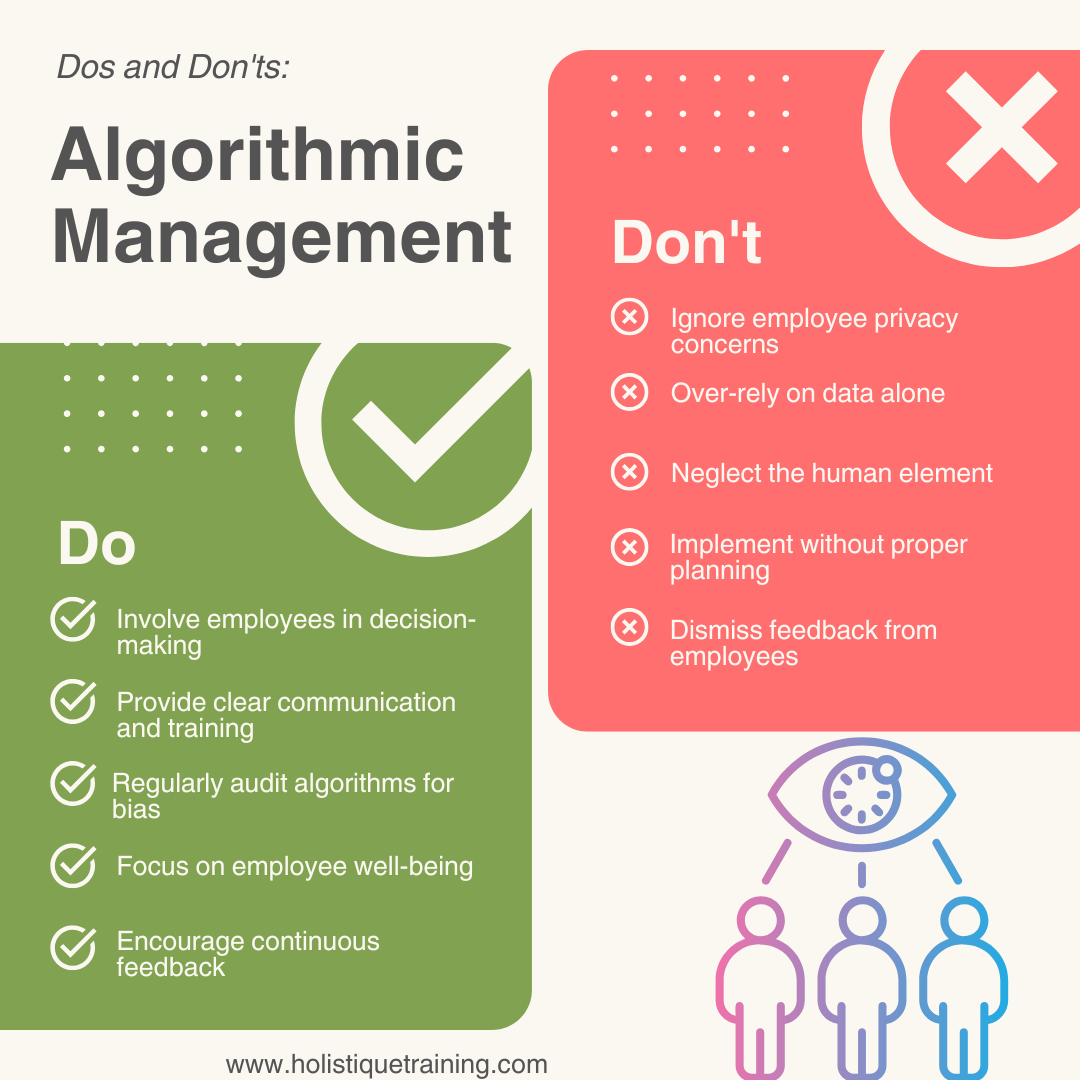
- Communication: Clearly communicate the purpose and benefits of algorithmic management to all employees. Transparency about how data will be used and the expected outcomes can alleviate concerns and build trust.
- Feedback Mechanisms: Establish channels for employees to provide feedback throughout the implementation process. This input can help identify potential issues and areas for improvement, ensuring that the system meets the needs of all stakeholders.
- Pilot Programs: Consider launching pilot programs in specific departments or teams before a full-scale rollout. This allows for testing the effectiveness of the tools and gathering insights on employee experiences, which can inform adjustments before broader implementation.
4. Provide Training and Support
To ensure a smooth transition to algorithmic management, organizations must invest in training and support for both managers and employees. This includes:
- Skill Development: Offer training sessions to help employees understand how to use new tools effectively. This could involve workshops, online courses, or one-on-one coaching to build confidence in utilizing AI-driven systems.
- Leadership Training: Equip managers with the necessary skills to interpret data and make informed decisions based on algorithmic insights. Emphasizing the importance of human judgment alongside data will help maintain a balanced approach to management.
- Ongoing Support: Provide continuous support and resources for employees as they adapt to new technologies. This could include access to a help desk, user manuals, or regular check-ins to address any concerns that arise during the transition.
5. Monitor and Evaluate Performance
Once algorithmic management is implemented, it is essential to monitor its effectiveness and make adjustments as needed. This involves:
- Setting Metrics: Establish key performance indicators (KPIs) to measure the success of algorithmic management initiatives. These metrics should align with the organization’s goals and provide insights into areas such as productivity, employee engagement, and retention rates.
- Regular Reviews: Conduct regular reviews of the algorithmic management system to assess its impact on the organization. Analyze data to identify trends, successes, and challenges, and use this information to inform future decisions.
- Continuous Improvement: Foster a culture of continuous improvement by encouraging feedback and making iterative changes to the system based on employee input and performance data. This ongoing evaluation will help ensure that the algorithmic management approach remains effective and relevant.
6. Address Ethical Considerations
As organizations implement algorithmic management, it is crucial to address ethical considerations related to data usage and employee privacy. This includes:
- Data Governance: Establish clear policies regarding data collection, storage, and usage to protect employee privacy. Ensure that employees are informed about what data is being collected and how it will be utilized in decision-making processes.
- Bias Mitigation: Actively work to identify and mitigate biases in algorithms to promote fairness and equity in management practices. Regular audits of the algorithms and their outcomes can help ensure that decisions are not influenced by unintended biases.
- Fostering Transparency: Maintain transparency in how algorithmic management decisions are made and communicated to employees. This openness builds trust and encourages a collaborative environment where employees feel valued and respected.
In short, implementing algorithmic management in the workplace is a multifaceted process that requires careful planning, employee involvement, and ongoing evaluation. By assessing organizational needs, selecting the right tools, providing training, and addressing ethical considerations, organizations can successfully integrate AI-driven management practices. This thoughtful approach not only enhances operational efficiency but also fosters a positive workplace culture that values both data-driven insights and human judgment. As organizations navigate this transition, they will be better positioned to leverage the benefits of algorithmic management while mitigating potential challenges.

This training course explores how networking strategies are evolving in today’s world of artificial intelligence (AI) and remote work. Leaders and professionals now need to build, maintain, and leverage networks in digital-first environments, where face-to-face interactions are limited and technology plays a central role.
The Future of Algorithmic Management
The future of algorithmic management is poised for significant evolution as technology continues to advance. Several trends are likely to shape this landscape:
1. Increased Integration of AI and Machine Learning
The future of algorithmic management will see a deeper integration of advanced AI and machine learning technologies. These tools will not only automate routine tasks but also provide predictive analytics that can forecast employee performance and project outcomes. As algorithms become more sophisticated, they will be able to analyze complex data sets in real time, enabling managers to make proactive decisions rather than reactive ones. This shift will allow organizations to tailor their management strategies to individual employee needs, fostering a more personalized approach to development and engagement. Furthermore, as AI systems learn from ongoing interactions, they will continually improve their recommendations, leading to more effective management practices over time.
2. Enhanced Focus on Employee Well-Being
In the future, there will likely be a greater emphasis on using algorithmic management to support employee well-being and mental health. Organizations are beginning to recognize that employee satisfaction and productivity are closely linked, and algorithmic tools can play a pivotal role in this area. For instance, AI-driven platforms can monitor workload and stress levels, providing insights that help managers identify when employees may need additional support or resources. Additionally, algorithms can help create a more balanced work environment by promoting flexible schedules and work-life balance initiatives. This focus on well-being not only enhances employee morale but also contributes to higher retention rates and overall organizational success.
3. Greater Emphasis on Ethical AI Practices
As algorithmic management becomes more prevalent, the importance ofethical AI practices will grow. Organizations will need to prioritize transparency and fairness in their algorithmic decision-making processes to build trust with employees. This includes ensuring that algorithms are free from biases and that data privacy is maintained. Companies may implement regular audits of their algorithms to identify and rectify any biases that could impact employee evaluations or promotions. Furthermore, as regulatory scrutiny around AI increases, organizations will need to establish clear guidelines and ethical frameworks for the use of algorithmic management. This commitment to ethical practices will not only mitigate risks but also enhance the organization's reputation as a fair and responsible employer.

As artificial intelligence continues to influence decision-making in healthcare, finance, justice, and beyond, questions around fairness, accountability, and transparency have moved to the forefront of AI development. This course introduces the ethical challenges posed by AI systems and focuses on explainable AI (XAI) as a critical component for
4. Evolution of Leadership Roles
The rise of algorithmic management will transform traditional leadership roles, requiring managers to develop new skills and competencies. Future leaders will need to be adept at interpreting data and leveraging AI insights to inform their decision-making. This shift will necessitate a blend of technical proficiency and emotional intelligence, as leaders must balance data-driven strategies with the human aspects of management. Additionally, managers will need to act as facilitators, guiding their teams through the integration of algorithmic tools and fostering a culture of collaboration and innovation. As a result, leadership development programs will likely evolve to emphasize these dual skill sets, preparing managers for the complexities of a data-driven workplace.
5. Continuous Learning and Adaptation
The future of algorithmic management will require organizations to embrace a culture of continuous learning and adaptation. As technologies and market conditions change, organizations must remain agile and responsive to new challenges and opportunities. This means that employees at all levels will need to engage in ongoing training and development to keep pace with advancements in AI and management practices. Organizations may implement adaptive learning platforms that personalize training experiences based on individual employee needs and performance data. By fostering a culture of lifelong learning, organizations can ensure that their workforce remains competitive and capable of leveraging algorithmic management effectively.

The rise of artificial intelligence is reshaping how we think, learn, and solve problems. In today’s fast-changing world, learning is no longer a linear process—it’s a dynamic interaction between human insight and machine intelligence. This course introduces the concept of hybrid intelligence and empowers participants to
All in all, the future of algorithmic management is bright, with the potential to revolutionize how organizations operate and interact with their employees. As AI technologies advance, organizations will need to focus on ethical practices, employee well-being, and the evolution of leadership roles to harness the full benefits of algorithmic management. By embracing these changes and fostering a culture of continuous learning and adaptation, organizations can position themselves for success in an increasingly data-driven world. This proactive approach will not only enhance operational efficiency but also create a more engaged and satisfied workforce, ultimately driving long-term organizational growth.
Conclusion
Algorithmic management represents a transformative approach to employee supervision, leveraging the power of AI to enhance decision-making, improve efficiency, and foster employee engagement. While the benefits are significant, organizations must also navigate the challenges associated with this shift, including privacy concerns, job displacement, and algorithmic bias. By carefully implementing algorithmic management practices and prioritizing transparency and ethical considerations, businesses can create a work environment that harnesses the potential of technology while supporting the needs and well-being of their employees. As we look to the future, the continued evolution of algorithmic management will undoubtedly shape the landscape of work, presenting new opportunities and challenges for organizations and their workforce.