
- Table of Contents
- Introduction
- 1. Defining Project Management Skills
- 2. The Two Pillars: Soft Skills and Hard Skills
- 3. Core Soft Skills in Project Management
- 4. Core Hard Skills in Project Management
- 5. Is Project Management a Soft Skill?
- 6. Strategic and Business Acumen Skills
- 7. The Role of Technology and Digital Skills
- 8. Assessing Project Management Skills: Implications for HR and L&D
- 9. Building a Project Management Skills Culture
- Conclusion
Introduction
Project management is one of the most consistently demanded professional disciplines across global industries. From infrastructure development and technology delivery to humanitarian operations and corporate transformation programmes, the ability to plan, coordinate, execute, and close projects effectively determines whether organisations achieve their strategic objectives or fall short of them. Yet despite the universal demand for skilled project managers, there remains considerable ambiguity in many organisations about precisely what project management skills entail, how they should be developed, and how HR and Learning and Development functions can best assess and address competency gaps in their workforces.
The Project Management Institute (PMI) estimates that the global economy will require approximately 25 million additional project management professionals by 2030, adding 2.3 million new project-oriented roles each year. This scale of demand reflects not only the growth of project-based work but also the increasing complexity of delivery environments, which now span remote teams, agile methodologies, AI-enabled tools, and multi-stakeholder governance structures. For organisations seeking to remain competitive and for L&D professionals designing training frameworks, understanding what constitutes project management skill is therefore both an urgent and a consequential task.
This article examines the full spectrum of project management skills, distinguishing between soft and hard skill categories, exploring why each matters, and addressing the contested question of whether project management is itself a soft skill. It is written for HR managers and Learning and Development professionals who are responsible for identifying competency gaps, designing training interventions, and building future-ready project talent pipelines.
1. Defining Project Management Skills
Project management skills are the competencies that enable an individual to plan, lead, execute, monitor, and close a project effectively. They span a broad continuum from highly technical, methodological capabilities to interpersonal and behavioural attributes. The Project Management Body of Knowledge (PMBOK), published by PMI, organises these competencies into technical project management, leadership, and strategic and business management domains, reflecting the understanding that no single category of skill is sufficient on its own.
In practical terms, project management skills allow a practitioner to translate organisational intent into coordinated action. They enable a project manager to define scope, build realistic schedules, manage resources, identify and mitigate risks, communicate with stakeholders, adapt to change, and ultimately deliver outcomes that meet or exceed expectations. The breadth of this skill set explains why project management has historically been difficult to reduce to a single professional profile. Different industries, project types, and organisational cultures weight these competencies differently, but the underlying taxonomy remains consistent.
For L&D and HR professionals, the importance of defining project management skills with precision lies in their function as diagnostic tools. Without a clear competency framework, training needs assessments remain imprecise, development investment risks being misallocated, and talent decisions lack defensible criteria. Establishing what project management skills look like at entry, practitioner, and expert levels is therefore a foundational step in building any effective project management capability programme.
2. The Two Pillars: Soft Skills and Hard Skills
Project management skills are most commonly organised into two broad categories: soft skills and hard skills. This distinction is not merely academic. It shapes how organisations assess capability, design development programmes, and evaluate performance. Understanding the characteristics, overlaps, and relative importance of each category is essential for any professional responsible for developing project talent.
Dimension | Soft Skills | Hard Skills |
Nature | Interpersonal and behavioural | Technical and methodological |
Examples | Leadership, communication, adaptability | Risk management, scheduling, budgeting |
Acquired through | Experience, coaching, practice | Training, certification, tools |
Measurability | Harder to quantify directly | Easier to test and certify |
Transferability | Highly transferable across sectors | Partially transferable; context-dependent |
Impact on success | Drives team cohesion and stakeholder trust | Ensures technical delivery and compliance |
Soft skills, sometimes referred to by PMI as power skills, are the interpersonal, cognitive, and behavioural competencies that determine how effectively a project manager works with people. They include leadership, communication, problem-solving, adaptability, emotional intelligence, negotiation, and decision-making. These skills are often harder to quantify, develop more slowly through experience and reflection, and are highly transferable across sectors and project types.
Hard skills, by contrast, are the technical and methodological competencies that enable a project manager to perform the structured tasks of project delivery. They include project planning, scheduling, risk management, budget management, quality assurance, and proficiency with recognised methodologies such as PRINCE2, Agile, or the PMP framework. These skills are learnable through formal training, measurable through certification, and directly tied to the procedural requirements of project execution.
According to the PMI Pulse of the Profession 2023, organisations that prioritise both categories of skill achieve project success rates of 72 per cent, compared to 65 per cent in organisations that do not. This finding underlines a widely observed truth in professional practice: neither category is sufficient in isolation. A project manager with advanced technical skill but limited interpersonal ability will struggle to maintain team cohesion or manage stakeholder expectations. Conversely, a highly empathetic communicator without structured planning ability will find it difficult to deliver complex work within constraints.
3. Core Soft Skills in Project Management
Soft skills are the foundation of effective project leadership. They govern the quality of working relationships, the culture of the project team, and the credibility of the project manager in the eyes of sponsors and stakeholders. While they are sometimes undervalued in technical environments, research consistently demonstrates their outsized impact on project outcomes.
Leadership is the first and most important soft skill. Effective project managers do not merely direct tasks; they build shared understanding of objectives, resolve ambiguity, inspire commitment from team members, and create the psychological safety that enables honest communication. Leadership in project management is situational and adaptive: the style appropriate for a high-autonomy specialist team differs substantially from that required in a structured compliance environment.
Communication encompasses both the ability to transmit information clearly across diverse audiences and the capacity to listen, synthesise, and respond to what others convey. Project managers communicate constantly with sponsors, team members, contractors, regulators, and clients, often across organisational and cultural boundaries. Poor communication is consistently identified in post-project reviews as a primary contributor to scope creep, misaligned expectations, and stakeholder dissatisfaction.
Emotional intelligence, a concept formalised by psychologist Daniel Goleman, refers to the ability to recognise, understand, and manage one's own emotions and the emotions of others. In project management, it manifests in a manager's capacity to handle conflict constructively, maintain composure under pressure, and motivate individuals with differing needs and motivations. A Capterra survey found that emotionally intelligent project managers are approximately 11 per cent more successful at managing processes, engaging stakeholders, avoiding scope creep, and using resources efficiently compared to those who lack this competency.

As a leader, understanding and utilising emotional intelligence and mastering effective communication styles are essential skills to get the most out of your team. It’s important that your direct reports find you approachable and relatable, meaning they feel confident raising issues and suggesting ideas to
Adaptability and problem-solving are closely related soft skills that become particularly important in projects characterised by uncertainty or rapid change. The ability to reassess a plan when circumstances shift, identify root causes of emerging issues, and generate creative solutions without losing momentum is a defining quality of experienced project managers.
Negotiation and stakeholder management are skills that bridge soft and strategic capability. Project managers regularly negotiate resource allocation, timelines, priorities, and scope with parties whose interests do not always align. The ability to navigate these tensions diplomatically while maintaining project integrity is a skill that develops significantly through practice and deliberate reflection.
4. Core Hard Skills in Project Management
Hard skills are the technical scaffolding of project management. They are the competencies that allow a project manager to translate intent into structured, trackable delivery. Unlike soft skills, which often develop gradually and resist direct measurement, hard skills can be taught in formal settings, assessed through examination, and validated through certification. For HR and L&D professionals, they offer more readily auditable criteria for capability assessment.
Project planning is the most fundamental hard skill in the discipline. It involves defining project scope, breaking work into manageable tasks, sequencing activities in logical order, identifying dependencies, and establishing realistic timelines. Effective planning requires both analytical ability and a sound understanding of how work actually gets done in the relevant context. Without strong planning competency, even experienced project managers are likely to encounter avoidable delays, cost overruns, or quality failures.
Risk management is a structured process of identifying potential threats to project objectives, assessing their likelihood and potential impact, developing mitigation strategies, and monitoring those risks throughout the project lifecycle. It is a hard skill because it follows defined frameworks, involves quantitative assessment techniques, and is a required knowledge area in all major project management certifications.
Budget management and cost control require the ability to develop credible cost estimates, track expenditure against baselines, manage variances, and communicate financial performance to sponsors and governance bodies. These competencies sit at the intersection of project management and financial management and are particularly critical in capital-intensive or externally funded projects.
Scheduling and the management of critical path analysis are technical skills that enable a project manager to identify which activities determine the earliest possible completion date and where float exists. Tools such as Gantt charts, network diagrams, and scheduling software support these capabilities, but the underlying conceptual skill lies in understanding how time, resources, and dependencies interact.
Methodology proficiency refers to the ability to select and apply recognised project management frameworks appropriately. PRINCE2, the PMP framework, Agile, Scrum, and hybrid approaches each carry specific process requirements, governance structures, and vocabulary. Knowing when to apply a predictive waterfall approach and when to adopt an iterative agile model is a strategic competency that builds on sound methodological knowledge.
Skill Category | Key Skills | Primary Application |
Soft Skills | Leadership, communication, emotional intelligence | Team management, stakeholder engagement |
Hard Skills | Planning, risk management, budgeting, scheduling | Project execution and delivery |
Methodological | Agile, PRINCE2, PMP frameworks, Scrum | Process governance and standards compliance |
Technical Tools | MS Project, Primavera P6, Jira, Asana | Scheduling, tracking and reporting |
Strategic | Business acumen, benefits realisation, KPI design | Organisational alignment and value delivery |

Effective leadership is paramount across all industries. This comprehensive course equips participants with the necessary skills to lead and motivate their teams to deliver exceptional results. Through a structured programme, delegates will develop a strong foundation in key leadership practices, refine their project vision, and enhance their
5. Is Project Management a Soft Skill?
This is a question that regularly surfaces in HR, L&D, and professional development discussions, and the answer requires careful unpacking. The debate reflects a deeper conceptual ambiguity about the nature of project management as a discipline. Depending on how one frames the question, project management can appear to sit primarily on either side of the soft-hard divide, or to transcend it altogether.
Those who argue that project management is fundamentally a soft skill tend to emphasise its relational and adaptive dimensions. The argument runs that what distinguishes an excellent project manager from a merely competent one is not technical knowledge, which can be acquired through certification and training, but the capacity to lead diverse teams, navigate political complexity, build trust, and make sound judgements in ambiguous circumstances. These are human capabilities that no methodology textbook can fully teach.
Those who argue that project management is a hard skill point to its codified body of knowledge, its formal certification pathways, and its procedural requirements. PMI's PMBOK, AXELOS's PRINCE2 framework, and Agile manifesto-based methodologies all constitute structured, learnable knowledge systems with defined processes, terminologies, and governance requirements. In this reading, project management is a technical discipline that happens to involve people, in the same way that financial accounting is a technical discipline that also involves client relationships.
The more practically useful position, and the one supported by research, is that project management is neither exclusively a soft skill nor exclusively a hard skill. It is a multidisciplinary professional competency that integrates both dimensions in ways that are specific to the project environment and the organisation within which it operates. PMI itself has moved away from the earlier hard-soft binary, introducing the concept of power skills in its 2023 Pulse of the Profession report to describe the interpersonal and adaptive capabilities that now differentiate high-performing project professionals and organisations.
Argument | Position | Evidence |
PM is a soft skill | Some argue it is primarily interpersonal | Leadership, communication and adaptability are core |
PM is a hard skill | Others frame it as technical and methodological | Planning, risk, budgeting and frameworks are certified |
PM is neither exclusively | It is a multidisciplinary professional competency | PMI defines it as a blend of power and technical skills |
Practical consensus | Both dimensions are inseparable for effective delivery | 72% project success rate where both are prioritised (PMI, 2023) |
For L&D professionals, this resolution has direct implications. A training needs assessment that focuses exclusively on methodology certification will leave significant capability gaps around leadership, communication, and emotional intelligence. Conversely, a programme focused solely on interpersonal development without reinforcing technical foundations may produce confident but structurally underprepared practitioners. A balanced development curriculum, calibrated to role level and project complexity, is the approach most consistent with both research evidence and professional standards.
Project management is recognised as the best way to ensure that complex additions to any company are added and completed in a timely and organised manner that considers the budget and stakeholder needs. This means that there is a lot of personnel involved
6. Strategic and Business Acumen Skills
Alongside soft and hard skills, a third dimension of project management competency has become increasingly prominent in professional discourse: strategic and business acumen skills. These are the capabilities that enable a project manager to contextualise their work within the broader strategic objectives of the organisation, to contribute to benefits realisation planning, and to make decisions that align project outcomes with organisational value.
PMI's Pulse of the Profession 2025 report identifies business acumen as a key differentiator among high-performing project professionals. The report notes that project managers who understand how their projects connect to organisational strategy, financial performance, and stakeholder value are better positioned to manage trade-offs, escalate decisions appropriately, and sustain sponsor engagement over the full project lifecycle. This shift reflects a wider evolution in the project manager's role, from tactical executor to strategic value creator.
Business acumen in a project management context includes the ability to read and interpret basic financial reports, to understand how project spending relates to capital expenditure and operational budgets, and to frame project outcomes in terms of return on investment and benefits realisation. It also includes commercial awareness, meaning an understanding of how the organisation's project decisions affect its relationships with clients, suppliers, and regulators.
For HR and L&D professionals, strategic competency development represents an important but often underfunded area of the project management curriculum. Many training programmes focus heavily on methodology certification and overlook the business literacy that allows project managers to operate with greater autonomy, take accountability for outcomes rather than merely outputs, and participate meaningfully in strategic conversations. Embedding business acumen modules within project management development programmes is a practical step towards closing this gap.
7. The Role of Technology and Digital Skills
The digital transformation of work has added a new layer of technical skill requirement to the project management role. Project managers are now expected to select, configure, and derive insight from a range of digital tools, from scheduling and collaboration platforms to data dashboards and, increasingly, AI-enabled project intelligence tools.
Proficiency in project management software, including platforms such as Microsoft Project, Primavera P6, Jira, Asana, and Monday.com, has shifted from a differentiating capability to a baseline expectation in many industries. These tools enable project managers to plan at scale, track progress in real time, manage resource allocation, and maintain audit trails that support governance requirements.
Beyond software proficiency, data literacy is an emerging skill requirement. Project managers are increasingly expected to interpret performance metrics, identify trends in project data, and use evidence to support decision-making. This requires at minimum a working understanding of quantitative methods, dashboard interpretation, and the limitations of data in complex project environments.
AI and automation tools are beginning to reshape the project management role in ways that L&D professionals should monitor closely. PMI research indicates that 82 per cent of senior leaders plan to use AI in some capacity for project management within five years. This suggests that future competency frameworks will need to accommodate AI literacy as a component of the technical skill set, encompassing both the ability to use AI tools effectively and the critical judgement to recognise their limitations.

IT Essentials for Non-Technical Project Managers is designed to equip non-IT professionals with the knowledge and skills to manage IT projects effectively. This course covers key IT concepts, project management tools, and best practices to bridge the gap between technical and non-technical stakeholders.
8. Assessing Project Management Skills: Implications for HR and L&D
For HR and L&D professionals, translating the taxonomy of project management skills into practical assessment and development frameworks is the central challenge. The diversity of the skill set, spanning interpersonal capability, technical knowledge, methodological proficiency, strategic awareness, and digital literacy, means that no single assessment instrument can capture the full picture.
Competency frameworks remain the most widely used tool for organising and communicating skill expectations. A well-designed project management competency framework will distinguish between entry-level, practitioner, and advanced expectations, differentiate between role types such as project coordinator, project manager, and programme director, and align with recognised professional standards such as those set by PMI or the Association for Project Management (APM). It will also signal which competencies are assessed through formal certification and which through evidence of practice and behavioural demonstration.
Training needs assessments for project management should address both the technical and interpersonal domains. Common gaps identified in organisational assessments include risk management, stakeholder communication, and the ability to adapt methodology to context. Many practitioners are certified in a specific methodology but lack the flexibility to select the most appropriate approach for a given project type, a reflection of training that has emphasised procedural knowledge over contextual judgement.
Development interventions should be varied in format. Formal training and certification programmes address the hard skill and methodological components effectively. Coaching, mentoring, action learning sets, and structured reflection practices are more appropriate for developing soft skills, which require behavioural practice rather than knowledge transmission. Blended models that combine formal learning with applied practice and peer reflection tend to produce the most durable capability improvements.
Evaluation of project management development programmes should not be limited to knowledge tests and participant satisfaction surveys. Impact measurement should include evidence of behaviour change in the workplace, observed improvement in project performance metrics, and, where possible, linkage to project outcome data. This requires close collaboration between L&D functions and project governance structures, and a shared understanding of what successful skill development looks like in practice.
Considering a career in project management? Learn about vital certifications, from PMP to PRINCE2 & explore the benefits of online vs in-person courses.
9. Building a Project Management Skills Culture
The development of project management skills is most effective when it occurs within an organisational culture that values structured delivery, continuous learning, and performance accountability. In organisations where project management is treated as a bureaucratic compliance requirement rather than a genuine professional discipline, even well-designed training programmes produce limited impact because the cultural conditions for applying and reinforcing new skills are absent.
Building a project management skills culture requires commitment from senior leadership to model good project governance, invest in the professional development of project practitioners, and create the structural conditions for learning from project experience. Lessons learned processes, project review mechanisms, communities of practice, and mentoring networks are all practical tools for embedding this culture.
HR business partners and L&D professionals play a critical role in making the business case for sustained investment in project management capability. This requires articulating the organisational return on investment of skill development, not only in terms of improved project success rates, but also in terms of reduced rework costs, improved staff retention among high-performing project practitioners, and greater organisational agility in responding to strategic change.
The World Economic Forum's Future of Jobs Report 2025 identifies project management as the twelfth fastest-growing job role globally and highlights its central contribution to net employment growth through 2030. This endorsement at the level of global economic analysis reflects the increasing recognition that project-based work is becoming the dominant mode of organised activity across sectors. For HR and L&D professionals, this is both a challenge and an opportunity: the organisations that invest most deliberately in building project management skills cultures now will be the best positioned to attract, develop, and retain the talent that will drive their strategic priorities in the years ahead.
Conclusion
Project management skills represent one of the most complex and consequential competency domains in contemporary organisational life. They span a wide spectrum from technical hard skills such as planning, risk management, budgeting, and methodology proficiency, through to behavioural soft skills such as leadership, communication, emotional intelligence, and adaptability, and extend further into strategic business acumen and digital literacy. No single category is sufficient on its own; the evidence consistently shows that high-performing project practitioners and organisations combine technical rigour with strong interpersonal and strategic capability.
The question of whether project management is a soft skill or a hard skill does not yield a simple answer because it is, in reality, neither exclusively one nor the other. It is a multidisciplinary professional competency that requires HR and L&D professionals to take a holistic view when designing assessment frameworks, training interventions, and talent development pathways. The introduction of PMI's power skills concept reflects a growing consensus in the profession that the interpersonal dimension of project management has been underweighted historically, and that redressing this imbalance is essential for improving delivery outcomes at scale.
For organisations seeking to build genuine project management capability, the starting point is a clear, well-structured competency framework aligned with recognised professional standards. The investment required is substantive, but the evidence of its return, measured in project success rates, strategic alignment, and organisational resilience, is compelling.
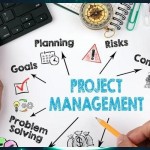
This course prepares participants for the "Project Management Professional (PMP®)" certification. It focuses on enhancing skills in managing scope, time, cost, and quality while navigating the intricacies of team dynamics and stakeholder engagement.Participants will learn to apply best practices and advanced methodologies to projects, ensuring successful outcomes. While this course