
- Table of Contents
- Introduction
- 1- What Is Good Leadership and Why Does It Matter?
- What Does Good Leadership Look Like in Daily Work?
- 2- What Are the Key Traits of a Good Leader?
- 3- What Does Bad Leadership Look Like?
- Micromanagement and Control
- Absent and Avoidant Leadership
- Toxic and Blaming Behaviour
- 4- How Do Good and Bad Leaders Compare in Everyday Situations?
- 5- What Are the Real Costs of Bad Leadership?
- Higher Turnover and Recruitment Costs
- Lower Engagement and Productivity
- Damaged Wellbeing and Reputation
- 6- Why Does Trust Matter So Much in Leadership?
- What Is Psychological Safety?
- How Can Leaders Build Trust Every Day?
- 7- Can a Leadership Style Be Good or Bad Depending on the Situation?
- 8- Can a Good Leader Turn Into a Bad Leader?
- 9- How Does Emotional Intelligence Separate Good Leaders from Bad Ones?
- Self-Awareness and Self-Control
- Empathy and Social Skill
- 10- How Can Managers Spot Bad Leadership in Themselves?
- 11- How Can You Become a Better Leader Starting Today?
- Conclusion
Introduction
Almost everyone has worked for a brilliant boss and a terrible one. The brilliant one made hard days feel manageable, gave you room to grow and left you wanting to do your best work. The terrible one made Sunday evenings feel heavy and quietly pushed you towards the exit. The difference between the two rarely comes down to intelligence or experience. It comes down to how they lead.
For managers and team leaders, this difference matters more than ever. You sit closest to the people who deliver the work, which means your habits, moods and decisions shape your team’s daily experience. Small behaviours, such as how you respond to a mistake or whether you listen in meetings, add up to a culture that either lifts people or wears them down. The good news is that leadership is a set of learnable behaviours rather than an inborn gift.
In this article, we will answer the questions managers ask most often about good leadership and bad leadership. We will look at what each one looks like, the traits that separate them, the real costs of getting it wrong, the role of trust and emotional intelligence, whether good leaders can slip into bad habits, how to spot warning signs in yourself, and practical steps to lead better starting today.
1- What Is Good Leadership and Why Does It Matter?
Good leadership is the ability to guide a group of people towards a shared goal in a way that earns their trust and brings out their best work. It is not about holding a senior title or giving the loudest instructions. A good leader sets a clear direction, removes obstacles, supports people through difficulty and takes responsibility when things go wrong. Their team knows what is expected of them, why it matters and where to turn for help.
Leadership matters because it shapes nearly everything about how a team performs. People rarely switch off at work because of the logo on the door. They respond to the person they report to every day. When that relationship is healthy, people communicate openly, solve problems earlier and take pride in their results. When it is damaged, even talented people hold back.
According to Gallup, managers account for at least 70% of the variance in team engagement, which makes the manager the single biggest influence on how switched on a team feels. The same research shows that global manager engagement fell from 31% to 22% between 2022 and 2025, a sign that many leaders are struggling without the support they need.
It is also worth remembering that good leadership is not the same as being liked. Leaders sometimes have to deliver unwelcome news, hold people to standards and make unpopular calls. The difference is that good leaders do these things with honesty and respect, so people understand the reasoning even when they disagree with the outcome.
What Does Good Leadership Look Like in Daily Work?
It rarely looks dramatic. Good leadership shows up in ordinary moments, and these moments are easy to overlook until they are missing. Consider the following examples.
1- Starting the week with clarity. A good leader tells the team what the priorities are, which tasks can wait and who owns what, so nobody wastes energy guessing.
2- Handling mistakes calmly. When an error appears, they ask what happened and how to prevent it next time, rather than hunting for someone to blame.
3- Giving credit generously. They name the people who did the work when presenting results to senior colleagues, which builds loyalty and encourages effort.
4- Making time for one-to-ones. Regular, unhurried conversations show people they matter and surface small problems before they become big ones.
2- What Are the Key Traits of a Good Leader?
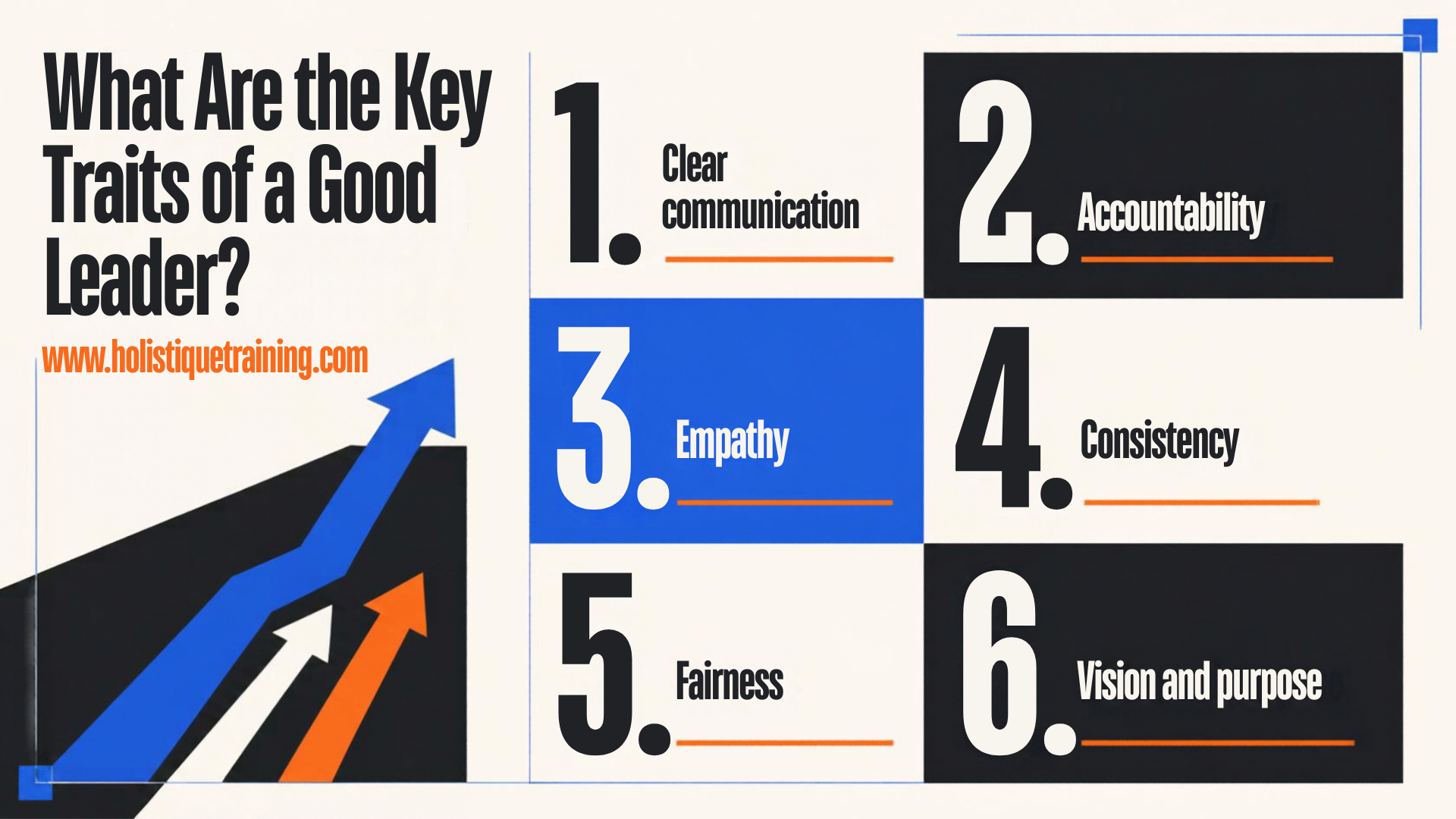
Researchers and practitioners describe leadership in many ways, but the same traits appear again and again in the managers people admire. None of them requires a particular personality. Quiet, thoughtful leaders and outgoing, energetic ones can all show these traits in their own way. Here are the ones that matter most.
1- Clear communication. Good leaders explain decisions in plain language, share context and check that people have understood. They also listen, which is the half of communication that managers most often forget.
2- Accountability. They own their decisions and their mistakes. When a project slips, they say what they will do differently instead of pointing at the team.
3- Empathy. They notice when someone is struggling, ask thoughtful questions and adjust their expectations when life gets difficult, without lowering standards altogether.
4- Consistency. Their mood and standards stay steady from one day to the next, so the team never has to guess which version of the boss will walk in.
5- Fairness. They apply the same rules to everyone, share opportunities openly and avoid favourites, because perceived bias destroys trust quickly.
6- Vision and purpose. They connect daily tasks to a bigger goal, helping people understand why their work matters rather than simply handing out jobs.
Notice that none of these traits are technical skills. Managers are often promoted because they were excellent at the job itself, then discover that leading people demands a completely different toolkit. That gap explains why so many new team leaders feel lost in their first year.
3- What Does Bad Leadership Look Like?
Bad leadership is any pattern of behaviour that damages a team’s performance, wellbeing or trust. It does not always involve shouting or cruelty. In fact, the most common forms are quiet and easy to excuse, such as vague instructions, constant interruptions or a boss who is never around. Because these habits feel normal to the person doing them, they often continue for years.
The three patterns below appear in almost every sector, from hospitals and warehouses to creative agencies and charities. Recognising them early gives managers a chance to change course before the damage spreads.
Micromanagement and Control
Micromanagers struggle to let go. They check every email, redo work that was already good and insist on approving small decisions. The intention is often to maintain quality, but the effect is the opposite. People stop thinking for themselves, wait for permission and quietly lose confidence in their own judgement. Strong control can be useful in narrow situations such as emergencies, but as a daily habit it drains initiative and creativity.

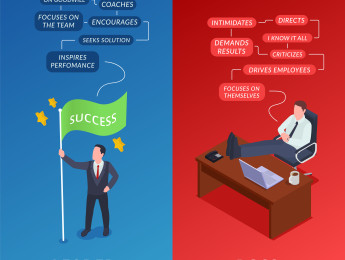
This blog post examines the key differences between authoritarian and authoritative leadership styles, outlining their characteristics, pros and cons, and how each can be cultivated. Learn how these distinct approaches to leadership impact teams and organisations, and discover which might be more effective depending on your leadership goals.
Absent and Avoidant Leadership
At the other end of the spectrum sits the leader who is never really there. They avoid difficult conversations, delay decisions and leave the team to sort out conflicts alone. Staff are left without direction, feedback or protection. Work still gets done for a while, but resentment grows, because the people doing the most are rarely recognised and underperformance goes unchallenged.
Toxic and Blaming Behaviour
The most damaging form of bad leadership involves disrespect. This includes public criticism, favouritism, taking credit for other people’s ideas and punishing honesty. Teams learn quickly that speaking up is risky, so problems stay hidden until they explode. Over time, the whole culture turns defensive and anxious.
A study published in MIT Sloan Management Review analysed 1.4 million employee reviews from hundreds of companies and found that a toxic corporate culture was 10.4 times more powerful than compensation in predicting which firms lost staff. In other words, people will often leave a bad environment even when the pay is good.
4- How Do Good and Bad Leaders Compare in Everyday Situations?
The clearest way to see the gap between good and bad leadership is to watch how each behaves under ordinary pressure. Most leaders look similar when everything is going well. The differences appear when something goes wrong, when someone disagrees or when the workload becomes heavy. The table below compares the two across six common situations.
Situation | Good Leadership | Bad Leadership |
A team member makes a mistake | Asks what happened and focuses on learning | Blames the individual in front of others |
Giving feedback | Specific, timely and delivered privately | Vague, rare or saved for annual reviews |
A new idea is raised | Listens and builds on it | Dismisses it or claims it as their own |
Workload increases | Reprioritises and protects the team | Adds pressure without removing anything |
Conflict between colleagues | Steps in early and stays neutral | Ignores it or takes sides |
Success is achieved | Shares credit widely | Keeps the spotlight on themselves |
Notice that the good leader’s responses all invite people to engage, while the bad leader’s responses all push people to protect themselves. That single difference explains much of what follows in terms of morale, retention and results.
5- What Are the Real Costs of Bad Leadership?
Bad leadership is often treated as a personality issue, something unpleasant but harmless. In reality, it carries measurable costs for teams and organisations. These costs build slowly, which is why they are easy to miss until a team has already lost momentum.
Higher Turnover and Recruitment Costs
When people leave because of their manager, the business pays twice. First comes the cost of hiring and training a replacement, and second comes the loss of knowledge and relationships that walked out with the departing employee. Remaining team members then carry extra work, which increases stress and makes further resignations more likely.
Lower Engagement and Productivity
Disengaged employees do what is required and nothing more. They stop offering ideas, avoid taking initiative and keep their heads down. The team still looks busy, but the quality of thinking falls, and customers and colleagues eventually feel it.
Damaged Wellbeing and Reputation
Poor leadership also affects people’s health. Constant uncertainty, criticism or unfair treatment raises stress and contributes to burnout and absence. Word travels, too. Former employees share their experiences with friends, on review sites and in interviews, which makes it harder to attract strong candidates in future.
Taken together, these effects mean that investing in better leadership is rarely a luxury. It is one of the most practical ways to protect performance, keep skilled people and build a workplace where others genuinely want to stay.
6- Why Does Trust Matter So Much in Leadership?
Trust is the foundation that every other leadership trait rests on. Without it, clear communication is treated with suspicion, feedback feels like an attack and even generous leaders are second-guessed. With it, people forgive occasional mistakes, speak openly and go the extra mile when it counts.
Trust is built through small, repeated actions rather than grand gestures. Leaders earn it by keeping promises, being honest when the news is bad and treating people the same way when they are absent as when they are present. It is lost far more quickly than it is built. One public humiliation or one broken promise can undo months of good work.
What Is Psychological Safety?
Psychological safety is the shared belief that you will not be punished or embarrassed for asking a question, admitting an error or challenging an idea. It is the practical result of trust. In a psychologically safe team, people raise concerns early, which prevents small issues from becoming expensive failures.
https://holistiquetraining.com/en/course/how-to-build-a-cohesive-team-for-excellence
Google’s re:Work research into team effectiveness found that psychological safety was the most important of five dynamics that set successful teams apart, ahead of factors such as who was on the team. This suggests that how a leader behaves matters more than how talented the group looks on paper.
How Can Leaders Build Trust Every Day?
You do not need a big programme to start building trust. A few consistent behaviours, repeated over time, make the biggest difference.
1- Do what you say. If you promise to follow up on Friday, follow up on Friday. Reliability in small matters tells people they can rely on you in large ones.
2- Admit what you do not know. Saying that you are unsure, or that you got something wrong, makes it easier for others to be honest too.
3- Share the reasons behind decisions. Explaining why a decision was made, even a difficult one, treats people as capable adults rather than order takers.
7- Can a Leadership Style Be Good or Bad Depending on the Situation?
Yes. Few leadership styles are good or bad in all circumstances. A directive approach can save lives in an emergency and yet suffocate a team of experienced specialists. A hands-off approach can inspire a skilled expert but leave a new starter lost. Good leaders read the situation and adjust, while bad leaders apply the same style to everything. The table below shows four common styles, when each works well and when it slips into bad leadership.
Style | Works Well When | Becomes Bad Leadership When |
Directive | Time is short or the team is inexperienced | It is used for every decision and ignores input |
Democratic | Decisions benefit from diverse views | Endless consultation delays action |
Coaching | People are keen to grow and develop | Standards are ignored in the name of being supportive |
Hands-off | The team is skilled and self-motivated | Staff need guidance and receive none |
The lesson is flexibility. Before choosing how to lead, ask what this person or team needs right now, then adapt.

Discover the 6 most common leadership styles, their strengths, risks, and how to adapt your approach for any team or situation.
8- Can a Good Leader Turn Into a Bad Leader?
Absolutely, and it happens more often than most people admit. Leaders rarely wake up and decide to become difficult. The slide usually happens gradually, driven by pressure and habit. Recognising the causes is the first step towards preventing them.
1- Chronic stress and burnout. Tired, overloaded leaders lose patience, snap at colleagues and stop listening. What looks like a personality change is often exhaustion.
2- Success and overconfidence. After a run of wins, some leaders stop seeking feedback and begin to believe they are always right, which cuts them off from useful warnings.
3- Isolation. As responsibility grows, fewer people feel able to challenge the leader honestly, so problems go unreported and blind spots widen.
4- Pressure from above. Unrealistic targets or a harsh senior culture can push even thoughtful managers to pass the pressure down to their teams.
5- Lack of development. Leaders who never receive training or feedback tend to repeat what worked at an earlier stage, even when it no longer fits.
The lesson is that leadership is a practice, not a status. It needs regular maintenance, honest feedback and rest, just like any other skill.
9- How Does Emotional Intelligence Separate Good Leaders from Bad Ones?
Emotional intelligence is the ability to recognise your own emotions, manage them and respond sensibly to the emotions of others. It is one of the clearest dividing lines between good and bad leadership because so many leadership failures are emotional rather than technical. A manager who cannot manage frustration will eventually take it out on the team.
Self-Awareness and Self-Control
Good leaders know their triggers. They notice when they are tired, anxious or irritated and take a breath before responding. Bad leaders react in the moment and then expect others to absorb the consequences. A calm pause before replying to an annoying email or a poor presentation can protect weeks of goodwill.
Empathy and Social Skill
Empathy lets a leader see how a decision will land with the people affected by it. Social skill turns that understanding into action, such as having a difficult conversation with care, resolving a conflict early or recognising that a quiet team member needs encouragement rather than pressure.
The encouraging point is that emotional intelligence is not fixed. Managers can strengthen it by reflecting after difficult conversations, asking trusted colleagues how their tone comes across and practising active listening until it becomes natural.

This specialised training course explores Daniel Goleman’s six leadership styles, rooted in emotional intelligence, and their practical application in diverse organisational contexts. Participants will learn how to assess situations, adapt their leadership approach, and build emotionally intelligent teams that deliver sustained performance.By combining theoretical insights with real-world
10- How Can Managers Spot Bad Leadership in Themselves?
Spotting bad habits in yourself is hard because most people judge themselves by their intentions while others judge them by their behaviour. The most reliable approach is to ask for honest input and then pay attention to what the team does, not only what it says. Silence in meetings, rising absence or a sudden rise in resignations are all signals worth taking seriously. Start with these questions and answer them honestly.
1- Do people bring me bad news early?If problems only reach you once they are serious, your team may be afraid of your reaction.
2- Do I give credit as often as I give criticism?Count the last five times you praised someone and the last five times you corrected them.
3- Do I make decisions people could make themselves?Frequent approvals and constant check-ins are common signs of micromanagement.
4- Can my team disagree with me openly?If every idea is met with agreement, people may simply be avoiding conflict.
5- Do I know what each person is working on?Distance from the work and the people is a quiet sign of absent leadership.
6- Would I want to work for me?Imagine receiving your own feedback, deadlines and tone, and ask whether you would feel motivated.
The table below links common habits to what teams experience and offers a simple fix for each.
Habit | How the Team Experiences It | Simple Fix |
Interrupting people | They feel unheard and stop contributing | Let colleagues finish, then summarise what you heard |
Vague instructions | They guess, redo work and lose confidence | State the outcome, deadline and priority in writing |
Reacting emotionally | They avoid you and hide problems | Pause before responding and return to the issue later |
Avoiding hard conversations | Poor performance continues and resentment builds | Address concerns early, privately and kindly |
11- How Can You Become a Better Leader Starting Today?
The encouraging news is that leadership improves with deliberate practice. You do not need a promotion or a new job title to begin. You only need to change a few daily habits and stay with them long enough for the team to notice.
1- Ask for feedback and act on it. Invite your team to tell you one thing to start, stop and continue. Thank them, then visibly change something so they know honesty is safe.
2- Clarify expectations. Write down goals, deadlines and what good looks like. Clarity removes most unnecessary frustration.
3- Hold regular one-to-ones. Even twenty minutes every fortnight shows people they matter and gives you early warning of trouble.
4- Delegate with trust. Give people ownership of outcomes, not just tasks, and resist the urge to take back control at the first wobble.
5- Recognise effort publicly and correct privately. This simple rule protects dignity while keeping standards high.
6- Keep learning. Read, find a mentor and attend structured training. Leadership skills grow when they are practised alongside reflection and fresh ideas.
Progress will feel slow at first, and you will make mistakes along the way. That is normal. What matters is that your team sees you trying, listening and adjusting. Over time, those visible efforts turn into trust, and trust turns into performance.

Strong management is always required within any business, regardless of industry or influence. A successful business cannot be achieved without skilled supervisors who manage their teams and promote productivity. Supervisors provide an important link between those developing strategies and those
Conclusion
Good leadership and bad leadership are separated less by talent than by daily habits. Good leaders communicate clearly, take responsibility, show empathy and build trust. Bad leaders control too tightly, disappear when needed or damage confidence through blame and disrespect. The consequences reach far beyond the team, affecting retention, engagement, wellbeing and an organisation’s reputation.
The most important point for managers is that leadership can be learned. Even good leaders slip, and even struggling leaders can change when they gather honest feedback, manage their emotions and treat people fairly. Start small. Choose one habit from this article, practise it for a month and ask your team what they notice.
To stay informed about leadership and management trends, subscribe to our newsletter and explore our specialised courses designed to help professionals and organisations build future-ready skills.