
- Table of Contents
- Introduction
- 1- What Is the Difference Between an Assistant Manager and a Manager?
- Definition of a Manager
- Definition of an Assistant Manager
- Where Each Role Sits in the Hierarchy
- 2- What Does a Manager Do? Core Duties and Responsibilities
- Leadership and Management Style
- 3- What Are the Duties and Responsibilities of an Assistant Manager?
- Core Duties of an Assistant Manager
- Delegated Authority and Its Limits
- 4- Authority, Decision-Making and Accountability
- Decision Rights
- Accountability
- 5- Skills and Qualities Needed for Each Role
- 6- How Assistant Managers and Managers Work Together
- Delegation and Trust
- Communication Rhythm and Avoiding Conflict
- 7- Career Path: From Assistant Manager to Manager
- 8- Assistant Manager vs Manager Across Industries
- Retail and Hospitality
- Healthcare and Corporate Settings
- 9- Common Challenges and How to Overcome Them
- 10- Best Practices for Defining Manager and Assistant Manager Roles
- Conclusion
Introduction
Every organisation that grows beyond a handful of people eventually needs layers of leadership, and two of the most commonly confused layers are the manager and the assistant manager. Job advertisements use both titles freely, yet the reality behind each title can differ sharply from one company to the next. In a small café, the assistant manager may run entire shifts. In a large bank, the same assistant manager may support a manager who oversees a whole department. Knowing where the manager role ends and the assistant role begins helps employers design fair structures, helps candidates choose the right career path, and helps every team know who to turn to when decisions must be made.
This article explains the difference between an assistant manager and a manager in plain terms. It looks at how each role is defined, how authority is shared, what the daily work looks like and which skills each position demands. It also answers an important question directly: what are the duties and responsibilities of an assistant manager? In addition, it explores how the assistant and the manager work together, how an assistant manager can progress into a manager role, and how the two titles vary by industry. Throughout, the words manager and assistant are used deliberately, because the relationship between the two sits at the heart of effective team leadership.
1- What Is the Difference Between an Assistant Manager and a Manager?
A manager is the person formally accountable for the results of a team, department, site or function. The manager sets priorities, owns performance targets, makes the final call on important decisions and answers to senior leadership. An assistant manager, by contrast, is the deputy to that manager. The assistant supports the manager, carries delegated authority and steps in when the manager is absent. The word assistant matters here, because the role exists to extend the reach of the manager rather than to replace the accountability that sits above it.
Definition of a Manager
In most organisations, the manager is both a planner and a decision maker. A manager turns company strategy into practical goals for the team, allocates resources, monitors results and takes responsibility when targets are missed. The manager is also usually the formal line manager for every employee in the team, which means the manager handles recruitment, performance reviews and disciplinary matters. Because of this wide scope, the manager is often the person who represents the team to senior leaders and to other departments.
Definition of an Assistant Manager
An assistant manager works alongside the manager and shares the daily load of running the team. The assistant may supervise shifts, coach junior colleagues, handle customer issues and complete reports, but usually does so within limits set by the manager. In many companies the assistant manager is also the natural successor, learning the manager role while performing the supporting one. This dual position makes the assistant manager a valuable link between the daily reality of the team and the strategic thinking of the manager.
Where Each Role Sits in the Hierarchy
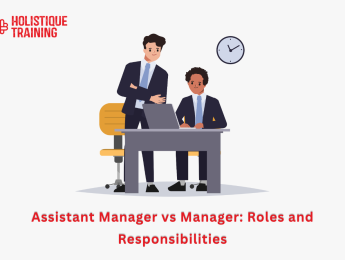
The manager normally sits one level above the assistant manager and reports to a senior manager, director or owner. The assistant reports to the manager and stands between the manager and the front-line team. This middle position gives the assistant a unique view, because the assistant understands the pressures of the team and the priorities of the manager at the same time. The table below summarises the main differences between the two roles.
Dimension | Assistant Manager | Manager |
|---|---|---|
Main purpose | Supports and extends the manager | Leads the team and owns the results |
Accountability | Answers to the manager for delegated tasks | Answers to senior leadership for team performance |
Reporting line | Reports to the manager | Reports to a senior manager, director or owner |
Decision scope | Operational and day-to-day | Operational, tactical and strategic |
Time focus | Shifts, tasks and daily priorities | Planning, budgets and long-term goals |
Career position | Often a stepping stone to manager | Established leadership role |
2- What Does a Manager Do? Core Duties and Responsibilities
Understanding the manager role makes the assistant role easier to define, because the assistant manager is built around the duties of the manager. A manager typically carries six core areas of responsibility, and each one is shared with the assistant to some degree.
1- Setting goals and direction:
The manager translates company objectives into clear targets for the team, agrees priorities and makes sure every team member understands how their work contributes to wider results.
2- Leading and developing people:
A manager recruits, inducts, motivates and develops staff. The manager holds regular performance conversations, recognises achievement and addresses poor performance fairly.
3- Managing budgets and resources:
Managers are normally responsible for the budget, whether that is a payroll allowance, an operating cost line or a project fund. The manager approves spending and controls costs.
4- Monitoring performance and quality:
The manager tracks key performance indicators, reviews reports and takes corrective action when results fall short, covering quality, safety and customer satisfaction.
5- Communicating in every direction:
A manager keeps senior leaders informed, briefs the team on company decisions and coordinates with other departments so that nobody is surprised.
6- Managing risk and compliance:
Managers ensure that policies, regulations and safety requirements are followed. When problems arise, the manager decides how to respond and owns the outcome.
These duties are demanding, and they rarely stand alone. According to Gallup’s January 2026 analysis of managers in the United States, 97% of managers also carry individual contributor responsibilities alongside leading others, and they spend a median of 40% of their time on that work. This finding shows why many managers rely so heavily on a capable assistant manager. When a manager must keep delivering hands-on work while also leading people, the assistant protects the manager’s time and keeps daily operations steady.
Leadership and Management Style
Beyond the formal duties, every manager has a style. Some managers are directive and prefer to give clear instructions, while others are collaborative and involve the team in decisions. The assistant manager must learn the style of the manager and adapt to it, while also developing a personal approach for the future. A manager who behaves fairly and consistently sets the tone for the assistant and the whole team, whereas a manager who leads poorly can pass bad habits to the assistant who is watching and learning.

Learn the difference between good and bad leadership, from key traits and warning signs to practical steps managers can take to lead better.
3- What Are the Duties and Responsibilities of an Assistant Manager?
This is the question most candidates and employers want answered, and the honest reply is that the duties and responsibilities of an assistant manager depend on the size and type of the organisation. Even so, a clear pattern exists across industries. The assistant manager keeps operations running smoothly, supports the decisions of the manager, supervises and develops the team, and stays ready to take charge when needed. In other words, the assistant manager is the operational backbone of the team.
Core Duties of an Assistant Manager
The following seven duties appear in most assistant manager job descriptions.
1- Supervising daily operations:
The assistant manager monitors the flow of work, checks that tasks meet the required standard and solves problems as they arise. In shift-based workplaces, the assistant often runs the floor while the manager focuses on planning and meetings.
2- Deputising for the manager:
When the manager is on leave, in meetings or off site, the assistant manager acts as the decision maker, approving routine requests and responding to escalations.
3- Coaching and training the team:
The assistant inducts new starters, demonstrates correct procedures and gives regular feedback. Because the assistant works so closely with the team, coaching is often more frequent than the manager can provide.
4- Scheduling and allocating work:
Task lists and workload balancing frequently fall to the assistant manager, who makes sure the right people are in the right place at the right time within the manager’s budget.
5- Handling customer and staff concerns:
Customers and employees often raise issues with the assistant manager first. The assistant resolves what can be resolved and escalates serious matters to the manager with a clear summary.
6- Completing reports and administration:
Attendance records, sales summaries, stock checks and incident logs are common tasks. Accurate reporting gives the manager the information needed for good decisions.
7- Upholding standards and compliance:
The assistant manager enforces company policies, safety rules and quality standards on the floor, spotting risks early and reporting them promptly.
Delegated Authority and Its Limits
Delegation is what turns an assistant into a genuine deputy. The manager decides which tasks and decisions the assistant may handle independently and which must be referred upward. Typical limits include final hiring decisions, formal disciplinary outcomes, large spending approvals and policy changes. These limits protect the organisation, but they should be explained clearly so the assistant manager can act with confidence rather than hesitation. A good assistant understands the boundaries and knows when to ask for guidance instead of guessing.
4- Authority, Decision-Making and Accountability
The sharpest difference between an assistant manager and a manager lies in authority. Both roles make decisions, but the weight and consequence of those decisions differ. A manager decides what the team will do and why, while an assistant decides how the daily work will be carried out within that framework. This distinction explains why an assistant can feel highly responsible in daily work, yet still need the manager to sign off on larger or riskier matters.
Decision Rights
Decision rights should be written down wherever possible. When a manager and an assistant share the same space but not the same authority, silence on boundaries leads to confusion. A simple decision matrix lets the assistant manager see which choices belong to the assistant, which need the approval of the manager and which must be escalated further.
Accountability
Accountability follows authority. The manager answers to senior leaders for the performance of the entire team, including the actions of the assistant. The assistant manager answers to the manager for the tasks and decisions that have been delegated. A manager can delegate work, but never the final responsibility for the result. The table below shows how typical decisions are divided.
Decision Area | Assistant Manager | Manager |
|---|---|---|
Daily shift planning | Decides and implements | Approves the overall rota framework |
Customer escalations | Resolves routine cases | Handles serious or high-value cases |
Staff discipline | Records issues and gives informal warnings | Decides formal outcomes |
Recruitment | Helps screen and interview | Makes the final hiring decision |
Budget and spending | Works within approved limits | Sets budgets and approves exceptions |
Performance reviews | Contributes feedback | Conducts and signs off reviews |
5- Skills and Qualities Needed for Each Role
Both roles require a blend of technical knowledge and people skills, but the emphasis differs. A manager leans towards strategic and leadership skills, while an assistant manager leans towards operational and supportive skills. Six skills matter most.
1- Communication:
The manager must communicate vision and expectations to the team and to senior leaders. The assistant manager must communicate in both directions, passing instructions down and concerns up without distortion.
2- Organisation and time management:
A manager prioritises long-term objectives, while an assistant manager prioritises the tasks of the day and often switches between them more quickly.
3- Problem solving:
Managers solve complex problems that affect the whole team. Assistant managers solve immediate problems in real time, often with limited information.
4- Leadership and influence:
A manager leads through vision and accountability. An assistant manager leads by example, building credibility through reliability and fairness.
5- Decision making:
Managers make high-impact decisions and accept the consequences. Assistants make quick, practical decisions within agreed limits and learn to weigh risk.
6- Emotional intelligence:
Both roles manage people under pressure. Empathy, patience and self-control help the manager and the assistant handle conflict and maintain morale.

An organisation can have many great features, systems, and employees, but that does not guarantee its success. Effective leadership and supervisors are crucial within any business. Without them, an organisation is bound to lose productivity, fall behind, and be drowned out in the market.
6- How Assistant Managers and Managers Work Together
The most successful teams treat the manager and the assistant manager as a partnership rather than a hierarchy of convenience. When the manager and the assistant align on goals, communicate openly and trust each other, the team enjoys consistency. When they do not, staff notice quickly and may play one against the other.
Delegation and Trust
A manager who delegates well gives the assistant clear tasks, clear authority and clear deadlines. Delegation is not dumping unwanted work. It is a deliberate development tool that prepares the assistant for greater responsibility while freeing the manager to plan. In return, the assistant manager must deliver reliably and report honestly, including when things go wrong.

Strong management is always required within any business, regardless of industry or influence. A successful business cannot be achieved without skilled supervisors who manage their teams and promote productivity. Supervisors provide an important link between those developing strategies and those
Communication Rhythm and Avoiding Conflict
Regular communication prevents misunderstandings. Many pairs hold a short daily briefing, a weekly review of priorities and a monthly development conversation. The manager and assistant should also present a united front, agree decisions privately before announcing them and never undermine each other in front of the team. If the assistant disagrees with the manager, the disagreement should be raised respectfully in private. Over time, this habit builds mutual respect, and the team learns that the manager and the assistant speak with one voice. It also helps the assistant manager learn how the manager thinks, which is valuable preparation for future leadership.
7- Career Path: From Assistant Manager to Manager
For many professionals, the assistant manager role is the first formal step into leadership. It offers a safe environment to practise supervising people and making decisions, with a manager available for guidance. However, becoming a manager is not simply a matter of waiting for a vacancy. It requires a shift from doing and supervising to planning and leading. Six steps help an assistant manager prepare for promotion.
1- Master the current role:
Deliver the duties of the assistant manager consistently and to a high standard, because reliability is the foundation of trust.
2- Seek stretch assignments:
Ask the manager for chances to lead a project, chair a meeting or review a budget. These tasks demonstrate readiness for the manager role.
3- Develop people leadership:
Practise coaching, giving feedback and handling difficult conversations. A future manager is judged by the growth of the people they lead.
4- Learn the numbers:
Understand targets, costs and performance indicators, since managers are expected to link daily activity to financial results.
5- Find a mentor:
A mentor, often the current manager, can share experience, explain decisions and offer honest feedback.
6- Invest in formal training:
Structured learning in leadership and management techniques fills gaps that experience alone may not cover.
Formal preparation matters because many people move into management without it. According to the American Management Association’s 2026 Talent Development Study, which surveyed more than 1,000 professionals worldwide, 51% of respondents said they were promoted into people management without formal leadership training. For an assistant manager aiming to become a manager, this figure is both a warning and an opportunity. Those who prepare in advance can step into the manager role with more confidence than peers who learn entirely on the job.

Effective leadership is crucial to the success of any business. This program will help you harness your internal leadership potential by exploring effective strategies, motivating team members, and mastering negotiation and influencing skills to achieve your goals. You will examine
8- Assistant Manager vs Manager Across Industries
Job titles carry different weight in different sectors. In some organisations, an assistant manager is a senior leader with significant authority. In others, the title describes a supervisory role close to the front line. Understanding the sector therefore helps explain why the same title can mean very different things from one employer to the next, and why a candidate should always read the job description rather than rely on the title alone.
Retail and Hospitality
In shops, restaurants and hotels, the assistant manager is highly operational, opening and closing the premises, handling cash, supervising shifts and resolving complaints. The manager focuses on sales targets, staffing budgets and supplier relationships.
Healthcare and Corporate Settings
In clinics and care homes, the assistant manager coordinates rotas and monitors compliance, while the manager answers for regulatory standards and funding. In offices, the assistant manager coordinates a small team and prepares reports, while the manager sets departmental strategy and represents the team in senior meetings.
Sector | Assistant Manager Focus | Manager Focus |
|---|---|---|
Retail | Shift supervision, cash handling and customer service | Sales targets, stock strategy and budgets |
Hospitality | Service quality, rotas and staff coaching | Profitability, suppliers and brand standards |
Healthcare | Service coordination and compliance checks | Regulatory standards and inspection readiness |
Corporate | Task coordination and reporting | Departmental strategy and stakeholders |
9- Common Challenges and How to Overcome Them
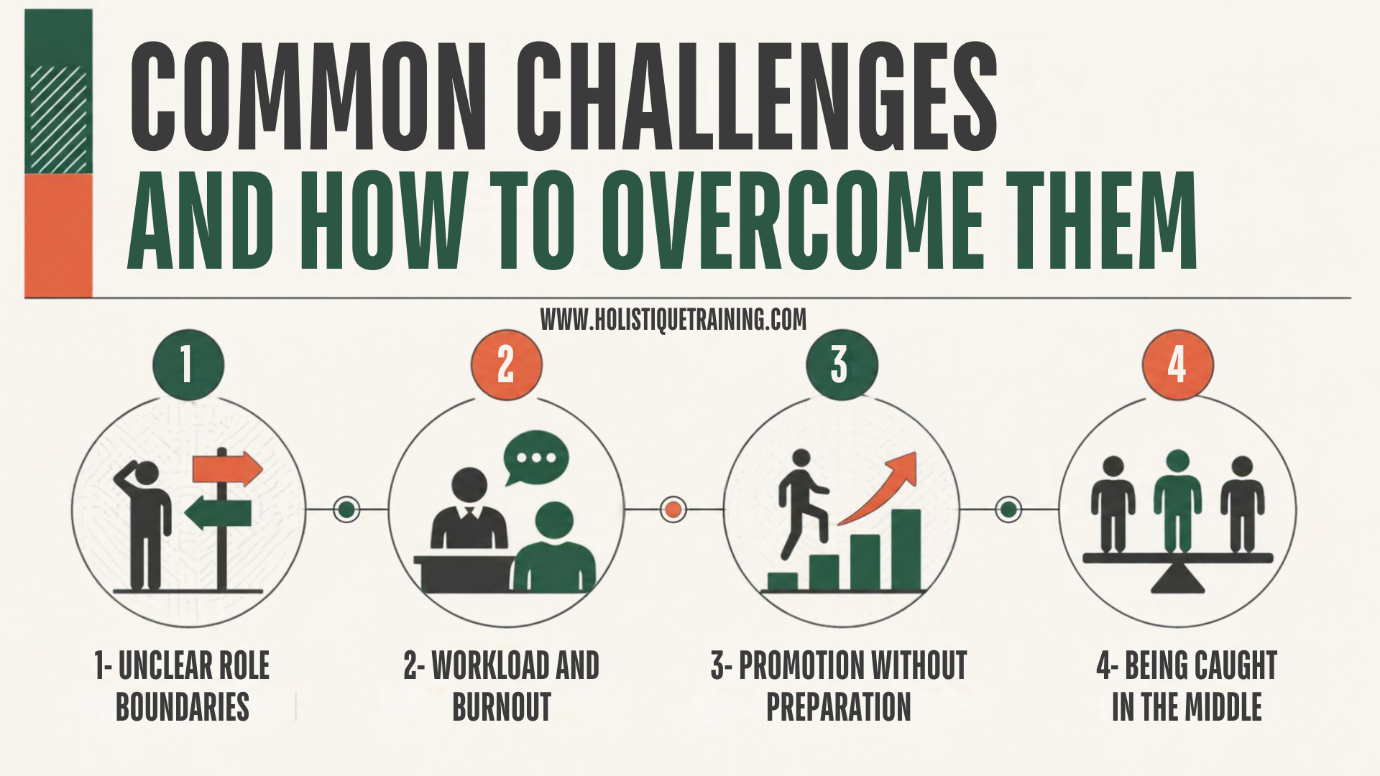
The relationship between a manager and an assistant is rewarding, but it is not free from friction. Four challenges appear repeatedly.
1- Unclear role boundaries:
When responsibilities are not documented, tasks fall through the gaps or are duplicated. A written description for both the manager and the assistant, reviewed each year, solves most of this.
2- Being caught in the middle:
An assistant manager sits between the manager and the team and may feel pulled in two directions. Consistent standards and open communication ease the pressure.
3- Promotion without preparation:
Strong performers are sometimes promoted without development and then struggle in a bigger role. Early training and mentoring reduce the risk.
4- Workload and burnout:
Both managers and assistants can become overloaded. Fair sharing of work and realistic targets keep leaders effective.
Readiness is a particular concern at manager level. A September 2026 study by Careerminds found that 98% of people managers believe managers are ready to lead through future workplace challenges. However, only 42% of senior and middle managers said they feel very ready, compared with two in three executive-level managers. This gap suggests that confidence at the top does not always reach the managers and assistant managers who deal with change every day, so organisations should invest in development at every level.
10- Best Practices for Defining Manager and Assistant Manager Roles
Organisations can reduce confusion and improve performance by following a few practical principles when they design the manager and assistant manager roles. Each principle protects the team from mixed messages and gives both people a fair chance to succeed.
1- Write clear role descriptions:
Document the purpose, duties, authority limits and reporting line for both roles. A manager and an assistant who read the same document are far less likely to disagree about who owns a task.
2- Define decision rights:
Use a simple matrix so that everyone knows which decisions belong to the assistant manager, which belong to the manager and which need senior approval.
3- Train both roles:
Offer development to assistants preparing for promotion and to managers who are learning to delegate. Both groups benefit from structured leadership learning.
4- Review roles regularly:
As the business grows, review the manager and assistant roles so that job titles continue to match real responsibilities.
5- Recognise the assistant’s contribution:
Acknowledge the work of the assistant manager in performance reviews and team meetings, because visible recognition builds motivation and retention.
Conclusion
The difference between an assistant manager and a manager comes down to accountability, authority and focus. The manager owns the results, sets the direction and answers to senior leadership. The assistant manager supports the manager, runs daily operations, develops the team and stands ready to step in. Neither role works well without the other. A confident manager who delegates, and a capable assistant who delivers, give a team stability and room to grow.
For organisations, the lesson is to define both roles clearly and invest in the people who hold them. For professionals, the lesson is to treat the assistant manager role as a learning ground and to prepare actively for the manager role ahead. When the manager and the assistant understand their responsibilities and trust each other, the whole team benefits. To stay informed about management trends, subscribe to our newsletter and explore our specialised courses designed to help managers, assistants and organisations build future-ready skills.